How Accurate Is the 16 Personalities Test? What the Science Says in 2026
The Truth About MBTI Accuracy
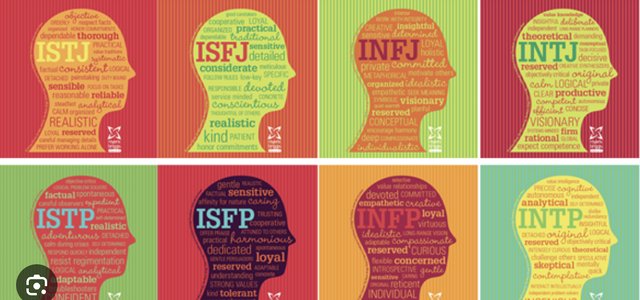
The Myers-Briggs Type Indicator (MBTI) is taken by over 2 million people annually and used by 89 of the Fortune 100 companies. It’s also one of the most hotly debated psychological instruments in existence. So: is it science, pseudoscience, or something in between?
What the Critics Say (And Why They Have a Point)
Academic psychology has three main criticisms of MBTI:
1. Test-Retest Reliability Studies show that 39-76% of people get a different result when retaking the MBTI after several weeks. Critics argue a personality test should produce consistent results.
The MBTI response: This criticism conflates the test with the theory. Multiple-choice tests are inherently noisy. The underlying cognitive function theory (which most online tests barely touch) is far more robust. When people study cognitive functions and self-type, consistency improves dramatically.
2. The Dichotomy Problem MBTI sorts people into binary categories (I vs. E, S vs. N, etc.), but most psychological traits exist on a continuum. You’re not 100% introverted or extraverted — you’re somewhere on a spectrum.
The MBTI response: Modern MBTI practitioners acknowledge this. The test measures preferences, not absolutes. The real value comes from understanding your dominant cognitive functions, not just the four letters.
3. The Big Five Comparison Academic psychology strongly prefers the Big Five (OCEAN) model: Openness, Conscientiousness, Extraversion, Agreeableness, Neuroticism. Unlike MBTI, the Big Five was derived from statistical analysis of language rather than theory.
However: Multiple studies have found significant correlations between MBTI scales and Big Five dimensions. MBTI’s S-N correlates strongly with Openness; T-F with Agreeableness; J-P with Conscientiousness; E-I with Extraversion. They’re measuring related constructs through different lenses.
What the Supporters Say (And Why They Also Have a Point)
1. Face Validity Millions of people report that their MBTI type description feels true — often eerily so. While this isn’t scientific proof, dismissing widespread subjective validation entirely is also unscientific.
2. Practical Utility MBTI excels as a communication tool. When teams understand that colleagues process information differently (not incorrectly), collaboration improves. This practical utility explains corporate adoption.
3. The Depth Beneath the Letters Most criticism targets the simplistic four-letter test. But Jung’s cognitive function theory — the actual foundation — is far more nuanced and hasn’t been subjected to the same scrutiny.
The Verdict: Use It Wisely
MBTI is best understood as a framework for self-reflection, not a scientific diagnostic tool. It will not:
- Predict your job performance with precision
- Determine your perfect romantic partner
- Define your immutable identity
It can help you:
- Understand your cognitive preferences
- Communicate better with different personality styles
- Identify work environments where you’re likely to thrive
- Recognize your stress patterns and growth edges
The most scientific approach? Learn the cognitive functions, self-reflect honestly, and use your type as a starting point for growth — not an excuse for limitation.
Take our free personality test and explore what your results reveal.
More About Personality Science
- 📊 Take the Free Personality Test — Try it yourself in 5 minutes →
- 📚 MBTI Myths Debunked — Separating personality fact from internet fiction →
- 🧠 MBTI Cognitive Functions — The deeper theory behind the 4-letter codes →
- 🧘 MBTI and Mental Health — What personality types reveal about emotional wellbeing →
- 🎭 Character Database — See personality theory applied to your favorite characters →