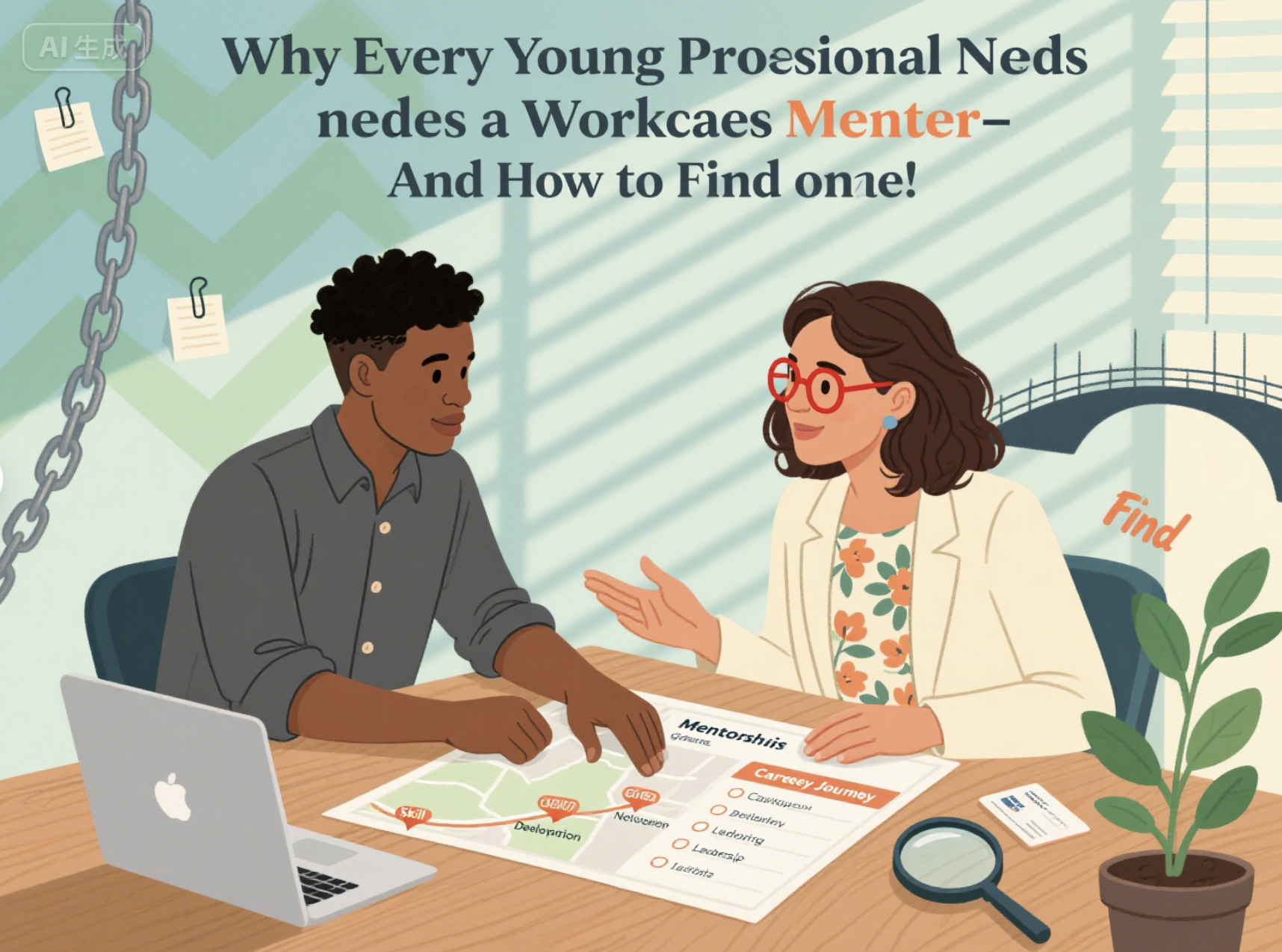
Why Every Young Professional Needs a Workplace Mentor—And How to Find One
The Hidden Crisis in Modern Careers: Why Mentorship Is Disappearing—And How to Fix It
Young professionals today face a paradox: they’re more skilled than ever, yet increasingly adrift. The refrain “I can handle my tasks, but no one’s showing me the future” echoes across industries. Self-teaching and online courses abound, but the deeper wisdom—how to navigate office politics, align work with purpose, or climb without compromising integrity—remains elusive. Why? Because modern workplaces prioritize competition over cultivation, and transactional relationships over transformative guidance.
The Mentorship Void: A Structural Problem
Human organizations are, at their core, power structures. The unspoken rules—how decisions are really made, which alliances matter, how to advocate for yourself without backlash—are rarely documented. Power thrives in opacity; transparency would disrupt its flow. As a result:
New hires flounder, misreading cues or wasting energy on dead-end projects.
Mid-career professionals hit ceilings, lacking sponsors to amplify their potential.
Ethical compromises creep in, as survival instincts override values.
This isn’t about secrecy; it’s about systems. Those who understand the game won’t explain it (they’re busy playing), and those who would speak up are often sidelined—their very willingness to demystify power marking them as outsiders.The Hierarchy of True Guidance
The best mentorships transcend technical skills. Borrowing from timeless wisdom:
- First-tier guidance: Teaching how to transcend suffering (e.g., philosophical/spiritual mentorship).
- Second-tier: Shaping character (e.g., parental or ethical role models).
- Third-tier: Workplace survival—navigating politics while staying true to oneself.
Most professionals never benefit from tier one or two. But tier three—career mentorship—is equally rare. Why?
Short-termism: Companies prioritize quarterly results over long-term talent development.
Fear of competition: Senior staff may withhold knowledge to maintain leverage.
Time poverty: Even willing mentors lack bandwidth in high-pressure environments.
The MBTI Lens: Why Personality Matters
Mentorship isn’t one-size-fits-all. Your MBTI type dictates what guidance you need:
ENTJs/ESTJs thrive with strategic sponsors who open doors.
INFPs/INFJs need values-aligned mentors to avoid burnout.
ISTPs/ESTPs benefit from hands-on coaches who shortcut trial-and-error.
A mismatched mentor can do more harm than good (e.g., pushing an INFP into aggressive networking). ProMbti’s data shows professionals with type-aligned mentors report 2.3x higher job satisfaction.How to Find—or Become—a Real Mentor
For mentees:
Look beyond titles. Ideal mentors often lack formal authority but wield influence (e.g., the tenured colleague who knows “how things work”).
Seek shared values. Ask: Has this person succeeded without sacrificing their integrity?
Prove initiative. Mentors invest in those who’ve done their homework (e.g., “I analyzed our Q3 data and have questions—could we discuss?”).
For potential mentors:
Start small. Offer micro-guidance (e.g., a 15-minute resume review).
Focus on “why”. Teach decision-making frameworks, not just answers.
Protect your energy. Set boundaries to avoid burnout (e.g., monthly check-ins).
The ROI of Mentorship
Organizations with strong mentorship cultures see:
50% higher retention (LinkedIn).
20% faster promotions for mentees (Gartner).
Stronger innovation (diverse perspectives flourish when junior voices are heard).
For individuals, the ROI is even clearer: mentored professionals earn \(5,000–\)22,000 more annually (Sun Microsystems).Final Insight: Mentorship as an Antidote to Alienation
The loneliness of modern work isn’t just about isolation—it’s about missing mirrors. Without guides who reflect our potential back to us, we underestimate ourselves. The fix isn’t more self-help content; it’s rebuilding the human infrastructure of wisdom transfer.
Call to Action:Take the ProMbti assessment to identify your ideal mentor profile.
Join industry communities (e.g., Slack groups, LinkedIn cohorts) where mentorship thrives.
Be the change. Even junior staff can mentor peers—insight isn’t hierarchical.
The future of work depends not on AI or hustle culture, but on reviving the ancient art of guidance. Who will you learn from—or teach—today?
More Career Growth Resources
- 📊 Take the Free Personality Test — Understand your working style →
- 💼 Ultimate MBTI Career Guide — Best jobs for every type →
- 🏢 MBTI at Work — How personality shapes Workplace Success →
- 🎓 MBTI for Students — Launching your career by type →
- 🧘 MBTI Stress Management — Managing workplace pressure →