Why SelfChange Fails And How Your MBTI Type Can Fix It
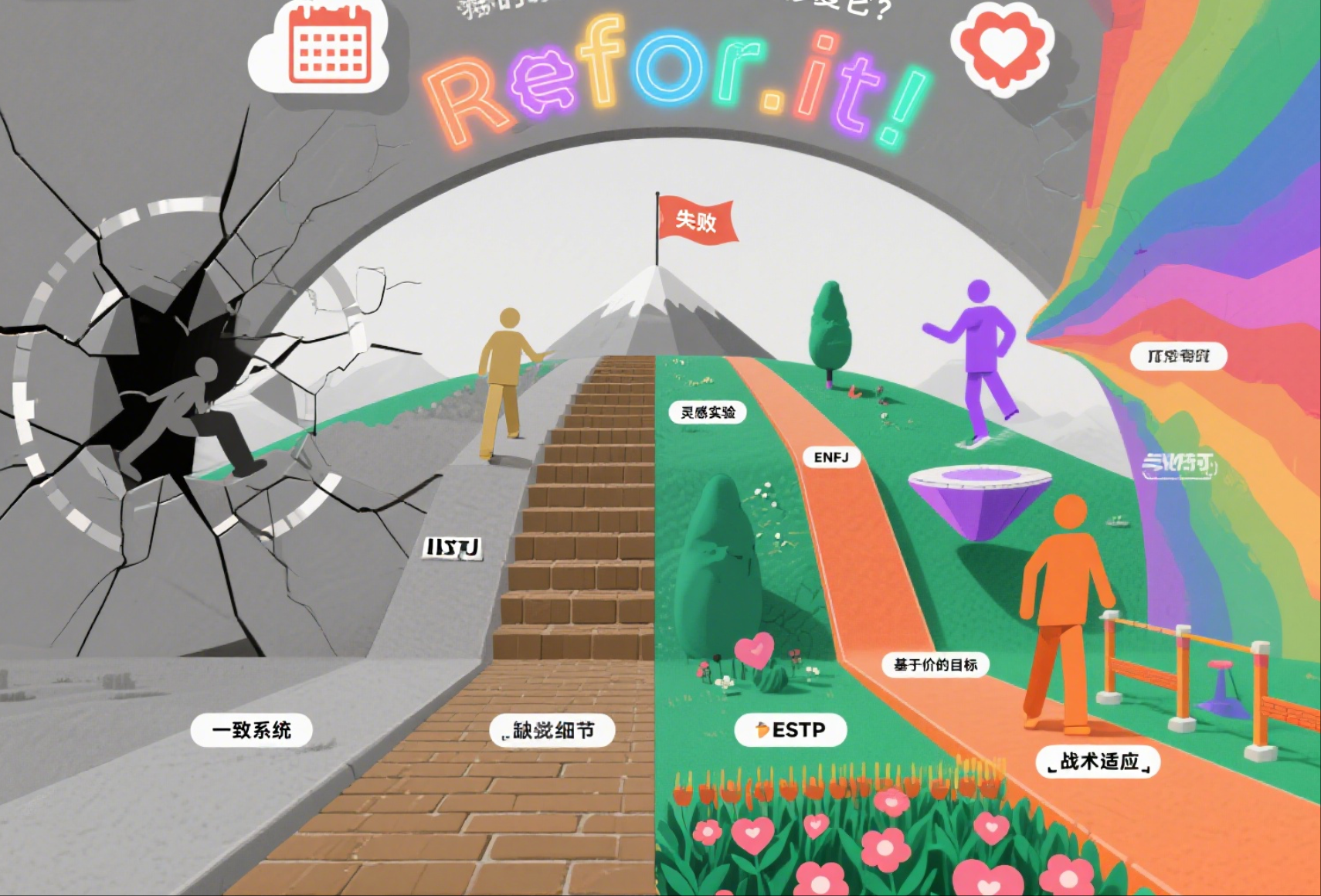
Why Self-Change Fails (And How Your MBTI Type Can Fix It)
For years, I believed change was a matter of logic: identify a problem, draft a step-by-step plan, and execute. Yet, like many, I watched these plans crumble—not due to flawed methods, but because they ignored a fundamental truth: human behavior is driven by personality, not just rationality. This revelation reshaped my understanding of growth, especially through the lens of MBTI psychology. Here’s why traditional “self-help” fails and how aligning change with your innate personality type succeeds.
The Myth of Rational Change
Most attempts at self-improvement begin with a logical premise: “I should exercise more,” “I need to network for my career,” or “I must stop procrastinating.” We analyze, strategize, and even convince ourselves of the “right” action. Yet, as MBTI theory underscores, logic alone rarely overrides our cognitive preferences.
The INTJ’s Trap: A strategic INTJ might design a meticulous productivity system but abandon it when their dominant Introverted Intuition craves big-picture ideation over mundane tasks.
The ESFP’s Struggle: An ESFP knows they “should” save money, but their auxiliary Extraverted Sensing prioritizes spontaneous experiences over future security.
The flaw? We assume rationality governs behavior. In reality, cognitive functions (the mental processes behind MBTI types) dictate our motivations. Change fails when it conflicts with these innate drivers.Why “Step-by-Step” Plans Backfire
Popular advice—“break goals into small steps!”—ignores personality disparities. For example:
Judgers (J) vs. Perceivers (P): A Judging type (e.g., ESTJ) thrives on structured plans, while a Perceiving type (e.g., ENTP) rebels against rigidity, needing flexibility to explore ideas.
Thinkers (T) vs. Feelers (F): A Thinking type may adopt a habit if it’s “efficient,” but a Feeling type (e.g., INFP) requires emotional resonance (“Does this align with my values?”).
The result: Generic plans trigger resistance because they don’t engage the dominant and auxiliary functions that fuel each type’s energy.The MBTI Key: Change Through Cognitive Alignment
Sustainable change requires working with your personality, not against it. Here’s how:
Identify Your Dominant Function:
- Extraverted Sensors (ESTP, ESFP): Tie habits to immediate, tangible rewards (e.g., “I’ll workout if it’s social”).
- Introverted Intuitives (INFJ, INTJ): Frame change as part of a long-term vision (“Learning this skill fulfills my master plan”).
- Extraverted Sensors (ESTP, ESFP): Tie habits to immediate, tangible rewards (e.g., “I’ll workout if it’s social”).
Leverage Your Inferior Function (Carefully):
- An ENTP (dominant Ne) might struggle with follow-through. Using their inferior Introverted Sensing (“What’s one concrete action I can take today?”) prevents overwhelm.
- An ENTP (dominant Ne) might struggle with follow-through. Using their inferior Introverted Sensing (“What’s one concrete action I can take today?”) prevents overwhelm.
Emotional Buy-In for Feelers:
Feelers (ISFJ, ENFJ) need to connect habits to people or causes. “Networking helps me support my team” works better than “It’s good for your career.”
Case Study: The Procrastinating INTP
An INTP client wanted to build a writing habit but hated schedules. Instead of forcing daily quotas, we tapped their Ti-Ne:
Reframe: “Writing is problem-solving—I’m exploring ideas, not ‘working’.”
Trigger: Link writing to curiosity (“After coffee, I’ll free-write one intriguing thought”).
Within weeks, they wrote consistently—because the method aligned with their need for intellectual autonomy.The Takeaway
Change isn’t about grit; it’s about designing strategies that resonate with your cognitive wiring. At ProMbti, we help clients:
Audit their personality-driven roadblocks.
Craft type-specific habit frameworks.
Turn self-awareness into actionable growth.
Ready to change differently? Start by understanding your MBTI type’s hidden drivers—your next breakthrough might defy every “logical” plan you’ve ever made.
More Personal Growth Resources
- 📊 Take the Free Personality Test — Start your self-discovery →
- 🧠 MBTI Cognitive Functions — Understand the engine behind your personality →
- 🧘 MBTI Stress Management — How each type handles pressure →
- 🧠 MBTI and Mental Health — Emotional wellbeing and personality →
- 📚 MBTI Myths Debunked — What personality can and cannot do →