Augusta Ada King, Countess of Lovelace (Ada Lovelace) - INTJ Personality Type

Augusta Ada King, Countess of Lovelace (Ada Lovelace)

INTJ - Architect

Category

Science

Nationality

British

Occupation

Mathematician, Writer (Computer Programmer)

About Augusta Ada King, Countess of Lovelace (Ada Lovelace)

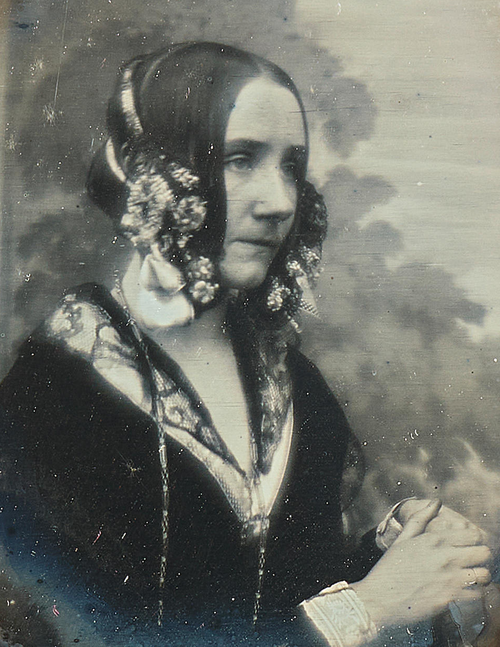
Ada Lovelace was a 19th-century English mathematician and writer, chiefly known for her work on Charles Babbage's proposed mechanical general-purpose computer, the Analytical Engine. She is celebrated for writing the first algorithm intended to be carried out by such a machine, making her widely regarded as the first computer programmer. Her vision extended beyond calculation, foreseeing the potential for computers to manipulate symbols and create music and art.

Personality Profile: INTJ

Confidence: 85%

Personality Analysis

Ada Lovelace exemplifies the INTJ personality type through her dominant Introverted Intuition (Ni). Her genius lay not merely in computation but in her ability to perceive the profound, latent possibilities of the Analytical Engine. While others, including Babbage, focused on its number-crunching utility, Lovelace’s Ni allowed her to envision a future where machines could manipulate any symbolic notation, foreseeing their application to music and art—a leap of abstract, future-oriented insight characteristic of dominant Ni.

Her auxiliary Extraverted Thinking (Te) provided the disciplined framework for her visions. She applied rigorous logic and systematic analysis to understand the Engine’s operations, translating Babbage’s ideas into detailed, step-by-step instructions (the first algorithm). This Te function allowed her to structure her visionary ideas into a concrete, logical form that others could, in theory, implement. She was direct in her intellectual correspondence, valuing efficiency and precision in her explanations.

Her tertiary Introverted Feeling (Fi) fueled a strong sense of personal conviction and intellectual passion. She was driven by an inner belief in the ‘poetical science’ of mathematics, seeing it as a language to discover fundamental truths about the universe. This Fi, combined with her 5w4 Enneagram, contributed to her unique, almost romantic perspective on analytical work, setting her apart from her contemporaries. Her inferior Extraverted Sensing (Se) manifested in occasional struggles with the practical, sensory world—notably her chronic health issues, gambling debts, and the societal constraints of her era, which her visionary mind often sought to transcend or ignore, leading to periods of disconnection from immediate physical realities.

Supporting Evidence

Her most famous work, the translation and extensive notes on Luigi Menabrea’s article about the Analytical Engine, demonstrates her Ni (visionary foresight of computing’s potential beyond calculation) and Te (logical, step-by-step elaboration of the algorithm, or ‘Note G’). Her correspondence with Charles Babbage and others reveals a direct, analytical, and often impatient (Te) communication style when debating technical details. Her lifelong fascination with integrating imagination and science, calling it ‘poetical science,’ highlights her strong Fi values. Her ambitious projects, such as attempting to create a mathematical model for winning at horse racing, show a clash between her intuitive theories and a neglect for practical, sensory reality (inferior Se). Finally, her ability to work independently for years on complex mathematical problems, often while bedridden, underscores the INTJ’s capacity for deep, focused, introverted concentration.

Cognitive Function Stack

Confidence: 85%

The cognitive function stack represents how an individual processes information and makes decisions based on Jungian personality type theory.

Auxiliary Function: Te

Extraverted Thinking - Organizing and structuring the external world logically and efficiently.

Dominant Function: Ni

Introverted Intuition - Perceiving underlying patterns and developing long-range visions.

Inferior Function: Se

Extraverted Sensing - Experiencing and interacting with the immediate environment.

Tertiary Function: Fi

Introverted Feeling - Making decisions based on internal values and personal ethics.

Enneagram Personality Profile:

Confidence: 85%

5w4

Big Five Personality Traits

Confidence: 85%

The Big Five personality traits represent the five broad dimensions of personality that are commonly used to describe human personality.

Openness 0%
Conscientiousness 0%
Extraversion 0%
Agreeableness 0%
Neuroticism 0%

Similar INTJ Characters

Explore other characters with similar personality traits