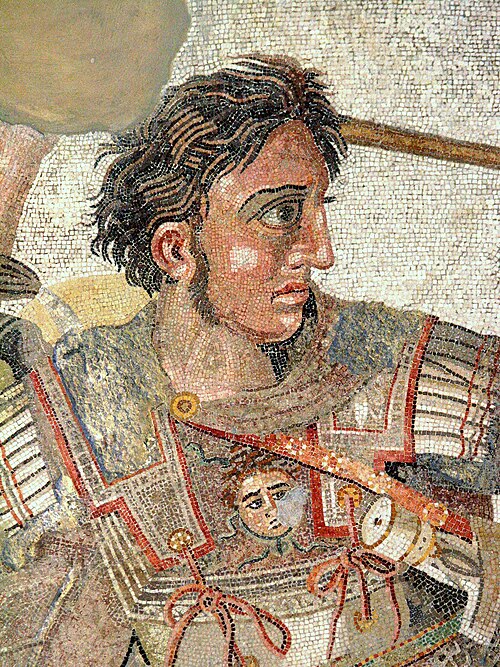
Alexander the Great exemplifies the ENTJ (The Commander) archetype. His dominant Extraverted Thinking (Te) is evident in his unparalleled ability to organize, strategize, and execute complex military campaigns with ruthless efficiency. He was a master of logistics, discipline, and tactical innovation, constantly optimizing his army’s performance. His auxiliary Introverted Intuition (Ni) provided the grand, visionary drive behind his actions; he didn’t just seek conquest but the creation of a unified, Hellenized world, inspired by the heroic ideal of Achilles. This Ni-Te combination made him a peerless long-term strategist who could also adapt his grand plans to immediate circumstances.
His tertiary Extraverted Sensing (Se) fueled his legendary personal bravery, leading charges from the front, and his appreciation for the spoils and luxuries of victory. This Se also contributed to his impulsiveness and occasional recklessness, as seen in his rash decisions in battle or personal conduct. The inferior Introverted Feeling (Fi) manifests in his deeply personal, often volatile, emotional reactions—intense loyalty to friends like Hephaestion, but also fits of rage (like the killing of Cleitus) and a stubborn, almost mystical belief in his own destiny and divinity that could override pragmatic counsel.
Interpersonally, Alexander was a charismatic and inspiring leader who could motivate his men to follow him to the ends of the earth, a classic ENTJ strength. However, his low Agreeableness (Big Five) and underdeveloped Fi led to significant flaws: paranoia, intolerance of dissent, and an inability to consolidate his empire through stable administration and succession planning. His growth area, typical for a young ENTJ, would have been integrating healthy Fi—developing deeper self-awareness, empathy, and a value system beyond conquest and glory to build a lasting legacy of governance.