Adrian Fahrenheit Țepeș (Alucard) - INTJ Personality Type

Adrian Fahrenheit Țepeș (Alucard)

INTJ - Architect

Category

Game

Nationality

Wallachian

Occupation

Vampire Hunter / Guardian

About Adrian Fahrenheit Țepeș (Alucard)

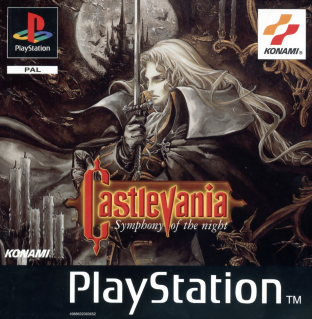
Alucard is the dhampir son of Dracula and a human woman, Lisa, in the Castlevania series. He is a tragic hero known for his eternal struggle against his father's legacy of darkness, choosing to protect humanity despite his monstrous heritage. He is most famously the protagonist of 'Castlevania: Symphony of the Night', renowned for his immense power, stoic demeanor, and complex morality.

Personality Profile: INTJ

Confidence: 85%

Personality Analysis

Alucard is a quintessential INTJ, driven by a dominant Introverted Intuition (Ni). His entire existence is defined by a singular, long-term vision: to oppose his father’s genocidal hatred of humanity and atone for his family’s sins. This Ni focus allows him to see the broader consequences of actions and ideologies, leading him to a path of eternal vigilance. He is not reactive but profoundly strategic, entering his extended sleep in ‘Symphony of the Night’ as a calculated move to be awakened only when his unique skills are truly needed, demonstrating his foresight and patience. His auxiliary Extraverted Thinking (Te) is evident in his cool, logical approach to problem-solving and combat. He assesses situations with detached efficiency, utilizing his vast knowledge and arsenal in the most effective manner possible. While he possesses immense power, he applies it precisely and purposefully, not for show but to achieve a specific end. This Te is tempered by his tertiary Introverted Feeling (Fi), which fuels his unwavering moral compass. His principles are not derived from external laws but from a deeply internalized sense of justice and a personal vow born from his love for his mother and his rejection of his father’s nihilism. Alucard’s inferior Extraverted Sensing (Se) manifests in his occasional struggle with the visceral, present-moment experiences of his existence—his vampiric nature, his immense physical power, and the sensory burden of immortality. He often seems detached from the physical world, moving with an elegant but reserved grace. His periods of profound melancholy and his choice to retreat into slumber can be seen as a rejection of an overwhelming sensory reality. Interpersonally, he is distant and reserved, though capable of deep loyalty (as seen with Richter Belmont and Maria Renard). His growth lies in integrating his Se—learning to experience life and connection in the present without being consumed by the past or the weight of his future-oriented mission.

Supporting Evidence

His entire quest in ‘Symphony of the Night’ is a strategic, Ni-driven plan to investigate his father’s castle, which he knows is a manifestation of a deeper corruption. He methodically (Te) explores and unlocks the castle’s secrets, using logic and observation. His defining moment is his principled (Fi) stand against his father, not out of hatred, but because Dracula’s path is ‘unforgivable’ based on Alucard’s personal moral code. His deep melancholy and decision to return to sleep at the game’s conclusion show his struggle with the sensory and emotional weight (inferior Se) of his immortal life and losses, preferring a strategic retreat until he is needed again.

Cognitive Function Stack

Confidence: 85%

The cognitive function stack represents how an individual processes information and makes decisions based on Jungian personality type theory.

Auxiliary Function: Te

Extraverted Thinking - Organizing and structuring the external world logically and efficiently.

Dominant Function: Ni

Introverted Intuition - Perceiving underlying patterns and developing long-range visions.

Inferior Function: Se

Extraverted Sensing - Experiencing and interacting with the immediate environment.

Tertiary Function: Fi

Introverted Feeling - Making decisions based on internal values and personal ethics.

Enneagram Personality Profile:

Confidence: 85%

1w9

Big Five Personality Traits

Confidence: 85%

The Big Five personality traits represent the five broad dimensions of personality that are commonly used to describe human personality.

Openness 0%
Conscientiousness 0%
Extraversion 0%
Agreeableness 0%
Neuroticism 0%

Similar INTJ Characters

Explore other characters with similar personality traits