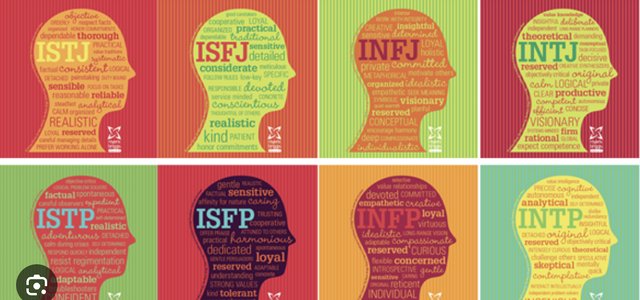
Antonius Block - INTJ Personality Type

Antonius Block

INTJ - Architect

Category

Movie

Nationality

Swedish

Occupation

Knight, Crusader

About Antonius Block

Antonius Block is a Swedish knight returning from the Crusades in Ingmar Bergman's film *The Seventh Seal*. He is known for his existential crisis and his iconic chess game with Death, whom he challenges in a desperate attempt to find meaning and knowledge before dying. His philosophical struggle with faith, doubt, and the silence of God defines his character and the film's central themes.

Personality Profile: INTJ

Confidence: 85%

Personality Analysis

Antonius Block is a quintessential INTJ, driven by a dominant Introverted Intuition (Ni). His consciousness is consumed by a singular, abstract pursuit: to find absolute proof of God’s existence and the meaning of life and death. This Ni-driven quest manifests as a relentless, internal search for a fundamental truth or pattern behind the chaotic and cruel reality of the plague-ridden world. His auxiliary Extraverted Thinking (Te) is evident in his logical, strategic approach to this quest. He does not merely pray or hope; he attempts to outmaneuver Death in a game of chess, using reason and tactics to buy time for his intellectual and spiritual search. His chess game is a Te-driven enterprise in a Ni-defined war.

His tertiary Introverted Feeling (Fi) fuels the deep, personal value he places on this search for meaning. His anguish is not a public performance but a private, intensely felt conviction that life must have a purpose beyond suffering. This Fi, however, is often in tension with his Te, leading to a cold, detached exterior that masks his inner turmoil. His inferior Extraverted Sensing (Se) is profoundly repressed, shown by his disconnection from the physical world and simple pleasures. He is numb to sensory joys, viewing the world through a lens of decay and abstraction, and is often startled by immediate, visceral realities (like the ‘vision’ of the Virgin Mary).

His growth area, typical of an INTJ under extreme stress, involves the negative eruption of his inferior Se and the isolation of his tertiary Fi. He becomes paralyzed, unable to act in the present moment, and his internal values lead to despair rather than guidance. His journey’s resolution involves a partial integration of his functions: he uses his Te-strategy (the chess distraction) not for his own abstract quest, but to perform a Fi-valued act of altruism, saving the innocent family of Jof and Mia, thereby connecting to a simple, present-moment (Se) reality of human love and continuity, which offers a form of meaning his intellect alone could not provide.


Supporting Evidence

His entire journey is structured around his Ni-driven question to a confessional priest (who is Death): ‘I want knowledge, not faith, not suppositions, but knowledge.’ He explicitly seeks the one, true answer. His strategic use of the chess game to delay Death is a classic Te maneuver, creating a logical framework to negotiate with the inevitable. His cold, analytical dismissal of his squire Jöns’s more pragmatic and cynical worldview highlights his Ni-Fi focus on internal truth over external practicality. His profound disconnect from sensory experience is shown when he shares a meal of wild strawberries and milk with Mia; for a moment, he is pulled into the present (inferior Se engagement), calling it a ‘sign’ and a profound, simple feeling of peace that contrasts sharply with his usual state. Finally, his confession scene reveals the deep, private anguish (Fi) beneath his intellectual quest, as he speaks of the ‘emptiness’ he carries like a monster within him.

Cognitive Function Stack

Confidence: 85%

The cognitive function stack represents how an individual processes information and makes decisions based on Jungian personality type theory.

Auxiliary Function: Te

Extraverted Thinking - Organizing and structuring the external world logically and efficiently.

Dominant Function: Ni

Introverted Intuition - Perceiving underlying patterns and developing long-range visions.

Inferior Function: Se

Extraverted Sensing - Experiencing and interacting with the immediate environment.

Tertiary Function: Fi

Introverted Feeling - Making decisions based on internal values and personal ethics.

Enneagram Personality Profile:

Confidence: 85%

5w4

Big Five Personality Traits

Confidence: 85%

The Big Five personality traits represent the five broad dimensions of personality that are commonly used to describe human personality.

Openness 0%
Conscientiousness 0%
Extraversion 0%
Agreeableness 0%
Neuroticism 0%

Similar INTJ Characters

Explore other characters with similar personality traits