Atticus Finch - INFJ Personality Type

Atticus Finch

INFJ - Advocate

Category

Literature

Nationality

American

Occupation

Lawyer

About Atticus Finch

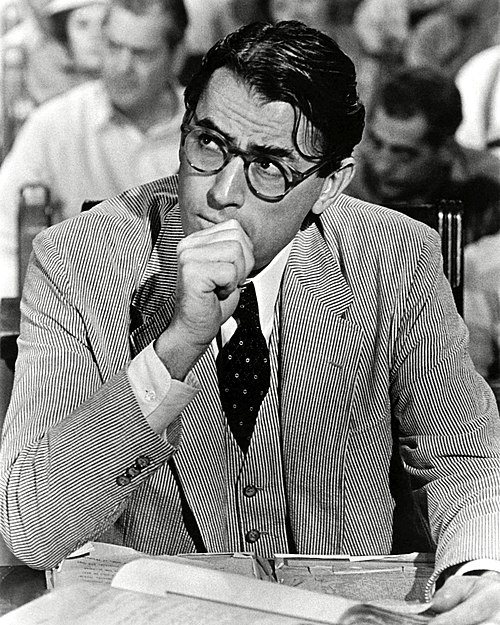
Atticus Finch is the principled lawyer and widowed father from Harper Lee's novel 'To Kill a Mockingbird'. He is known for his unwavering moral integrity, profound sense of justice, and his defense of Tom Robinson, a Black man falsely accused of rape in the racially charged American South of the 1930s. He serves as a moral compass and a model of empathy and courage for his children and community.

Personality Profile: INFJ

Confidence: 85%

Personality Analysis

Atticus Finch is a quintessential INFJ, driven by a visionary internal framework of justice and human dignity (dominant Introverted Intuition). His Ni allows him to see the deeper truths and inevitable consequences of societal prejudice, guiding his long-term strategy in Tom Robinson’s case. He operates not on fleeting emotions but on a profound, future-oriented understanding of what is right. His auxiliary Extraverted Feeling is evident in his deep empathy and his desire to foster harmony and moral growth in his community. He treats everyone, from his children to the marginalized members of Maycomb, with respect and seeks to appeal to their better nature, famously advising Scout to ‘climb into his skin and walk around in it.’ His tertiary Introverted Thinking supports his Ni vision with a logical, analytical approach to the law and argumentation, crafting meticulous defenses. His inferior Extraverted Sensing manifests in his occasional physical awkwardness (notably with a gun) and his preference for quiet reading over action, though he can engage with the physical world decisively when necessary, as seen when he faces the mob at the jail. His growth area, typical for an INFJ, involves balancing his idealistic vision with the harsh realities of the world without becoming cynical, a tension he manages by focusing on the incremental progress he can make in his children and community.

Supporting Evidence

His decision to defend Tom Robinson, despite knowing he will lose and face social ostracism, stems from his Ni-Fe driven moral imperative and long-term vision for justice. His parenting style is a constant exercise in Fe-Ti, using calm reasoning and empathetic lessons to guide Scout and Jem’s moral development. His famous closing argument, where he appeals to the jury’s sense of justice and exposes the logical fallacies of the prosecution’s case, perfectly blends Ni (vision of equality), Fe (appeal to shared humanity), and Ti (logical dismantling of evidence). His composed, non-violent confrontation of the lynch mob at the jail demonstrates Fe’s desire to de-escalate and connect on a human level, while his later marksmanship to protect the children from the rabid dog shows a controlled, necessary engagement with inferior Se.

Cognitive Function Stack

Confidence: 85%

The cognitive function stack represents how an individual processes information and makes decisions based on Jungian personality type theory.

Auxiliary Function: Fe

Extraverted Feeling - Connecting with others and maintaining social harmony.

Dominant Function: Ni

Introverted Intuition - Perceiving underlying patterns and developing long-range visions.

Inferior Function: Se

Extraverted Sensing - Experiencing and interacting with the immediate environment.

Tertiary Function: Ti

Introverted Thinking - Analyzing and categorizing information logically and precisely.

Enneagram Personality Profile:

Confidence: 85%

1w9

Big Five Personality Traits

Confidence: 85%

The Big Five personality traits represent the five broad dimensions of personality that are commonly used to describe human personality.

Openness 0%
Conscientiousness 0%
Extraversion 0%
Agreeableness 0%
Neuroticism 0%

Similar INFJ Characters

Explore other characters with similar personality traits