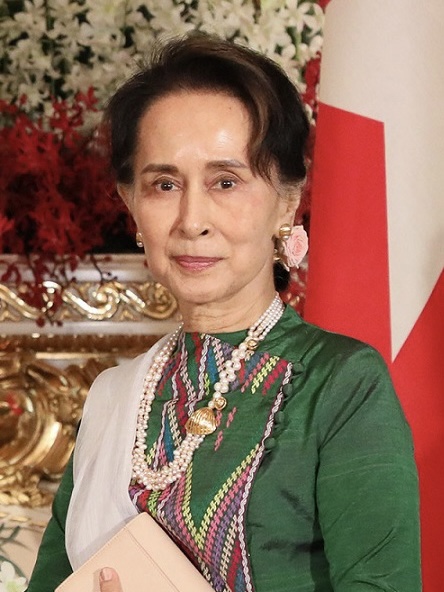
Aung San Suu Kyi’s personality is archetypically INFJ, driven by a dominant Introverted Intuition (Ni). This function manifests in her long-term, visionary focus on a free and unified Myanmar, a singular goal that has guided her entire political life. Her Ni allowed her to foresee the symbolic and strategic power of non-violent resistance, even during decades of isolation, creating a powerful long-term narrative for her movement. This inner vision is absolute and can lead to a form of ideological stubbornness, where complex realities are filtered through the lens of her core principle of national reconciliation. Her auxiliary function, Extraverted Feeling (Fe), is evident in her profound connection to the people of Myanmar, whom she refers to as her ‘family.’ It fueled her immense personal sacrifice and provided the ethical imperative for her struggle. In public, her Fe is expressed through calm, dignified, and deeply persuasive oratory, aimed at unifying and inspiring. However, it also explains her later stance during the Rohingya crisis, where her Fe appeared intensely focused on the in-group (her vision of a unified Burmese nation) at the perceived expense of an out-group, prioritizing national stability and sovereignty over universal human rights accusations. Her tertiary Introverted Thinking (Ti) supports her vision with a logical framework derived from her father’s legacy and Buddhist principles of governance, while her inferior Extraverted Sensing (Se) is seen in her periods of forced physical confinement (house arrest) and a certain detachment from immediate, chaotic realities on the ground, preferring to deal with the abstract ideal rather than messy particulars that might contradict her Ni vision.