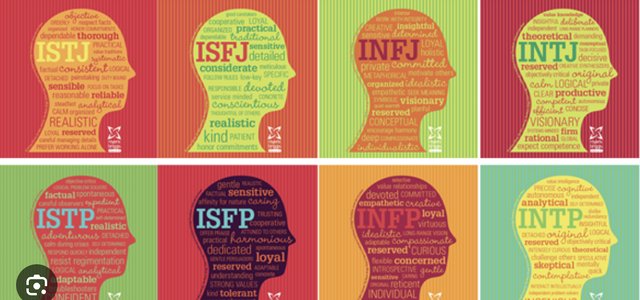
Bobby Fischer’s personality is a quintessential, albeit extreme, example of the INTJ type. His dominant Introverted Intuition (Ni) allowed him to perceive deep patterns and possibilities in chess, foreseeing complex variations and strategic outcomes far ahead of his opponents. This function manifested as an almost prophetic conviction in his ideas and an intense, singular focus on his long-term goal of becoming World Champion. His auxiliary Extroverted Thinking (Te) drove him to build efficient, logical systems for studying and mastering the game, treating chess as a solvable problem. He valued objective truth in the form of perfect play, leading to his famous demands for precise conditions during matches and his disdain for what he perceived as illogical or ‘unclean’ aspects of the chess world, like pre-arranged draws.
His tertiary Introverted Feeling (Fi) provided a strong internal value system that, while often overshadowed by his Te, fueled his fierce independence and notorious stubbornness. He made decisions based on a personal, deeply felt sense of right and wrong, which frequently clashed with external expectations. This contributed to his withdrawal from public life and his eventual rejection of the chess establishment. His inferior Extroverted Sensing (Se) was expressed in a tense, often antagonistic relationship with the immediate physical world. He could be hyper-aware of sensory details (like lighting or noise during a match) to the point of paranoia, yet he neglected his own physical well-being and surroundings, living an ascetic life wholly dedicated to his inner vision.
Fischer’s growth was stunted by a lack of balance in his cognitive stack. While his Ni-Te made him a genius at his craft, his underdeveloped Fi and Se led to significant interpersonal and real-world difficulties. His inability to integrate healthy Se contributed to conspiracy theories and a distorted view of reality, while his Fi, untempered by empathy, led to isolation and bitter feuds. His life story tragically illustrates how the INTJ’s potential for visionary mastery can be undermined when the inferior functions are not integrated, resulting in a brilliant mind becoming its own prisoner.