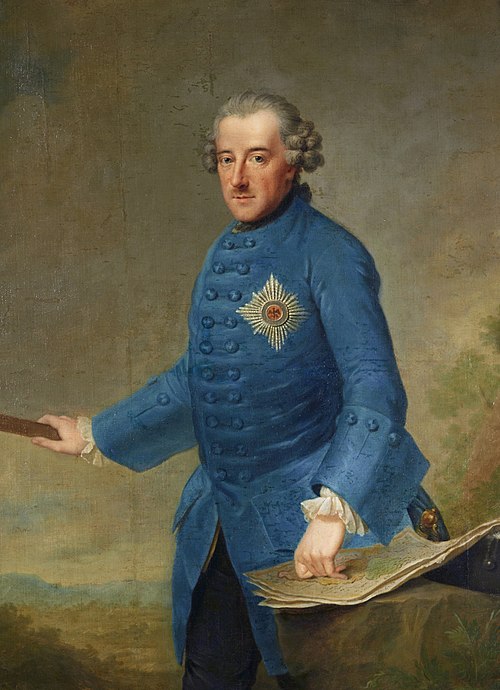
Catherine II of Russia (Catherine the Great) - ENTJ Personality Type

Catherine II of Russia (Catherine the Great)

ENTJ - Commander

Category

History

Nationality

Prussian-born, Russian ruler

Occupation

Empress Regnant of Russia

About Catherine II of Russia (Catherine the Great)

Catherine the Great was the Empress of Russia from 1762 to 1796, who significantly expanded the Russian Empire through conquest and diplomacy. She is renowned for her political acumen, ambitious modernization efforts, and patronage of the arts and education, embodying the ideals of the Enlightenment while maintaining autocratic control.

Personality Profile: ENTJ

Confidence: 85%

Personality Analysis

Catherine the Great exemplifies the ENTJ (The Commander) personality type. Her dominant Extraverted Thinking (Te) is evident in her relentless drive for efficiency, order, and tangible results. She governed as a supreme executive, implementing vast administrative, legal, and territorial reforms (like the Nakaz and the Provincial Reform) with a focus on rationalizing and strengthening the state apparatus. Her decision-making was decisive, pragmatic, and often impersonal, aimed at achieving grand strategic objectives rather than personal sentiment. Her auxiliary Introverted Intuition (Ni) provided the visionary, long-term perspective. She was deeply influenced by Enlightenment philosophers and envisioned a modern, powerful, and culturally sophisticated Russia. This Ni-Te combination allowed her to conceive grand designs (like the ‘Greek Project’ to dismantle the Ottoman Empire) and execute them with formidable organizational skill. Her tertiary Extraverted Sensing (Se) manifested in her appreciation for art, architecture, and the sensual pleasures of court life, as well as her ability to act swiftly and decisively in crises, such as the coup that brought her to power and her response to the Pugachev Rebellion. Her inferior Introverted Feeling (Fi) represents a potential growth area and blind spot. While she spoke of ‘benevolent’ rule, her actions were ultimately guided by raison d’état. Personal relationships were often secondary to political necessity, as seen in her handling of her son Paul and her numerous favorites, whom she used for both companionship and political leverage. Her low tolerance for dissent and the entrenched serfdom under her rule highlight a disconnect between enlightened ideals and the pragmatic, power-centric application of her Fi.

Supporting Evidence

Her authorship of the ‘Nakaz,’ a detailed instruction for a new law code based on Enlightenment principles, demonstrates Te-Ni systematic planning for societal reform. The bold, bloodless coup d’état against her husband, Peter III, showcases decisive Te-Se action in seizing power. Her extensive territorial expansions, including the partitions of Poland and victories against the Ottoman Empire, reflect long-term strategic Ni vision executed with Te military and diplomatic force. Her complex relationships, such as with Potemkin—a blend of romantic partnership, political alliance, and shared imperial ambition—illustrate the subordination of personal Fi to strategic Te goals. Finally, her patronage of the arts and sciences, founding the Hermitage Museum and the Smolny Institute, shows her use of Se grandeur and Ni vision to cultivate Russia’s image and intellectual capital.

Cognitive Function Stack

Confidence: 85%

The cognitive function stack represents how an individual processes information and makes decisions based on Jungian personality type theory.

Auxiliary Function: Ni

Introverted Intuition - Perceiving underlying patterns and developing long-range visions.

Dominant Function: Te

Extraverted Thinking - Organizing and structuring the external world logically and efficiently.

Inferior Function: Fi

Introverted Feeling - Making decisions based on internal values and personal ethics.

Tertiary Function: Se

Extraverted Sensing - Experiencing and interacting with the immediate environment.

Enneagram Personality Profile:

Confidence: 85%

8w7

Big Five Personality Traits

Confidence: 85%

The Big Five personality traits represent the five broad dimensions of personality that are commonly used to describe human personality.

Openness 0%
Conscientiousness 0%
Extraversion 0%
Agreeableness 0%
Neuroticism 0%

Similar ENTJ Characters

Explore other characters with similar personality traits