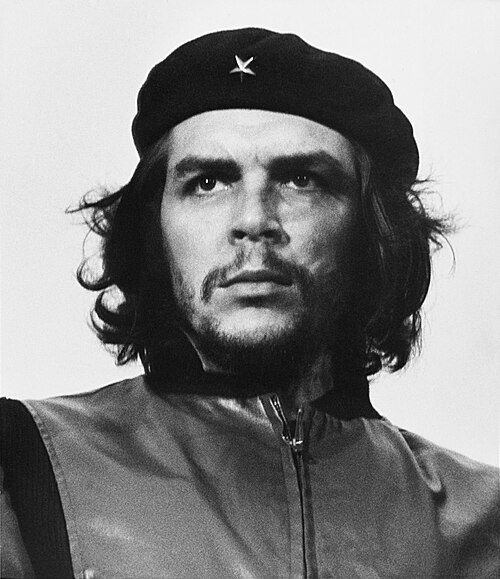
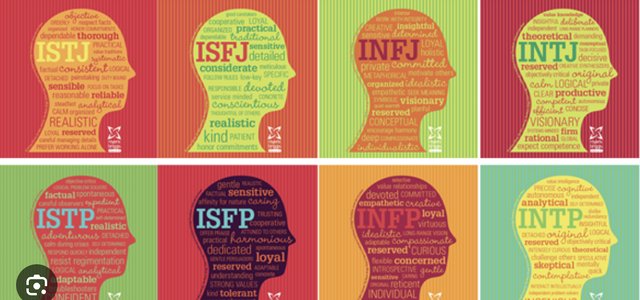
Che Guevara exemplifies the INTJ personality type through his dominant Introverted Intuition (Ni), which manifested as a singular, visionary focus on a utopian socialist future. He synthesized complex socio-economic theories into a coherent, overarching ideological framework that guided his entire life. His worldview was not a collection of disparate ideas but a holistic, forward-looking system that predicted the inevitable success of revolution through a specific, almost deterministic, historical process.
His auxiliary Extraverted Thinking (Te) was the engine of his revolutionary action. He applied his Ni vision with ruthless logistical and strategic efficiency, organizing guerrilla campaigns, managing resources, and implementing policies with a focus on systemic results. This Te function drove his famous emphasis on discipline, organization, and harsh punishment for deviation, viewing individuals as components within the larger revolutionary machine. His tertiary Introverted Feeling (Fi) provided the intense, internalized moral fervor that fueled his actions. His values of justice, equality, and anti-imperialism were deeply personal and absolute, leading to his famous asceticism and willingness to die for his beliefs, but also to a stark moral rigidity.
As an INTJ, Guevara struggled with his inferior Extraverted Sensing (Se). While he could masterfully endure and operate in harsh physical environments, he often disregarded immediate sensory realities—like the specific cultural contexts of Bolivia—in favor of his Ni-derived blueprint. His interpersonal style was often impersonal and demanding, a weakness of underdeveloped Feeling in the INTJ stack. His growth area would have involved integrating a more adaptable, present-moment awareness (Se) and a greater appreciation for individual emotional and cultural nuances, potentially making his revolutionary efforts more effective and less dogmatic.