Clarissa Dalloway - ESFJ Personality Type

Clarissa Dalloway

ESFJ - Consul

Category

Literature

Nationality

British

Occupation

Society Hostess, Politician's Wife

About Clarissa Dalloway

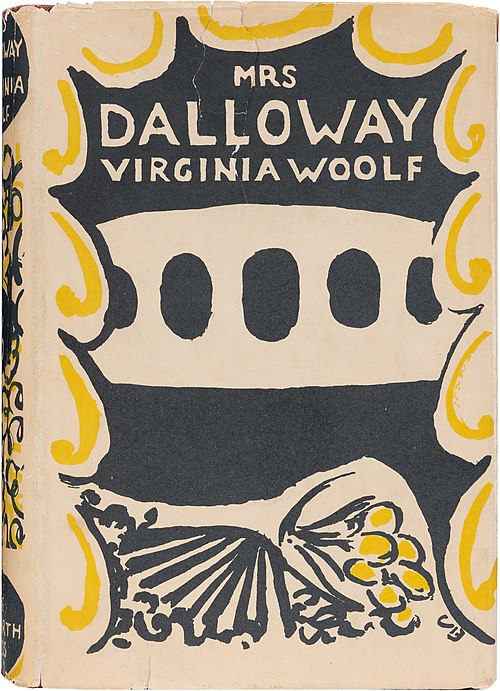
The protagonist of Virginia Woolf's 1925 novel 'Mrs. Dalloway.' She is an upper-class Englishwoman in post-World War I London, known for hosting a high-society party on a single day. Her significance lies in her complex interior life, which Woolf explores through stream-of-consciousness, revealing her regrets, social anxieties, and quest for meaning within the constraints of her role.

Personality Profile: ESFJ

Confidence: 85%

Personality Analysis

Clarissa Dalloway is a quintessential ESFJ. Her dominant cognitive function is Extraverted Feeling (Fe), which drives her entire existence. She is acutely attuned to the emotional atmosphere and social harmony of her world, defining her self-worth through her ability to host, connect people, and fulfill the expectations of her role as a society wife. Her life is a carefully curated performance of warmth and propriety aimed at creating a seamless, pleasant social fabric. Her identity is inextricably linked to her relationships and her position within her community.

Her auxiliary function is Introverted Sensing (Si), which grounds her in tradition, personal history, and concrete sensory details. She is deeply nostalgic, constantly comparing her present life to memories of her youth at Bourton, particularly her relationship with Sally Seton and Peter Walsh. These memories are vivid and sensory-rich, serving as a benchmark for her feelings and decisions. Si also manifests in her meticulous, detail-oriented approach to party planning, where familiar rituals and social norms provide a sense of security and order in a changing post-war world.

Her tertiary function, Extraverted Intuition (Ne), introduces a flickering sense of possibility and ‘what if.’ It fuels her imaginative moments, such as her identification with Septimus Warren Smith, a stranger whose tragic death she intuits at her party. Ne allows her to perceive deeper, often painful, connections beneath the social surface—the fleeting nature of life, the roads not taken. However, this function is underdeveloped compared to her Fe-Si axis, leading to anxiety and a sense of fragmentation when these possibilities clash with her duty-bound reality. Her inferior function, Introverted Thinking (Ti), represents her greatest area of neglect. She struggles with systematic, impersonal analysis of her own life’s structure. Her decisions (like marrying the reliable Richard Dalloway over the passionate Peter Walsh) are based on Fe/Si values (security, duty, social viability) rather than a coherent internal logic, leaving her with a latent, unexamined feeling of emptiness and questioning.

Supporting Evidence

Her entire day is organized around the evening party, an Fe-driven project to gather people and create harmony. She feels a profound, almost mystical connection to strangers like the old woman in the window opposite, demonstrating Fe’s broad attunement. Her memories of Bourton are detailed and sensory, classic Si, which she uses to measure her present happiness. Her immediate, empathetic reaction to hearing of Septimus’s death at her party—seeing it as a defiant act of communication rather than a mere disruption—shows a flash of Ne-informed insight. Finally, her inability to articulate a clear, logical reason for her life choices beyond social and emotional necessity (“It was her life”) points to the repressed inferior Ti.

Cognitive Function Stack

Confidence: 85%

The cognitive function stack represents how an individual processes information and makes decisions based on Jungian personality type theory.

Auxiliary Function: Si

Introverted Sensing - Recalling detailed information and maintaining traditions.

Dominant Function: Fe

Extraverted Feeling - Connecting with others and maintaining social harmony.

Inferior Function: Ti

Introverted Thinking - Analyzing and categorizing information logically and precisely.

Tertiary Function: Ne

Extraverted Intuition - Seeing possibilities and connections in the external world.

Enneagram Personality Profile:

Confidence: 85%

2w3

Big Five Personality Traits

Confidence: 85%

The Big Five personality traits represent the five broad dimensions of personality that are commonly used to describe human personality.

Openness 0%
Conscientiousness 0%
Extraversion 0%
Agreeableness 0%
Neuroticism 0%

Similar ESFJ Characters

Explore other characters with similar personality traits