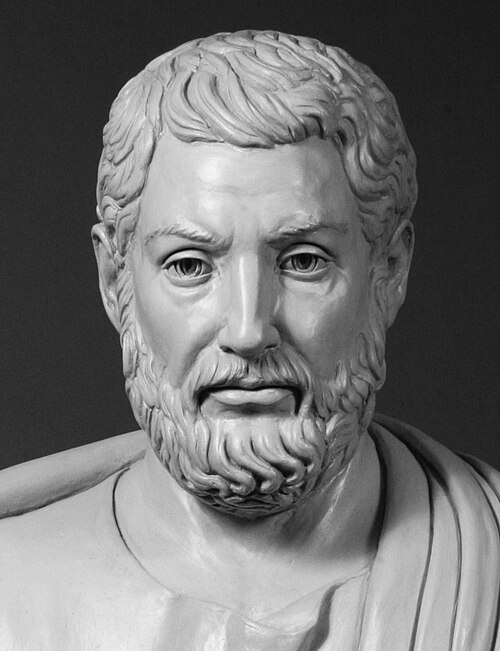
Cleisthenes exemplifies the ENTJ (The Commander) archetype, driven by a dominant Extraverted Thinking (Te) function. His actions were characterized by a relentless focus on efficiency, structure, and achieving tangible results. He did not seek to return to an idealized past or govern based on personal sentiment, but to design a new, more effective and stable political system. His reforms—like the creation of ten new tribes based on geography (deme) rather than kinship—were masterstrokes of Te, systematically dismantling old power structures (the aristocratic clans) to solve the chronic problem of factional strife.
His auxiliary Introverted Intuition (Ni) provided the visionary, long-term strategic insight. Cleisthenes didn’t just tinker with existing laws; he conceived and executed a holistic, revolutionary blueprint for Athenian society. He foresaw that a system where power was diffused among a broader citizenry (through the Council of 500 and the Assembly) would create a stronger, more unified polis. This Ni-Te combination allowed him to connect abstract concepts of political equality and civic engagement to concrete, implementable institutions.
His interpersonal dynamics and use of tertiary Extraverted Sensing (Se) are seen in his decisive, action-oriented maneuvers. When exiled by his rival Isagoras, he didn’t retreat; he rallied the common people (the demos) and, with Spartan intervention against him, he stormed back to Athens, forcing Isagoras to flee. This shows an ENTJ’s comfort with tactical, real-world confrontation and leveraging immediate circumstances. His inferior Introverted Feeling (Fi) is suggested in the relative lack of emphasis on personal moral philosophy or deep internal values in his recorded history; his legacy is the system itself, not a personal creed. His motivations appear more about order, legacy, and Athenian strength than personal emotional connection.