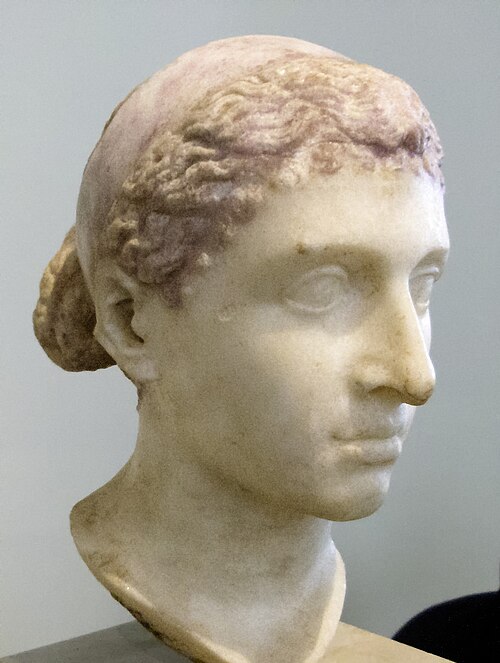
Cleopatra exemplifies the ENTJ (The Commander) archetype, driven by a dominant Extraverted Thinking (Te) function. Her entire reign was a masterclass in strategic, goal-oriented action aimed at preserving and expanding her power and Egypt’s autonomy within the Roman sphere. She was a decisive leader who restructured her kingdom’s economy and military, always with a pragmatic focus on efficiency and results. Her interpersonal dealings, from her calculated first meeting with Caesar to her political and romantic partnership with Antony, were extensions of her statecraft, chosen for their strategic utility.
Her auxiliary Introverted Intuition (Ni) provided the long-term visionary thinking behind her Te execution. She didn’t just react to events; she foresaw the shifting balance of power in the Mediterranean and crafted a grand, if ultimately doomed, strategy to position Egypt as an equal partner to Rome through her progeny. This Ni vision is evident in her self-identification as the ‘New Isis’ and her ambition to create a Greco-Roman-Egyptian dynasty that would rule the known world.
Her tertiary Extraverted Sensing (Se) manifested in her famous flair for the dramatic and immersive spectacle. She used sensory pageantry—arriving rolled in a carpet, dressing as Venus, hosting lavish events—as a calculated tool to captivate and overwhelm powerful men. This Se, however, served her Te-Ni goals; the spectacle was never an end in itself but a means of psychological and political influence. Her inferior Introverted Feeling (Fi) reveals a potential growth area and vulnerability. While deeply committed to her dynasty and Egypt, her personal values were often subsumed by strategic necessity. The emotional toll of this, and a possible deeper need for authentic connection, may have surfaced in her intense, ultimately fatal bond with Mark Antony, where strategic alliance blurred into personal devotion.