Emma Bovary - ISFP Personality Type

Emma Bovary

ISFP - Adventurer

Category

Literature

Nationality

French

Occupation

Housewife (formerly farmer's daughter)

About Emma Bovary

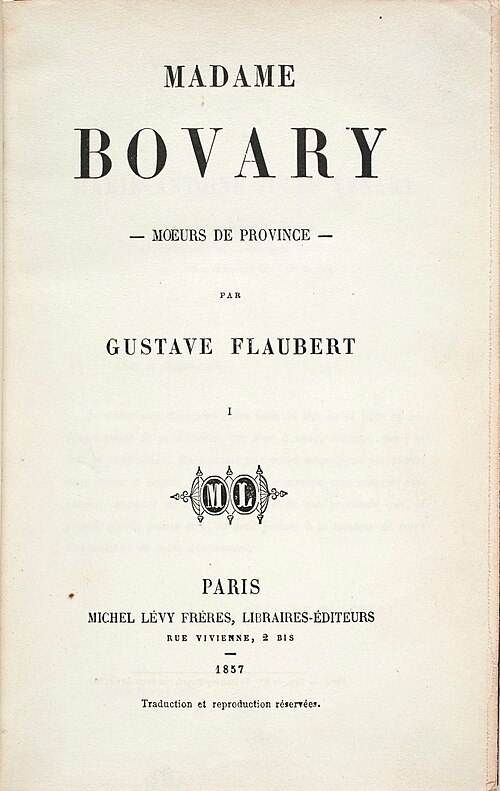
Emma Bovary is the tragic protagonist of Gustave Flaubert's 1856 novel 'Madame Bovary'. She is a deeply dissatisfied bourgeois housewife in provincial France, known for her intense romantic fantasies, extravagant materialism, and extramarital affairs, which lead to her financial ruin and suicide. Her character is a seminal critique of romanticism, societal constraints on women, and the dangers of escapism.

Personality Profile: ISFP

Confidence: 85%

Personality Analysis

Emma Bovary is a classic ISFP, dominated by Introverted Feeling (Fi). Her entire identity is built upon a deeply personal, internal value system centered on romantic passion, beauty, and transcendent experience. She judges her world—her husband Charles, her lovers, her surroundings—against this intense, subjective ideal, finding everything painfully lacking. This leads to her chronic, profound sense of alienation and unique suffering, hallmarks of a core Enneagram 4. Her auxiliary Extraverted Sensing (Se) drives her relentless pursuit of sensory gratification—luxurious fabrics, rich foods, passionate physical encounters, and the thrilling ambiance of balls and operas—as a means to fulfill her inner emotional cravings. However, this Se is in service to her Fi, not grounded in reality, making her experiences fleeting and her consumption impulsive. Her underdeveloped tertiary Introverted Intuition (Ni) manifests in a vague, fatalistic sense of a different, more glorious destiny meant for her, but she lacks the discipline to envision or build a realistic path toward it. Instead, it fuels her restlessness. Her inferior Extraverted Thinking (Te) is her greatest weakness. She is utterly incapable of practical planning, logical consequence management, or systematic organization. Her dealings with the merchant Lheureux showcase a complete failure to understand contracts, budgets, or long-term strategy, leading directly to her catastrophe. She attempts to wield Te in moments of crisis (e.g., trying to procure money) but does so erratically and ineffectively. Emma’s interpersonal dynamics are defined by her Fi-Se loop. She relates to others not as complex individuals but as instruments or actors in her personal drama—Charles as the boring prop, Rodolphe and Léon as romantic leads. Her affairs are less about the men themselves and more about the intense feelings and sensory experiences they temporarily provide. Her growth area, tragically never realized, would involve integrating a healthier Te: developing practical life skills and confronting reality with logic, or developing her Ni to find deeper meaning within her actual circumstances rather than in perpetual fantasy.

Supporting Evidence

Her entire marriage to Charles is deemed a failure not due to his cruelty (he is devoted) but because he fails to match her internal, Fi-driven ideal of a passionate, heroic lover. She plunges into extravagant debt with Lheureux, buying luxuries to create a sensory (Se) environment that matches her internal fantasy, with zero practical (Te) consideration for cost or consequence. Her affairs with Rodolphe and Léon are pursued for the intense emotional and physical sensations (Se serving Fi) they provide, and she becomes disillusioned when the reality of the men intrudes on her romantic projections. Her final, chaotic acts—begging for money from Rodolphe, Léon, and the notary, then impulsively taking arsenic—demonstrate a catastrophic failure of inferior Te under stress, leading to an escape defined by pure, feeling-based desperation.

Cognitive Function Stack

Confidence: 85%

The cognitive function stack represents how an individual processes information and makes decisions based on Jungian personality type theory.

Auxiliary Function: Se

Extraverted Sensing - Experiencing and interacting with the immediate environment.

Dominant Function: Fi

Introverted Feeling - Making decisions based on internal values and personal ethics.

Inferior Function: Te

Extraverted Thinking - Organizing and structuring the external world logically and efficiently.

Tertiary Function: Ni

Introverted Intuition - Perceiving underlying patterns and developing long-range visions.

Enneagram Personality Profile:

Confidence: 85%

4w3

Big Five Personality Traits

Confidence: 85%

The Big Five personality traits represent the five broad dimensions of personality that are commonly used to describe human personality.

Openness 0%
Conscientiousness 0%
Extraversion 0%
Agreeableness 0%
Neuroticism 0%

Similar ISFP Characters

Explore other characters with similar personality traits