Frank Herbert - INTJ Personality Type

Frank Herbert

INTJ - Architect

Category

Literature

Nationality

American

Occupation

Author, Journalist

About Frank Herbert

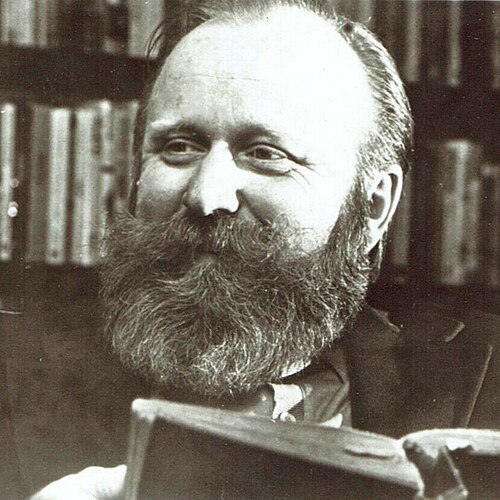
Frank Herbert was an American science fiction author, best known for his epic 1965 novel 'Dune' and its sequels. He is celebrated for creating one of the most complex and influential worlds in literature, blending intricate themes of ecology, politics, religion, and human evolution.

Personality Profile: INTJ

Confidence: 85%

Personality Analysis

Frank Herbert exhibits the hallmark traits of an INTJ personality, driven by a dominant Introverted Intuition (Ni). This function is evident in his ability to synthesize vast amounts of disparate information—from ecology and desert survival to political theory and messianic lore—into a single, cohesive, and prophetic vision in ‘Dune.’ His work is not merely storytelling but the presentation of a grand, interconnected model of human society and potential futures, a classic Ni output. He operated as a systems thinker long before the term was popular, viewing his fictional universe as a complex web of cause and effect.

His auxiliary Extraverted Thinking (Te) provided the structured, logical framework necessary to bring his visionary ideas to tangible reality. This is seen in the meticulous internal logic of the Dune universe, from the precise rules of the Bene Gesserit’s breeding program to the economic and political mechanics of the spice trade. Herbert was a researcher and journalist by trade, using Te to gather, organize, and deploy factual information to build convincing worlds. His writing style is often dense and explanatory, focused on the mechanics of the systems he created, which can sometimes prioritize idea over character emotion.

Tertiary Introverted Feeling (Fi) fueled the deep, personal convictions and moral questions at the heart of his work. While his narratives are cerebral, they are driven by his own strong values concerning ecology, the dangers of charismatic leaders, and the survival of humanity. The inferior Extraverted Sensing (Se) manifests in his vivid, immersive descriptions of the physical world—the sensory overload of Arrakis, the taste of spice, the feel of a stillsuit. However, his relationship with Se could be one of tension; his work warns against being trapped by immediate sensations and short-term gains, advocating instead for the long-term, strategic view of the Ni dominant. His growth involved successfully translating his immense internal visions (Ni) into a concrete, sensory-rich narrative (Se) that could captivate millions.

Supporting Evidence

The creation of ‘Dune’ itself is the primary evidence, stemming from five years of intensive research into topics like desert ecology, psychology, and linguistics, demonstrating Ni’s synthesizing drive and Te’s research rigor. His career path shows INTJ independence; after initial commercial failures, he persisted with his complex vision for Dune despite numerous rejections, trusting his internal framework over market trends. His non-fiction work, such as the ‘Threshold’ essay with his son, shows his constant drive to analyze and model future human societal evolution. His authorial approach was famously not character-centric but idea- and system-centric, often stepping back from characters to explain the historical, political, or ecological forces at play, a clear Ni-Te prioritization. Interviews and profiles consistently describe him as a private, intellectually intense individual who was more comfortable discussing grand ideas than engaging in small talk, aligning with INTJ social patterns.

Cognitive Function Stack

Confidence: 85%

The cognitive function stack represents how an individual processes information and makes decisions based on Jungian personality type theory.

Auxiliary Function: Te

Extraverted Thinking - Organizing and structuring the external world logically and efficiently.

Dominant Function: Ni

Introverted Intuition - Perceiving underlying patterns and developing long-range visions.

Inferior Function: Se

Extraverted Sensing - Experiencing and interacting with the immediate environment.

Tertiary Function: Fi

Introverted Feeling - Making decisions based on internal values and personal ethics.

Enneagram Personality Profile:

Confidence: 85%

5w6

Big Five Personality Traits

Confidence: 85%

The Big Five personality traits represent the five broad dimensions of personality that are commonly used to describe human personality.

Openness 0%
Conscientiousness 0%
Extraversion 0%
Agreeableness 0%
Neuroticism 0%

Similar INTJ Characters

Explore other characters with similar personality traits