Franklin Delano Roosevelt - ENFJ Personality Type

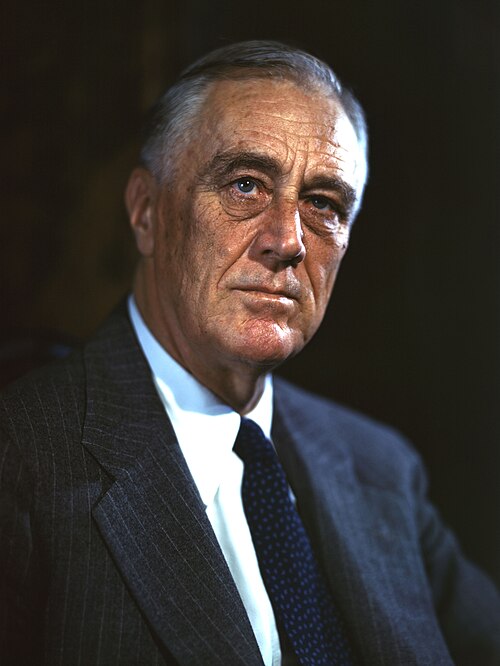
Franklin Delano Roosevelt

ENFJ - Protagonist

Category

Politics

Nationality

United States

Occupation

Politician, President of the United States

About Franklin Delano Roosevelt

Franklin D. Roosevelt was the 32nd President of the United States, serving an unprecedented four terms from 1933 until his death in 1945. He is best known for his leadership during the Great Depression, where he implemented the New Deal, and during World War II, guiding the Allied strategy.

Personality Profile: ENFJ

Confidence: 85%

Personality Analysis

FDR is a classic ENFJ, driven by Extraverted Feeling (Fe). His primary motivation was to harmonize and uplift the nation, famously stating ‘the only thing we have to fear is fear itself.’ His leadership style was intensely interpersonal, focusing on public morale and connection through tools like his ‘Fireside Chats.’ He possessed a keen ability to read the emotional climate and tailor his message to provide reassurance and hope, acting as the nation’s empathetic caretaker (aligning with Enneagram 2’s desire to be helpful and needed).

His auxiliary Introverted Intuition (Ni) provided the visionary foresight that guided his long-term strategies. He anticipated the threats of fascism and the need for collective security long before the public was ready, and his New Deal, while pragmatic and experimental, was underpinned by a core vision of a more equitable and secure society. This Ni-Fe combination allowed him to sell grand, complex ideas in simple, emotionally resonant terms, making him a master of persuasion.

Tertiary Extraverted Sensing (Se) manifested in his pragmatic, ‘try something’ approach to policy and his enjoyment of the tangible pleasures of life, such as sailing and social gatherings, despite his physical limitations. It also contributed to his ability to act decisively in a crisis. His inferior Introverted Thinking (Ti) is seen in his occasional dismissal of rigid ideological consistency or detailed systemic analysis in favor of what ‘felt’ right and worked politically. Critics sometimes noted a lack of deep, logical coherence in his policies, which were often a bundle of sometimes contradictory programs aimed at achieving his Fe-Ni goals of stability and progress.

Supporting Evidence

His ‘Fireside Chats’ are a quintessential example of dominant Fe, using a warm, conversational tone to directly calm and unite a frightened public. The First Hundred Days and the experimental nature of the New Deal programs demonstrate auxiliary Ni vision supported by tertiary Se pragmatism—launching bold initiatives quickly to see what worked. His ability to build and manage the ‘Big Three’ alliance with Churchill and Stalin, despite profound differences, showcases his Fe-driven diplomatic skill in creating harmony for a larger goal. His concealment of the severity of his polio paralysis, projecting vigor and optimism, illustrates the ENFJ’s tendency to manage external perception to maintain group morale and his own leadership image.

Cognitive Function Stack

Confidence: 85%

The cognitive function stack represents how an individual processes information and makes decisions based on Jungian personality type theory.

Auxiliary Function: Ni

Introverted Intuition - Perceiving underlying patterns and developing long-range visions.

Dominant Function: Fe

Extraverted Feeling - Connecting with others and maintaining social harmony.

Inferior Function: Ti

Introverted Thinking - Analyzing and categorizing information logically and precisely.

Tertiary Function: Se

Extraverted Sensing - Experiencing and interacting with the immediate environment.

Enneagram Personality Profile:

Confidence: 85%

2w3

Big Five Personality Traits

Confidence: 85%

The Big Five personality traits represent the five broad dimensions of personality that are commonly used to describe human personality.

Openness 0%
Conscientiousness 0%
Extraversion 0%
Agreeableness 0%
Neuroticism 0%

Similar ENFJ Characters

Explore other characters with similar personality traits