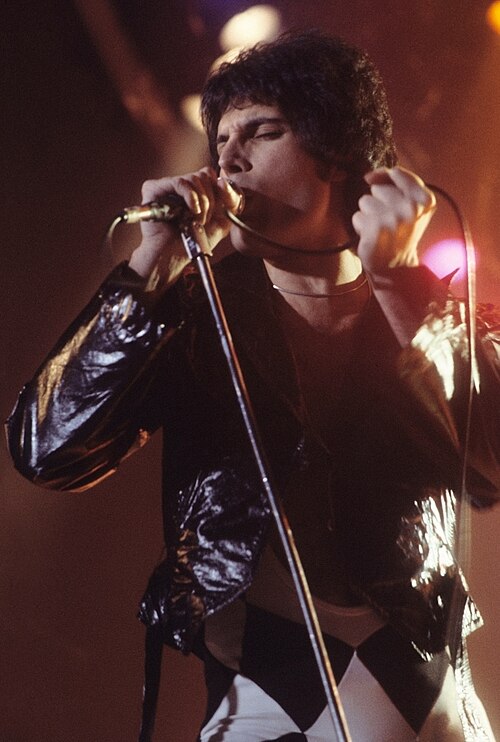
Freddie Mercury embodies the ESFP personality type, driven by a dominant Extraverted Sensing (Se) function. He lived intensely in the present moment, absorbing the energy of the crowd and translating it into electrifying, physically dynamic performances. His world was one of sensory spectacle—vibrant costumes, theatrical staging, and powerful vocal delivery—all aimed at creating an unforgettable, immersive experience for himself and the audience. This Se dominance fueled his spontaneity, love for pleasure, and ability to command the stage with unparalleled presence.
His auxiliary Introverted Feeling (Fi) provided the internal compass for his artistry. While his performances were outwardly extravagant, his songwriting and lyrical themes often explored deep, personal emotions of love, pain, and identity (‘Love of My Life,’ ‘Somebody to Love’). His decisions, from his stage persona to his musical direction, were guided by a strong, personal value system and a desire for authentic self-expression, even when that expression was complex and unconventional.
The tertiary Extraverted Thinking (Te) emerged in his pragmatic, decisive leadership within Queen. He was known for his sharp, direct critiques in the studio (‘darlings’ and all), pushing the band toward excellence with a clear vision of the final product. He efficiently organized and executed ambitious projects like the 1985 Live Aid performance. His inferior Introverted Intuition (Ni) represented a growth area; while he had visionary flashes for Queen’s musical legacy, he could be impulsive, avoiding deep future planning in his personal life, which sometimes led to chaotic periods before he ultimately focused his vision on his final creative output.