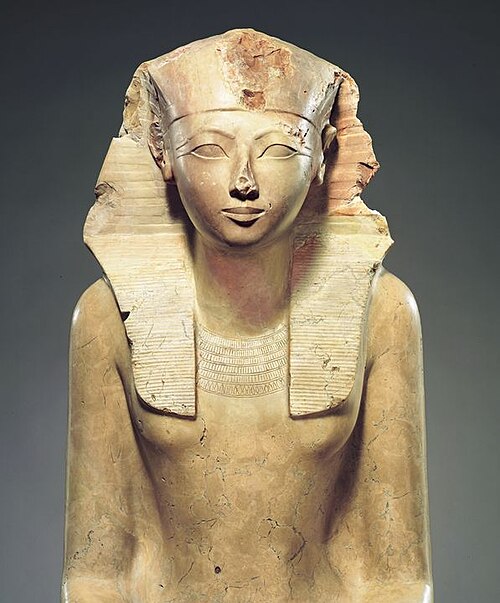
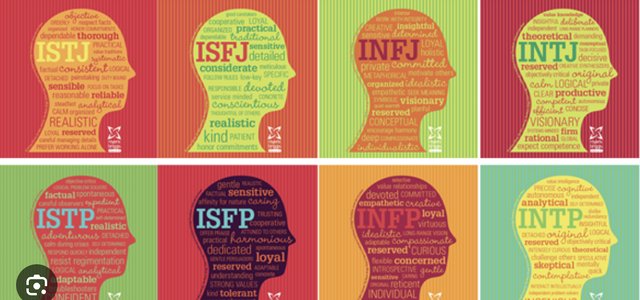
Hatshepsut exemplifies the INTJ personality type through her visionary leadership and systematic execution. Her dominant Introverted Intuition (Ni) is evident in her long-term strategic vision for Egypt’s prosperity and her own legacy. She did not merely react to events but conceived and implemented a grand plan for economic stability, architectural magnificence, and ideological reinforcement of her reign. This forward-thinking is most clearly seen in the design and purpose of her mortuary temple, which served both religious and political ends for centuries to come. Her auxiliary Extraverted Thinking (Te) drove the pragmatic and efficient execution of these visions. She organized and deployed resources effectively, whether for monumental construction or the famed expedition to the Land of Punt. Her reign was characterized by order, logistical mastery, and a focus on tangible results over sentiment. In interpersonal and political dynamics, Hatshepsut likely operated from her tertiary Introverted Feeling (Fi), which provided a strong internal sense of identity and right to rule. This fueled her ambition and the unique, self-confident solution she crafted to the problem of female kingship, adopting the full regalia and titles of a male pharaoh. Her inferior Extraverted Sensing (Se) might manifest in the grandeur and physical symbolism of her monuments, but her overall style was more cerebral and detached from immediate sensory indulgence. A growth area for an INTJ, especially in her position, would be navigating interpersonal alliances and potential resentment from traditionalists, which history suggests she managed adeptly for decades through a combination of competence, propaganda, and co-opting key supporters.