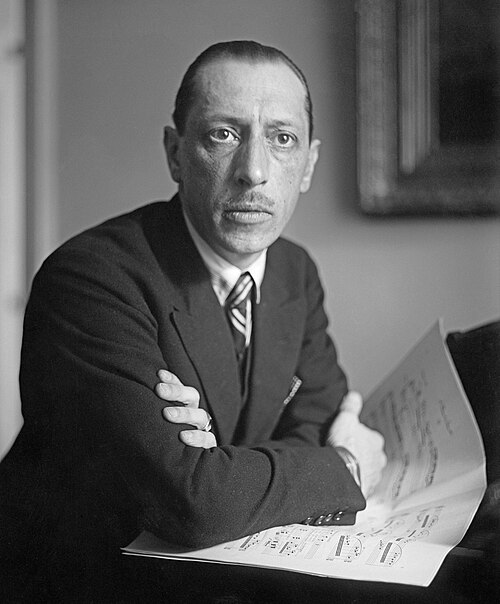
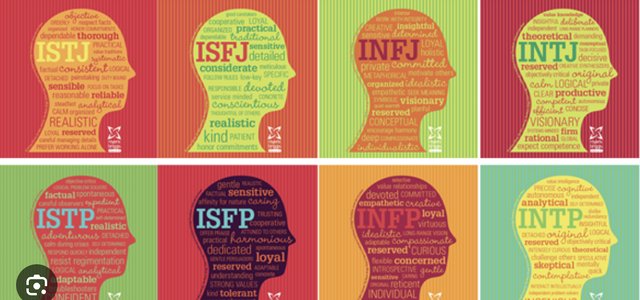
Igor Stravinsky’s personality archetype is a quintessential INTJ, the ‘Architect.’ His dominant Introverted Intuition (Ni) is evident in his visionary, future-oriented approach to composition. He did not merely build upon existing tradition; he foresaw new musical architectures and brought them into being through works like ‘The Rite of Spring,’ which constructed a complex, ritualistic soundscape from a singular, primal concept. His mind worked synthetically, drawing from disparate sources (Russian folklore, Baroque forms, jazz) to create entirely novel, coherent systems. His auxiliary Extraverted Thinking (Te) provided the disciplined, logical framework necessary to execute these grand visions. Stravinsky was a master of structural control, famously stating ‘my music is best understood through the performance of it.’ This reflects a Te-driven focus on objective function, precision, and the efficient organization of musical materials. His scores are famously exacting, leaving little to chance, and he was known for being pragmatic and businesslike in his professional contracts and collaborations. The tertiary Introverted Feeling (Fi) manifested in a fierce, internal sense of artistic integrity and independence. While he adapted to external circumstances (exile, wars, changing trends), his core aesthetic convictions were non-negotiable. This created a persona that could seem aloof or stubborn, as his personal values dictated his artistic path regardless of public or critical reaction. His inferior Extraverted Sensing (Se) appears in his intense, almost visceral manipulation of raw sonic material—the explosive rhythms, striking dissonances, and brilliant orchestral colors—yet these sensory explosions were always tightly governed by his Ni-Te framework. In times of stress, a preoccupation with control could tip into rigidity or outbursts of temperament.