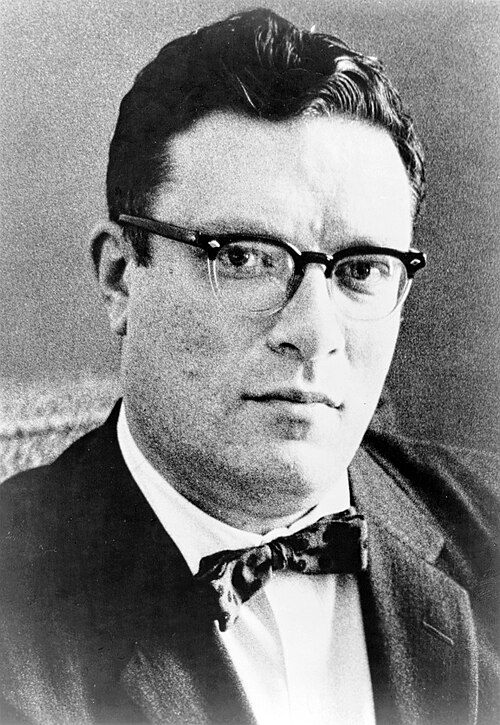
Isaac Asimov exemplifies the INTJ personality type, driven by a dominant Introverted Intuition (Ni). His genius lay in synthesizing vast amounts of information into coherent, predictive systems and grand narratives. His Foundation series is a direct manifestation of Ni, exploring the concept of psychohistory—a mathematical prediction of large-scale societal trends. He was a visionary who saw patterns and possibilities far beyond the present, constructing intricate fictional universes governed by internal logic (like the Three Laws of Robotics) that felt inevitable and real. His auxiliary Extraverted Thinking (Te) was expressed through his immense productivity, systematic approach to writing, and clear, logical prose. He applied Te to organize his ideas and his life, maintaining a rigorous work schedule and valuing factual accuracy and efficiency in communication, whether in fiction or non-fiction. Asimov’s tertiary Introverted Feeling (Fi) is seen in his strong, privately held values of rational humanism, optimism about science and knowledge, and a quiet but firm sense of his own intellectual identity. His inferior Extraverted Sensing (Se) manifested in his noted fear of flying and general preference for the world of ideas over physical adventure or spontaneity. His ‘growth area’ as an INTJ was perhaps in interpersonal dynamics, where he could be brusque or intellectually domineering, though often charmingly so.