Isaac Newton - INTJ Personality Type

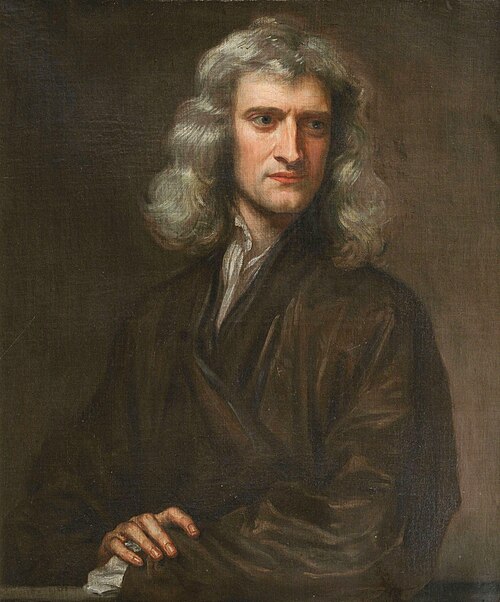
Isaac Newton

INTJ - Architect

Category

Science

Nationality

England

Occupation

Mathematician, Physicist, Astronomer, Natural Philosopher

About Isaac Newton

Sir Isaac Newton was an English mathematician, physicist, and astronomer, widely regarded as one of the most influential scientists of all time. He formulated the laws of motion and universal gravitation, laying the foundation for classical mechanics, and co-developed calculus, revolutionizing mathematics and science.

Personality Profile: INTJ

Confidence: 85%

Personality Analysis

Newton is a quintessential INTJ, driven by a dominant Introverted Intuition (Ni). This function manifests in his ability to synthesize disparate observations—like the fall of an apple and the motion of the moon—into a single, elegant, and universal theory of gravitation. His Ni provided him with profound visionary insights into the fundamental laws governing the universe, seeing the underlying patterns where others saw only chaos. He was a consummate systems-builder, seeking to create a complete, unified mathematical framework for physics and the cosmos. His auxiliary Extraverted Thinking (Te) is evident in his rigorous, logical, and empirical methodology, as detailed in the ‘Principia Mathematica.’ He demanded precise, verifiable results and constructed his arguments with ironclad logic. However, his Te was often impersonal and ruthless, not just in his science but in his dealings with others, such as in his infamous disputes with Robert Hooke and Gottfried Leibniz. His tertiary Introverted Feeling (Fi) fueled a strong, private sense of conviction and moral righteousness about his own work, often leading to intense personal investment in his ideas and a view of competitors as adversaries challenging a personal truth. His inferior Extraverted Sensing (Se) was a notable area of neglect and occasional overcompensation. He was famously absent-minded and neglectful of his physical surroundings and appearance, deeply lost in his internal world of thought. However, in his later role as Warden of the Royal Mint, he applied his Te with ruthless Se-driven efficiency, personally pursuing and prosecuting counterfeiters with surprising vigor and attention to gritty detail, showing a rare engagement with the tangible, immediate world.

Supporting Evidence

His development of calculus and the laws of motion in near-total isolation during his ‘annus mirabilis’ at Woolsthorpe demonstrates intense Ni-Te focus. His monumental work, ‘Philosophiæ Naturalis Principia Mathematica,’ showcases his Te-driven need for a systematic, logical, and mathematically rigorous proof of his Ni-inspired universal principles. His protracted, bitter priority disputes, particularly with Leibniz over calculus, reveal his Fi-fueled personal conviction and possessiveness over his ideas, coupled with a Te ruthlessness in defending his intellectual territory. His later career at the Royal Mint, where he applied systematic analysis to the physical problem of counterfeiting and pursued criminals with relentless energy, illustrates a late-life engagement with his inferior Se, applying his dominant functions to a concrete, sensory world.

Cognitive Function Stack

Confidence: 85%

The cognitive function stack represents how an individual processes information and makes decisions based on Jungian personality type theory.

Auxiliary Function: Te

Extraverted Thinking - Organizing and structuring the external world logically and efficiently.

Dominant Function: Ni

Introverted Intuition - Perceiving underlying patterns and developing long-range visions.

Inferior Function: Se

Extraverted Sensing - Experiencing and interacting with the immediate environment.

Tertiary Function: Fi

Introverted Feeling - Making decisions based on internal values and personal ethics.

Enneagram Personality Profile:

Confidence: 85%

5w6

Big Five Personality Traits

Confidence: 85%

The Big Five personality traits represent the five broad dimensions of personality that are commonly used to describe human personality.

Openness 0%
Conscientiousness 0%
Extraversion 0%
Agreeableness 0%
Neuroticism 0%

Similar INTJ Characters

Explore other characters with similar personality traits