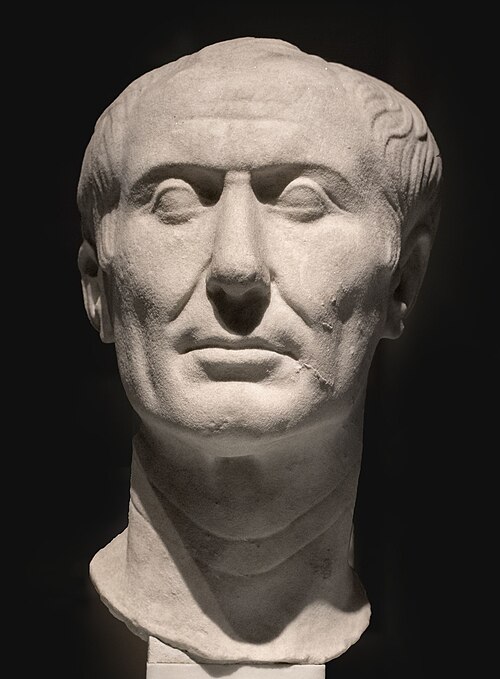
Julius Caesar exemplifies the ENTJ (The Commander) personality type, driven by Extraverted Thinking (Te) as his dominant function. This manifests in his unparalleled ability to organize, command, and implement large-scale systems with ruthless efficiency. He was a master of logistics, military strategy, and political maneuvering, all focused on achieving tangible results and expanding his power and influence. His leadership style was direct, commanding, and oriented towards decisive action, as seen in his famous crossing of the Rubicon, a point of no return taken with calculated speed.
His auxiliary function, Introverted Intuition (Ni), provided the visionary, long-term strategic foresight. Caesar didn’t just win battles; he envisioned a new political order for Rome and systematically worked to make it a reality. His reforms of the calendar, debt laws, and provincial administration were part of a grand blueprint to consolidate power and stabilize the empire under his control. This Ni-Te combination allowed him to see the interconnected patterns of politics and war and devise masterful plans to exploit them.
His tertiary Extraverted Sensing (Se) contributed to his boldness, charisma, and ability to act swiftly in the moment. He was known for his personal bravery in battle, his energetic lifestyle, and his ability to read a room or a battlefield instantly. His inferior function, Introverted Feeling (Fi), represents his potential blind spot. While capable of deep personal loyalty to some (like his soldiers), his overarching ambition and focus on systemic power often overrode personal moral considerations or empathy for those who stood in his way, leading to perceptions of arrogance and tyranny that ultimately provoked his assassination.