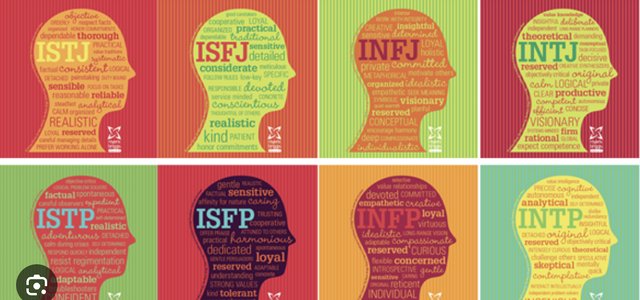
Ken Griffin exhibits the classic hallmarks of an INTJ (The Architect) personality type. His dominant Introverted Intuition (Ni) drives his ability to synthesize vast amounts of market data into a cohesive, long-term vision for his firms. He is not a short-term speculator but a builder of enduring financial systems and institutions, as seen in the creation of both Citadel’s hedge fund and its market-making arm. This forward-thinking, pattern-oriented cognition allows him to anticipate market shifts and position his companies accordingly, often years in advance.
His auxiliary Extroverted Thinking (Te) is the engine that executes this vision with ruthless efficiency. Griffin is renowned for a hyper-logical, results-oriented leadership style. He demands excellence and precision, creating a high-performance culture at Citadel where decisions are driven by data and empirical evidence. This Te-Fi (tertiary Introverted Feeling) combination manifests as a strong internal set of principles about winning, legacy, and meritocracy, which fuels his immense ambition (Enneagram 3) but is often guarded from public view. His competitive nature is not just for wealth but for building an entity that outlasts and out-performs all others.
In interpersonal dynamics, Griffin maintains the INTJ’s characteristic reserve. He is intensely private, controlling his public image carefully and avoiding the social spotlight unless it serves a strategic purpose for his business or philanthropic goals. While he can be charismatic in controlled settings, he is not naturally gregarious; his social energy is focused on recruiting talent, persuading investors, and influencing policy. Relationships are often transactional or aligned with long-term objectives.
Growth areas for an INTJ like Griffin typically involve engaging with the inferior function, Extroverted Sensing (Se). This can involve appreciating present-moment realities beyond the strategic plan, potentially leading to a more balanced lifestyle and greater openness to spontaneous feedback. There is also room for development in the realm of tertiary Fi, moving from a private value system to one that more openly acknowledges the human element within his vast organization, fostering loyalty beyond mere performance metrics.