Lelouch vi Britannia - INTJ Personality Type

Lelouch vi Britannia

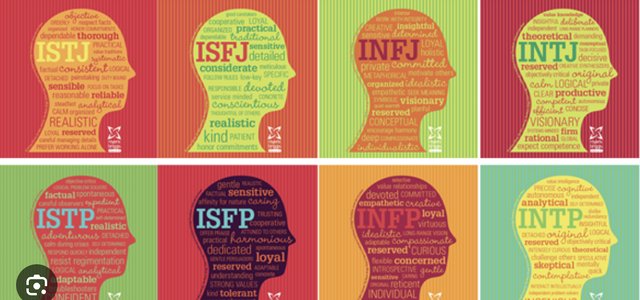
INTJ - Architect

Category

Anime

Nationality

Britannian (fictional empire)

Occupation

Student (cover), Revolutionary Leader / Strategist

About Lelouch vi Britannia

Lelouch is the exiled prince of the Holy Britannian Empire and the protagonist of the anime series Code Geass. He is known for his brilliant strategic mind and his acquisition of the supernatural power of Geass, which allows him to command absolute obedience. He becomes the masked revolutionary leader 'Zero' to destroy the empire and create a gentler world for his sister.

Personality Profile: INTJ

Confidence: 85%

Personality Analysis

Lelouch vi Britannia is a quintessential INTJ, defined by his dominant Introverted Intuition (Ni) and auxiliary Extraverted Thinking (Te). His Ni manifests as an unparalleled ability to see the ‘big picture,’ weaving countless variables into a single, complex long-term vision—the destruction of Britannia and the creation of a new world. He operates not by reacting to events, but by orchestrating them, foreseeing outcomes dozens of steps ahead. His Te is the engine that executes this vision with ruthless efficiency. He values competence, logical outcomes, and effective systems, using his commanding presence as Zero to direct resources and people as pieces on a chessboard. He disdains inefficiency and sentimentality that interferes with the plan. His tertiary Introverted Feeling (Fi) is the hidden core of his motivation, providing the intense, personal values that fuel his entire crusade: love for his sister Nunnally and a burning hatred for his father and the empire that abandoned them. However, this Fi is subordinated to his Te and Ni, leading him to justify horrific acts for his ‘right’ cause. His inferior Extraverted Sensing (Se) emerges under extreme stress as impulsivity or a reckless indulgence in the immediate moment (e.g., high-stakes gambling). When integrated, it allows him to be a captivating performer as Zero and make sharp, real-time tactical adjustments. Interpersonally, Lelouch is a master manipulator who keeps everyone at a distance. He forms few genuine connections, viewing most people as tools to be used in his grand design. His growth arc involves grappling with the consequences of his methods and the loneliness his path creates, slowly and painfully recognizing the value of trust and the human cost of his revolution, though he never wavers from his ultimate goal.


Supporting Evidence

His entire identity as Zero is a testament to Ni-Te planning, creating a symbolic figurehead to unite the Japanese resistance while meticulously calculating every public appearance and battle for maximum psychological and strategic impact. The ‘Black Knights’ rebellion is not an organic movement but a system he engineers and controls. His use of the Geass power is a clinical application of Te—a tool to be deployed efficiently to eliminate obstacles, gather information, or ensure loyalty, often with cold disregard for the autonomy of those he commands. The pivotal moment where he commands Euphemia to slaughter the Japanese is a dark fusion of Ni (a sudden, horrific vision of a forced peaceful outcome) and unprocessed inferior Se (a panicked, impulsive command to stop it), showcasing a catastrophic failure of his usual controlled demeanor. Finally, his meticulously orchestrated ‘Zero Requiem’ plan is the ultimate Ni vision, a self-sacrificial scheme designed to redirect the world’s hatred onto himself to achieve lasting peace, demonstrating his Fi-driven values executed with Te-like precision.

Cognitive Function Stack

Confidence: 85%

The cognitive function stack represents how an individual processes information and makes decisions based on Jungian personality type theory.

Auxiliary Function: Te

Extraverted Thinking - Organizing and structuring the external world logically and efficiently.

Dominant Function: Ni

Introverted Intuition - Perceiving underlying patterns and developing long-range visions.

Inferior Function: Se

Extraverted Sensing - Experiencing and interacting with the immediate environment.

Tertiary Function: Fi

Introverted Feeling - Making decisions based on internal values and personal ethics.

Enneagram Personality Profile:

Confidence: 85%

8w7

Big Five Personality Traits

Confidence: 85%

The Big Five personality traits represent the five broad dimensions of personality that are commonly used to describe human personality.

Openness 0%
Conscientiousness 0%
Extraversion 0%
Agreeableness 0%
Neuroticism 0%

Similar INTJ Characters

Explore other characters with similar personality traits