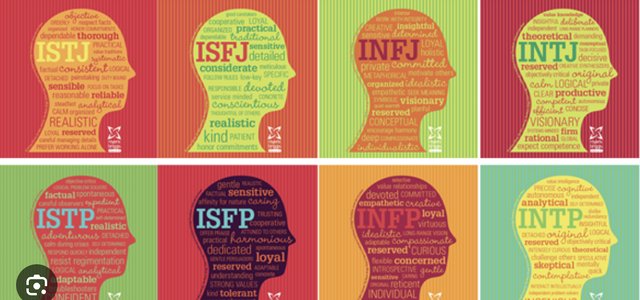
Margaret Hamilton exemplifies the INTJ personality type through her dominant Introverted Intuition (Ni). This function allowed her to envision complex, long-term systems and foresee potential points of failure in the Apollo software long before they occurred. Her ability to conceptualize the entire mission’s software architecture and the interactions between its myriad components was a hallmark of her strategic, future-oriented Ni thinking. She was not just coding for the expected path; she was building a system robust enough to handle the unexpected.
Her auxiliary Extraverted Thinking (Te) is evident in her pragmatic, results-driven leadership. She organized her team with clear, logical directives and established rigorous development processes. Hamilton valued efficiency, precision, and demonstrable correctness above all, insisting on exhaustive testing and error-checking protocols. This Te function channeled her Ni visions into concrete, executable plans and high-integrity code. Her coining of the term ‘software engineering’ itself reflects a Te desire to impose a disciplined, systematic framework on what was then considered an art.
Tertiary Introverted Feeling (Fi) provided an internal compass of conviction and values. Her dedication to the mission’s success and the safety of the astronauts went beyond professional duty; it was a personal commitment to a monumental human achievement. This quiet passion fueled her relentless work ethic. The inferior Extraverted Sensing (Se) in an INTJ can manifest as a disregard for physical immediacy or conventional social niceties when engrossed in a project, but it can also emerge under stress as a hyper-focus on concrete details. Hamilton’s legendary focus on the specific lines of code that saved Apollo 11 from an overload during descent shows a mastery of Se-in-the-service-of-Ni, grounding her abstract vision in lifesaving, real-time action.