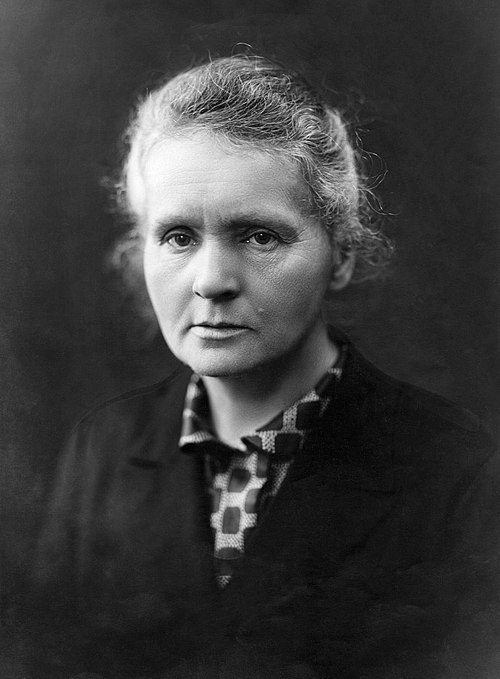
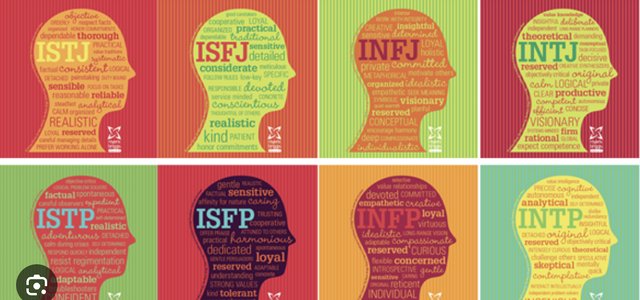
Marie Curie exemplifies the INTJ personality type, driven by a powerful visionary intuition (Ni) that allowed her to perceive the profound implications of radioactivity long before it was a formalized field. Her dominant Ni was focused on a singular, long-term goal: understanding the nature of atomic energy. This internal vision was so compelling that it fueled her through years of grueling, physically demanding work in a makeshift laboratory. She was not merely collecting data; she was building a new theoretical framework from her insights.
Her auxiliary function, Extraverted Thinking (Te), was the engine that executed her vision with ruthless efficiency and logic. She developed meticulous, systematic methods to process tons of pitchblende ore, a task requiring immense organization and practical problem-solving. Her Te is evident in her precise record-keeping, her clear and direct scientific publications, and her pragmatic approach to research. She valued what worked and what produced verifiable results, a hallmark of Te.
Her tertiary Introverted Feeling (Fi) provided the deep-seated passion and personal conviction that undergirded her work. Her drive was not for fame, but for the intrinsic value of discovery and its potential benefit to humanity. This is seen in her refusal to patent the radium-isolation process, believing scientific knowledge should be shared. Her inferior Extraverted Sensing (Se) manifested in her almost reckless physical endurance in the lab, ignoring immediate bodily discomfort and danger from radiation exposure in pursuit of her Ni vision, a common INTJ blind spot regarding present-moment physical realities.