Wolfgang Amadeus Mozart - ESFP Personality Type

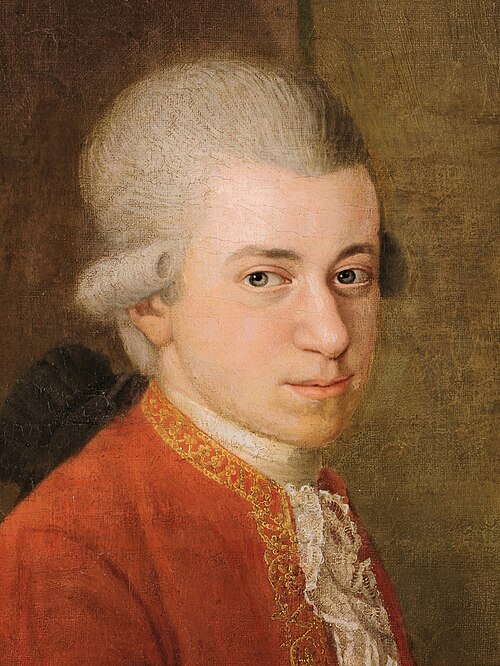
Wolfgang Amadeus Mozart

ESFP - Entertainer

Category

Music

Nationality

Austrian

Occupation

Composer, Musician

About Wolfgang Amadeus Mozart

Wolfgang Amadeus Mozart was an Austrian composer and musical prodigy of the Classical era. He is one of the most significant and enduringly popular composers in Western music history, known for his prolific output, melodic genius, and mastery of symphonic, operatic, chamber, and choral music.

Personality Profile: ESFP

Confidence: 85%

Personality Analysis

Mozart’s personality is a classic representation of an ESFP (The Entertainer) with dominant Extraverted Sensing (Se) and auxiliary Introverted Feeling (Fi). His dominant Se was expressed through an intense immersion in the physical and sensory world. He was captivated by sound, texture, and immediate experience, composing with a spontaneous flow of ideas that seemed to emerge fully formed. He lived vibrantly in the present moment, seeking novelty, pleasure, and social interaction, which fueled his creative process and often led to a lavish lifestyle. This Se-dominance aligns with his legendary ability to compose rapidly, sometimes finishing entire scores in his head before writing them down, and his love for parties, games, and witty conversation.

His auxiliary Introverted Feeling (Fi) provided the inner framework for his artistic expression. While he was an extroverted performer, his music and personal values came from a deep, internal well of emotion and personal conviction. His compositions are not just technically brilliant but profoundly expressive, communicating complex human feelings. This Fi contributed to his stubborn independence and disdain for hierarchical authority, as seen in his turbulent relationship with his employer, the Archbishop of Salzburg. He made decisions based on his personal sense of what was right or fulfilling, rather than external pressure, valuing authenticity above all.

His tertiary Extraverted Thinking (Te) manifested in his practical, results-oriented approach to his craft. He was a meticulous worker who could organize his prolific musical ideas with incredible efficiency, often meeting tight deadlines. However, this function was less developed, leading to paradoxical behavior: he was a master of his professional domain but notoriously poor at managing his personal finances and long-term security. His inferior Introverted Intuition (Ni) represents his growth area and point of stress. He struggled with abstract, long-term planning and could be myopic about his future. Under pressure, he might have experienced bouts of anxiety or dark premonitions about fate, which occasionally surface in works like his Requiem Mass in D minor, but his default mode was firmly rooted in the tangible, immediate present.

Supporting Evidence

His prolific and spontaneous composition process, such as writing the overture to ‘Don Giovanni’ on the night before its premiere, demonstrates dominant Se. His rebellious decision to leave the secure but stifling court of the Archbishop of Salzburg to pursue freelance work in Vienna, despite significant risk, highlights strong auxiliary Fi prioritizing personal freedom and authenticity. His legendary ability to absorb and instantly elaborate on musical themes in social settings, like after hearing Allegri’s Miserere once, shows Se’s real-time processing. His chaotic personal finances and love for extravagant clothing, parties, and billiards illustrate a life driven by sensory enjoyment (Se) and a lack of future-oriented planning (inferior Ni). Finally, the deep, personalized emotional expression in his letters and music, such as the poignant grief in his Masonic Funeral Music, reveals the rich inner world of his Fi.

Cognitive Function Stack

Confidence: 85%

The cognitive function stack represents how an individual processes information and makes decisions based on Jungian personality type theory.

Auxiliary Function: Fi

Introverted Feeling - Making decisions based on internal values and personal ethics.

Dominant Function: Se

Extraverted Sensing - Experiencing and interacting with the immediate environment.

Inferior Function: Ni

Introverted Intuition - Perceiving underlying patterns and developing long-range visions.

Tertiary Function: Te

Extraverted Thinking - Organizing and structuring the external world logically and efficiently.

Enneagram Personality Profile:

Confidence: 85%

7w8

Big Five Personality Traits

Confidence: 85%

The Big Five personality traits represent the five broad dimensions of personality that are commonly used to describe human personality.

Openness 0%
Conscientiousness 0%
Extraversion 0%
Agreeableness 0%
Neuroticism 0%

Similar ESFP Characters

Explore other characters with similar personality traits