Fitzwilliam Darcy - INTJ Personality Type

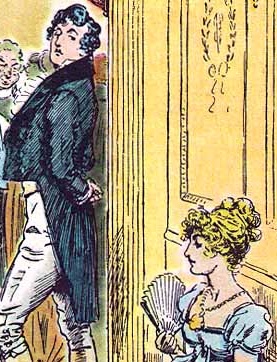
Fitzwilliam Darcy

INTJ - Architect

Category

Literature

Nationality

British

Occupation

Landowner and Gentleman

About Fitzwilliam Darcy

Mr. Darcy is the wealthy, aristocratic protagonist of Jane Austen's 1813 novel 'Pride and Prejudice'. He is initially perceived as aloof, proud, and disdainful of the country society, but is revealed to be a deeply principled, intelligent, and loyal man. He is best known for his complex relationship with Elizabeth Bennet and his iconic character arc from pride to humility and love.

Personality Profile: INTJ

Confidence: 85%

Personality Analysis

Fitzwilliam Darcy is a quintessential INTJ. His dominant Introverted Intuition (Ni) is evident in his long-term strategic vision for his estate and family legacy, and his ability to foresee social consequences, such as the potential disgrace the Bennet family could face. He operates from a deep internal framework of how the world should be, which initially manifests as a harsh, judgmental outlook. His auxiliary Extraverted Thinking (Te) drives his efficient management of Pemberley and his direct, often blunt, communication style when he believes he is stating facts, as seen in his disastrous first proposal. This Te-Ni combination makes him a formidable problem-solver, as demonstrated by his quiet, effective resolution of the Lydia-Wickham scandal. His tertiary Introverted Feeling (Fi) is the source of his strong, private moral code and his intense, unwavering love for Elizabeth, which he struggles to express until his values are fundamentally challenged. His inferior Extraverted Sensing (Se) emerges in moments of stress or deep feeling, such as his restless pacing after Elizabeth’s rejection or the heightened sensory detail of his environment at Pemberley when he unexpectedly encounters her there. His growth arc involves integrating this inferior function, learning to be more present in the moment and appreciate sensory beauty and social spontaneity, largely through Elizabeth’s influence.

Supporting Evidence

His initial behavior at the Meryton ball, where he refuses to dance and makes critical remarks, showcases Ni-Te judgment and a lack of developed Fe. His first proposal to Elizabeth is a masterclass in INTJ dysfunction: it is logically structured (Te) around his internal convictions about social duty and her family’s inferiority (Ni-Fi), but utterly fails to consider her feelings (underdeveloped Feeling). His letter to Elizabeth after the proposal demonstrates classic INTJ processing; it is a detailed, factual (Te) explanation of his past actions (regarding Wickham and Jane/Bingley), appealing to her rationality to correct her misinterpretation of his character (Ni). Finally, his silent, effective intervention in the Lydia-Wickham affair, motivated by his love for Elizabeth and his own sense of responsibility (Fi), and executed with strategic efficiency and secrecy (Ni-Te), is the ultimate proof of his INTJ nature—acting from deep principle to orchestrate a real-world solution without seeking credit.

Cognitive Function Stack

Confidence: 85%

The cognitive function stack represents how an individual processes information and makes decisions based on Jungian personality type theory.

Auxiliary Function: Te

Extraverted Thinking - Organizing and structuring the external world logically and efficiently.

Dominant Function: Ni

Introverted Intuition - Perceiving underlying patterns and developing long-range visions.

Inferior Function: Se

Extraverted Sensing - Experiencing and interacting with the immediate environment.

Tertiary Function: Fi

Introverted Feeling - Making decisions based on internal values and personal ethics.

Enneagram Personality Profile:

Confidence: 85%

1w9

Big Five Personality Traits

Confidence: 85%

The Big Five personality traits represent the five broad dimensions of personality that are commonly used to describe human personality.

Openness 0%
Conscientiousness 0%
Extraversion 0%
Agreeableness 0%
Neuroticism 0%

Similar INTJ Characters

Explore other characters with similar personality traits