Nelson Rolihlahla Mandela - ENFJ Personality Type

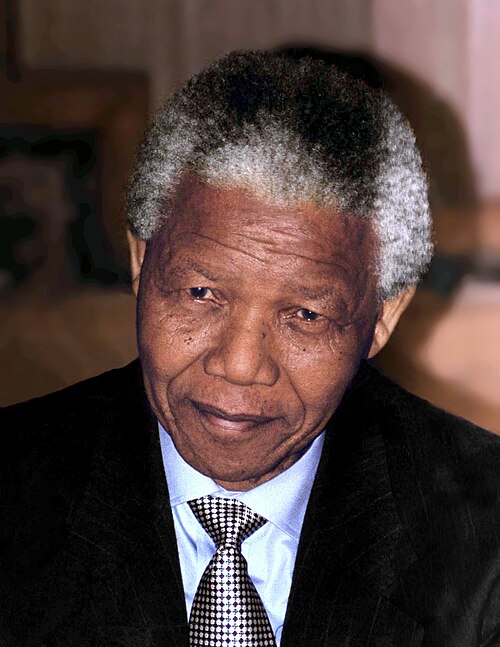
Nelson Rolihlahla Mandela

ENFJ - Protagonist

Category

History

Nationality

South African

Occupation

Statesman, Revolutionary, Philanthropist

About Nelson Rolihlahla Mandela

Nelson Mandela was a South African anti-apartheid revolutionary, political leader, and philanthropist who served as President of South Africa from 1994 to 1999. He is globally celebrated for leading the fight against institutionalized racial segregation, enduring 27 years in prison, and subsequently fostering national reconciliation and dismantling the legacy of apartheid.

Personality Profile: ENFJ

Confidence: 85%

Personality Analysis

Nelson Mandela’s personality strongly aligns with the ENFJ type, the ‘Protagonist’ or ‘Mentor.’ His dominant Extraverted Feeling (Fe) was the engine of his life’s work. He was acutely attuned to the collective needs, values, and suffering of his people, and he possessed a remarkable ability to connect with, inspire, and mobilize diverse groups towards a common humanitarian goal—the end of apartheid and the establishment of a ‘Rainbow Nation.’ His leadership was not autocratic but charismatic and unifying, driven by a deep-seated desire for social harmony and justice. His auxiliary Introverted Intuition (Ni) provided the long-term, visionary focus. Mandela was a strategic thinker who could foresee a future beyond the immediate brutality of his circumstances. His 27-year imprisonment was not merely endured but used as a period of refinement, where he developed a clear, unwavering vision for a reconciled South Africa. This Ni-Fe combination allowed him to make pragmatic, long-game decisions (like initiating negotiations with the apartheid government) that served his ultimate idealistic goal, even when they were unpopular with more militant factions. His tertiary Extraverted Sensing (Se) manifested in his powerful physical presence, his enjoyment of boxing in his youth, and his ability to engage with the tangible world—from his sartorial choices to his public appearances. It gave him a grounded, ‘here and now’ energy that complemented his visionary side. The inferior Introverted Thinking (Ti) is seen in his initial embrace of armed struggle as a logical necessity, but more profoundly in his later, conscious mastery over it. His post-presidential life showed less need for the rigid, internal logical frameworks of his revolutionary youth, replaced by the wisdom of his dominant Fe-Ni harmony. As a 9w1 Enneagram, his core drive for peace and unity (9) was channeled through a principled, idealistic lens (wing 1). This explains his profound capacity for forgiveness, his avoidance of demonizing his oppressors, and his insistence on a truth and reconciliation process over retributive justice. His high scores in Conscientiousness and Agreeableness in the Big Five reflect his disciplined resilience and his conciliatory nature, while his lower Neuroticism points to the extraordinary emotional stability he cultivated.

Supporting Evidence

His leadership of the African National Congress and ability to unify a fragmented liberation movement demonstrates his Fe-driven charisma and Ni vision. The strategic decision to pursue reconciliation and form a Government of National Unity upon his election, rather than seeking vengeance, highlights his Fe-Ni prioritization of long-term harmony over short-term emotion. His autobiography, ‘Long Walk to Freedom,’ reveals his Ni-driven reflection on his journey and the evolution of his ideals. His meticulous personal discipline and routine in prison, and his later embrace of symbolic gestures like wearing the Springbok jersey at the 1995 Rugby World Cup, show Se in service of his Fe-Ni goal of national unity.

Cognitive Function Stack

Confidence: 85%

The cognitive function stack represents how an individual processes information and makes decisions based on Jungian personality type theory.

Auxiliary Function: Ni

Introverted Intuition - Perceiving underlying patterns and developing long-range visions.

Dominant Function: Fe

Extraverted Feeling - Connecting with others and maintaining social harmony.

Inferior Function: Ti

Introverted Thinking - Analyzing and categorizing information logically and precisely.

Tertiary Function: Se

Extraverted Sensing - Experiencing and interacting with the immediate environment.

Enneagram Personality Profile:

Confidence: 85%

9w1

Big Five Personality Traits

Confidence: 85%

The Big Five personality traits represent the five broad dimensions of personality that are commonly used to describe human personality.

Openness 0%
Conscientiousness 0%
Extraversion 0%
Agreeableness 0%
Neuroticism 0%

Similar ENFJ Characters

Explore other characters with similar personality traits