Nero Claudius Caesar Augustus Germanicus - ESFP Personality Type

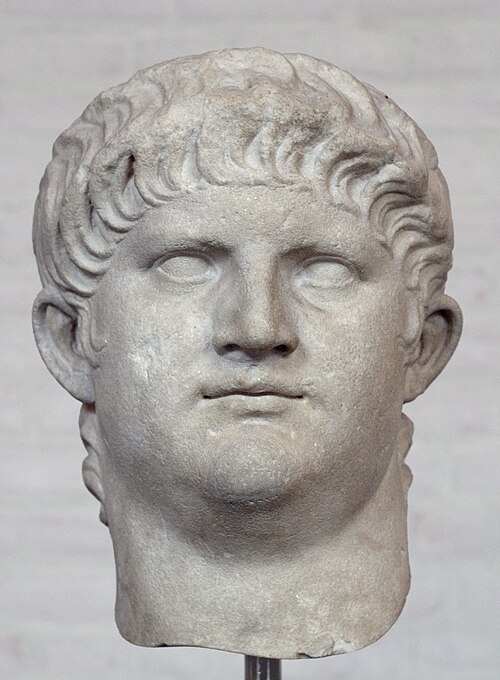
Nero Claudius Caesar Augustus Germanicus

ESFP - Entertainer

Category

History

Nationality

Roman

Occupation

Roman Emperor

About Nero Claudius Caesar Augustus Germanicus

Nero was the fifth Roman emperor, ruling from AD 54 to 68. He is historically infamous for his tyrannical rule, extravagance, and alleged role in the Great Fire of Rome. His reign marked the end of the Julio-Claudian dynasty and is often cited as an example of imperial decadence and cruelty.

Personality Profile: ESFP

Confidence: 85%

Personality Analysis

Nero’s personality strongly aligns with the ESFP type, dominated by Extraverted Sensing (Se). He was immersed in the sensory and experiential world of the moment, seeking constant stimulation through lavish banquets, artistic performances, chariot racing, and grand building projects like the Domus Aurea. His decision-making was guided by his auxiliary Introverted Feeling (Fi), which manifested as a strong, personal sense of what he desired or felt was right for him, often disregarding tradition, duty, or public welfare. His tertiary Extraverted Thinking (Te) emerged in bursts of decisive, often brutal, action to eliminate perceived obstacles (like ordering executions), but it was not guided by a coherent long-term strategy. His inferior Introverted Intuition (Ni) is evident in his profound lack of foresight and long-term planning. He failed to anticipate the consequences of his actions, leading to revolts and his eventual downfall. His paranoia in later years can be seen as the negative, distorted eruption of this neglected function.

Interpersonally, Nero craved the spotlight and adoration of the masses, typical of an ESFP with a 4w3 Enneagram. He performed publicly as a poet, musician, and charioteer, seeking validation for his artistic self-image rather than his imperial duties. This need for a unique, celebrated identity (Enneagram 4) combined with a desire for achievement and recognition (wing 3) fueled his extravagant and often scandalous behavior. His relationships were intense but unstable, swinging from deep affection (for his mother or wives initially) to murderous rage when he felt betrayed or upstaged.

His growth areas, which he catastrophically failed to develop, involved integrating his inferior Ni. This would have required developing patience, strategic foresight, and an understanding of deeper historical and symbolic consequences. Instead, he remained trapped in a cycle of Se-driven immediacy and Fi-fueled personal drama, leading to impulsive, self-destructive acts. His low scores in Conscientiousness and Agreeableness on the Big Five reflect his undisciplined, self-indulgent, and ruthless nature, while his high Neuroticism points to his emotional volatility and insecurity beneath the performative confidence.

Supporting Evidence

His dominant Se is evidenced by his obsession with public games, theatrical performances, and the opulent, sensory-overload design of the Domus Aurea. His auxiliary Fi is clear in his personal passion for Greek arts and music, which he pursued against Roman aristocratic tradition, and in his personal vendettas against family members he perceived as threats. His inferior Ni’s failure is starkly demonstrated by his handling of the Great Fire of Rome and its aftermath; instead of a coherent recovery plan, he focused on scapegoating Christians and building his pleasure palace, failing to grasp the long-term political damage. His 4w3 need for a special identity is shown by his insistence on performing publicly in Greece and demanding victory crowns, seeking artistic acclaim over political stability. Finally, his volatile Te-in-the-grip reactions are seen in the brutal and haphazard purges following the Pisonian conspiracy, where he executed and exiled people with little discernment.

Cognitive Function Stack

Confidence: 85%

The cognitive function stack represents how an individual processes information and makes decisions based on Jungian personality type theory.

Auxiliary Function: Fi

Introverted Feeling - Making decisions based on internal values and personal ethics.

Dominant Function: Se

Extraverted Sensing - Experiencing and interacting with the immediate environment.

Inferior Function: Ni

Introverted Intuition - Perceiving underlying patterns and developing long-range visions.

Tertiary Function: Te

Extraverted Thinking - Organizing and structuring the external world logically and efficiently.

Enneagram Personality Profile:

Confidence: 85%

4w3

Big Five Personality Traits

Confidence: 85%

The Big Five personality traits represent the five broad dimensions of personality that are commonly used to describe human personality.

Openness 0%
Conscientiousness 0%
Extraversion 0%
Agreeableness 0%
Neuroticism 0%

Similar ESFP Characters

Explore other characters with similar personality traits