Elizabeth I of England - INTJ Personality Type

Elizabeth I of England

INTJ - Architect

Category

History

Nationality

English

Occupation

Monarch, Queen Regnant of England and Ireland

About Elizabeth I of England

Queen Elizabeth I was the last monarch of the Tudor dynasty, ruling England and Ireland from 1558 until her death in 1603. She is known as the 'Virgin Queen' and her reign, the Elizabethan Era, is famed for the flourishing of English drama, the establishment of the Protestant Church of England, and the defeat of the Spanish Armada. Her political acumen and symbolic leadership transformed England into a major world power.

Personality Profile: INTJ

Confidence: 85%

Personality Analysis

Elizabeth I is a quintessential INTJ, driven by a visionary, future-oriented Intuition (Ni) and a ruthlessly pragmatic Thinking (Te) approach. Her dominant Ni allowed her to craft a long-term strategic vision for England’s religious stability, economic prosperity, and geopolitical independence, often playing the long game against rivals. She was not an innovator of grand new philosophies but a master executor of a carefully constructed national identity and power structure. Her auxiliary Te manifested in her efficient, often impersonal, administration and her decisive actions, such as signing the execution warrant for Mary, Queen of Scots, when it became a strategic necessity, despite personal reluctance. This Ni-Te axis made her a brilliant tactician who valued competence and results in her advisors.

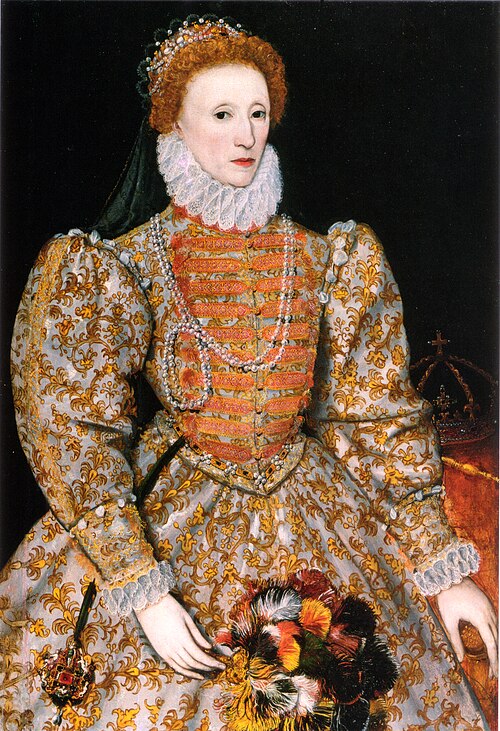
Her tertiary Introverted Feeling (Fi) provided the core of her famous personal resolve and the deeply held principles that underpinned her rule, such as her commitment to her nation above all personal desires, encapsulated in her ‘Virgin Queen’ persona. This Fi, while private, fueled her powerful oratory, as seen in the Tilbury speech, where she connected her personal sacrifice to the collective identity of England. The inferior function, Extraverted Sensing (Se), was a notable area of tension and growth. While she could engage magnificently in Se-driven pageantry—her lavish wardrobe and progresses were tools of statecraft—she also displayed classic inferior Se stress in moments of impulsivity, such as her famous rages at courtiers who disappointed her, followed by calculated reconciliation.

Interpersonally, Elizabeth was charismatic and commanding (a developed use of Te and Se for effect), yet profoundly private and isolated. She maintained emotional distance, using her marriageability as a political chess piece for decades, never allowing personal attachments to compromise her strategic vision. Her growth as a monarch involved learning to harness the symbolic power of Se spectacle while tempering its raw, reactive impulses, and balancing her Te-driven pragmatism with the Fi-inspired loyalty she demanded and occasionally bestowed. Her reign exemplifies the INTJ’s capacity to impose a complex inner vision onto the external world through will, intellect, and strategic patience.

Supporting Evidence

Her handling of the religious conflict through the Elizabethan Religious Settlement demonstrated Ni-Te: a long-term, pragmatic compromise that established a stable Protestant state. The cultivation of her ‘Virgin Queen’ image was a masterstroke of Ni symbolism, tying her personal body to the inviolability of the nation. Her decisive, Te-heavy actions are clear in the execution of Mary, Queen of Scots, after years of imprisonment and political calculation. The famous ‘Golden Speech’ of 1601 displayed her Fi connection to her people and role, expressing deep personal sentiment within a calculated political framework. Finally, her carefully stage-managed public appearances and progresses showcased her controlled, strategic use of inferior Se to project power and majesty.

Cognitive Function Stack

Confidence: 85%

The cognitive function stack represents how an individual processes information and makes decisions based on Jungian personality type theory.

Auxiliary Function: Te

Extraverted Thinking - Organizing and structuring the external world logically and efficiently.

Dominant Function: Ni

Introverted Intuition - Perceiving underlying patterns and developing long-range visions.

Inferior Function: Se

Extraverted Sensing - Experiencing and interacting with the immediate environment.

Tertiary Function: Fi

Introverted Feeling - Making decisions based on internal values and personal ethics.

Enneagram Personality Profile:

Confidence: 85%

1w2

Big Five Personality Traits

Confidence: 85%

The Big Five personality traits represent the five broad dimensions of personality that are commonly used to describe human personality.

Openness 0%
Conscientiousness 0%
Extraversion 0%
Agreeableness 0%
Neuroticism 0%

Similar INTJ Characters

Explore other characters with similar personality traits