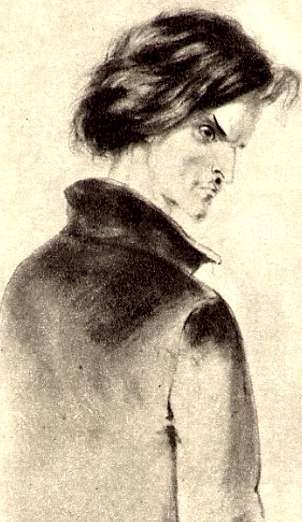
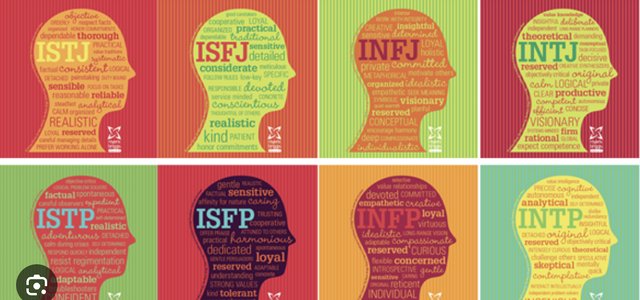
Raskolnikov is a quintessential, albeit unhealthy, INTJ. His dominant Introverted Intuition (Ni) is manifested in his obsessive, theoretical mind. He constructs a complex, abstract ideology (the ‘extraordinary man’ theory) that predicts reality based on a singular, internal vision, disconnected from sensory or social feedback. He sees patterns and ultimate meanings, but his vision is solipsistic and detached from human consequence. His auxiliary Extraverted Thinking (Te) is evident in his desire to apply his theory logically and efficiently—the murder is an ‘experiment’ to prove a point—but it is subservient to his distorted Ni vision, making his actions seem coldly calculated yet paradoxically reckless. His underdeveloped tertiary Introverted Feeling (Fi) is the source of his immense inner turmoil. Beneath the intellectual scaffolding lies a deep, conflicted personal value system centered on pride, compassion for the downtrodden (like Marmeladov’s family), and a yearning for greatness. This Fi, unintegrated with his dominant functions, erupts as paralyzing guilt, self-recrimination, and erratic emotional outbursts after the crime. His inferior Extraverted Sensing (Se) is his greatest area of weakness and stress. He is utterly disconnected from his physical environment and body, living in a squalid room and neglecting his health. Under stress, he is prone to Se ‘grips’—sudden sensory overload, impulsive actions (like giving away all his money), and a collapse into animalistic panic and paranoia. His growth, spurred by Sonya and his confession, involves integrating this buried Se (accepting concrete reality and suffering) and his Fi (acknowledging his shared humanity and moral guilt), moving him toward a more holistic, feeling-based existence.