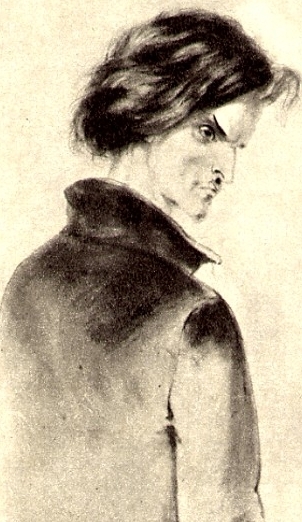
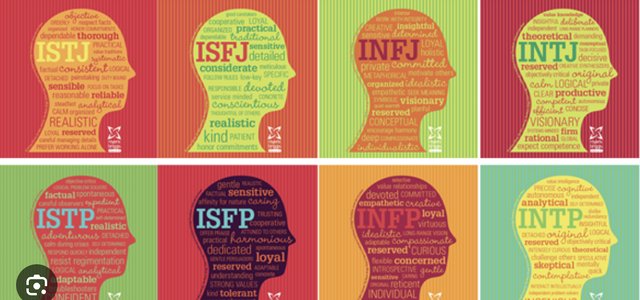
Raskolnikov is a quintessential, albeit unhealthy, INTJ. His dominant Introverted Intuition (Ni) is evident in his obsessive focus on a singular, abstract theory—the ‘extraordinary man’ hypothesis—which becomes the lens through which he interprets the world. He is future-oriented, constantly theorizing about the consequences and meaning of his actions, yet his vision is distorted by his isolation and pride. His auxiliary Extraverted Thinking (Te) is used to logically construct and justify his nihilistic philosophy, providing a cold, systematic framework for the murder. However, this Te is not directed productively outward but is warped in service of his Ni vision.
His tertiary Introverted Feeling (Fi) is the source of his profound internal conflict. While he tries to suppress emotion with logic, his deep-seated personal moral code and capacity for empathy (shown toward Marmeladov’s family and Sonya) create unbearable guilt and spiritual agony. This Fi-Te conflict manifests as a battle between his heart and his head. His inferior Extraverted Sensing (Se) is severely repressed, leading to a disconnection from physical reality and his own body, except in moments of extreme stress when it erupts in panic, nausea, and hypersensitivity to his surroundings.
His growth, as outlined in the novel’s epilogue, lies in integrating his inferior functions. He must learn to accept sensory reality and human connection (Se) and allow his buried empathy and moral sense (Fi) to guide him, rather than his grandiose, isolating Ni-Te framework. His journey from intellectual arrogance to humbled acceptance of shared human suffering is a movement from a dysfunctional INTJ shadow state toward a healthier, more integrated personality.