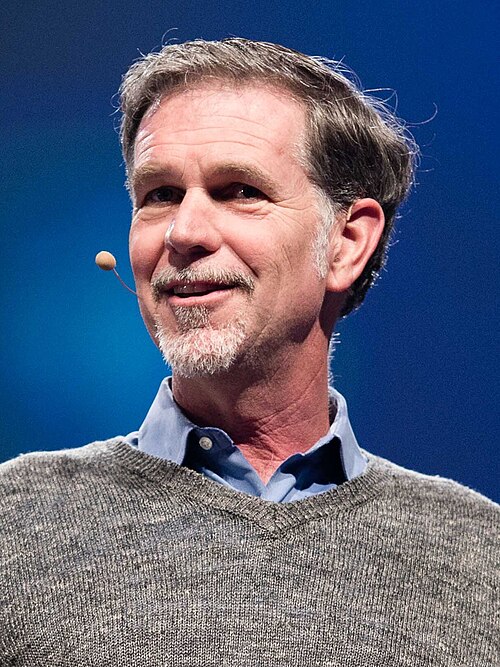
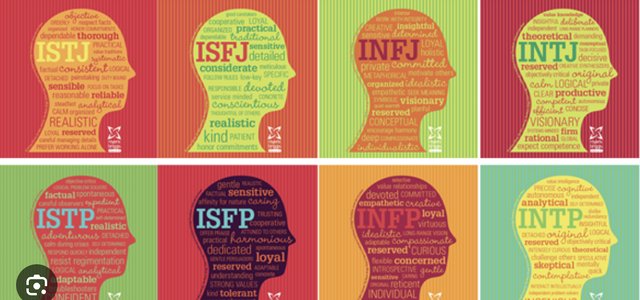
Reed Hastings exemplifies the INTJ archetype, driven by a dominant Introverted Intuition (Ni). This function manifests in his visionary, future-oriented mindset, where he consistently identifies and works towards a singular, long-term strategic goal—such as the early bet on streaming over DVDs and the shift to original content. His decision-making is governed by a powerful auxiliary Extraverted Thinking (Te), which seeks efficiency, logical structure, and measurable outcomes. This is evident in Netflix’s data-driven culture, its algorithm-centric approach to recommendations and production, and its hard-nosed business pivots. Hastings’s Te is also visible in his managerial philosophy of ‘radical candor,’ prioritizing honest, performance-focused feedback over harmony, a hallmark of low Extraverted Feeling (Fe).
Interpersonally, Hastings displays the INTJ’s characteristic reserve and preference for intellectual discourse over emotional connection. He is known for his intense, analytical demeanor and a communication style that can be perceived as blunt or detached. This aligns with lower Feeling functions (tertiary Introverted Feeling (Fi) and inferior Extraverted Feeling (Fe)), where personal values (Fi) guide his vision internally but are not the primary tool for managing external relationships. His leadership is not about charisma but about constructing a superior, self-correcting system. The tertiary Fi provides a strong internal compass for his convictions, such as his advocacy for education reform, separate from his main business.
Growth areas for an INTJ like Hastings often involve engaging with the inferior function, Extraverted Sensing (Se). This can manifest as a potential blind spot to immediate environmental details or employee morale in the pursuit of the grand vision. There is also the challenge of balancing Te-driven efficiency with the human element of leadership. Hastings’s development can be seen in his eventual partnership with more complementary personalities (like Ted Sarandos, who handles content and relationships) and his shift to Executive Chairman, allowing for a broader perspective beyond pure systemic optimization.