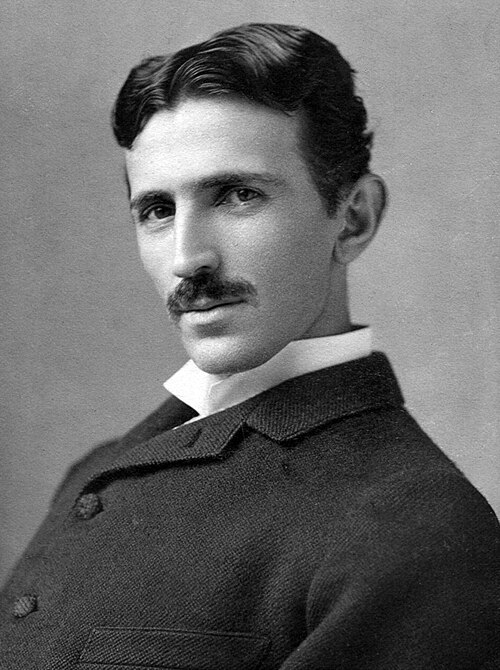
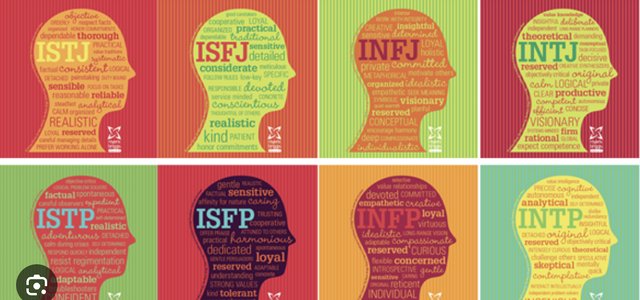
Sherlock Holmes - INTJ Personality Type

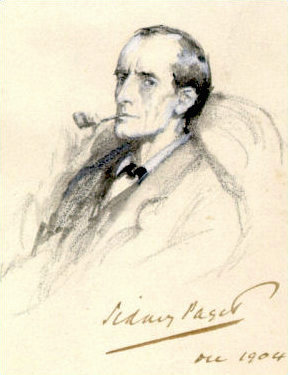
Sherlock Holmes

INTJ - Architect

Category

Literature

Nationality

British

Occupation

Consulting Detective

About Sherlock Holmes

Sherlock Holmes is a fictional consulting detective created by Sir Arthur Conan Doyle. He is renowned for his brilliant powers of logical deduction, forensic science skills, and eccentric personality. He is one of the most iconic and enduring characters in detective fiction.

Personality Profile: INTJ

Confidence: 85%

Personality Analysis

Sherlock Holmes is a quintessential INTJ, driven by a dominant Introverted Intuition (Ni). This function allows him to perceive underlying patterns, connections, and future implications from disparate pieces of data. He doesn’t just see a mud stain; he sees a specific London street and the likely sequence of events that put it there. His mind constantly synthesizes information into a single, coherent theory, which he then presents as an undeniable truth. This Ni dominance explains his moments of sudden insight and his ability to solve cases that baffle others, as he works from the abstract ‘whole’ down to the concrete details.

His auxiliary function, Extraverted Thinking (Te), is the engine of his methodology. Te drives his need for logical efficiency, systematic investigation, and empirical evidence. He organizes facts ruthlessly, dismisses irrelevant emotional data, and applies a cold, objective rationality to every problem. This Te-Ni combination creates his famous deductive reasoning: Ni provides the visionary framework, and Te fills it with verifiable facts. His communication style is often blunt and instructional (Te), as seen in his explanations to Watson or his dismissive treatment of the official police.

Holmes’s tertiary Introverted Feeling (Fi) manifests in his strong personal code and inner values. While he often appears emotionless, he is deeply committed to justice, intellectual challenge, and his few personal bonds (notably with Dr. Watson). His sense of morality is internal and non-negotiable, leading him to sometimes bend the law for what he perceives as a greater good. His inferior Extraverted Sensing (Se) is his area of weakness and stress. He engages with the sensory world in a controlled, utilitarian way (e.g., his violin playing, chemical experiments, or disguise work), but understimulation leads to profound boredom and self-destructive behaviors like cocaine use. In high-stress moments, he can become reckless and impulsive, a sign of an Se ‘grip’ experience.

Supporting Evidence

His deduction of Watson’s history from his appearance in ‘A Study in Scarlet’ demonstrates Ni pattern recognition fueled by Te factual analysis. His creation of a meticulous, organized ‘mind palace’ for information (or his filing system for past cases) showcases Te’s need for systematic order. His deep boredom and drug use when without a stimulating case reveal the struggle of an under-stimulated dominant Ni and the collapse into inferior Se seeking sensation. His fierce loyalty to Watson and occasional forays into vigilante justice (e.g., letting a criminal go in ‘The Adventure of the Blue Carbuncle’) point to a strong but private Fi moral compass. His ability to instantly read a crime scene and reconstruct events in his mind’s eye is a classic display of Ni synthesizing sensory details (Se) into a holistic narrative.

Cognitive Function Stack

Confidence: 85%

The cognitive function stack represents how an individual processes information and makes decisions based on Jungian personality type theory.

Auxiliary Function: Te

Extraverted Thinking - Organizing and structuring the external world logically and efficiently.

Dominant Function: Ni

Introverted Intuition - Perceiving underlying patterns and developing long-range visions.

Inferior Function: Se

Extraverted Sensing - Experiencing and interacting with the immediate environment.

Tertiary Function: Fi

Introverted Feeling - Making decisions based on internal values and personal ethics.

Enneagram Personality Profile:

Confidence: 85%

5w6

Big Five Personality Traits

Confidence: 85%

The Big Five personality traits represent the five broad dimensions of personality that are commonly used to describe human personality.

Openness 0%
Conscientiousness 0%
Extraversion 0%
Agreeableness 0%
Neuroticism 0%

Similar INTJ Characters

Explore other characters with similar personality traits