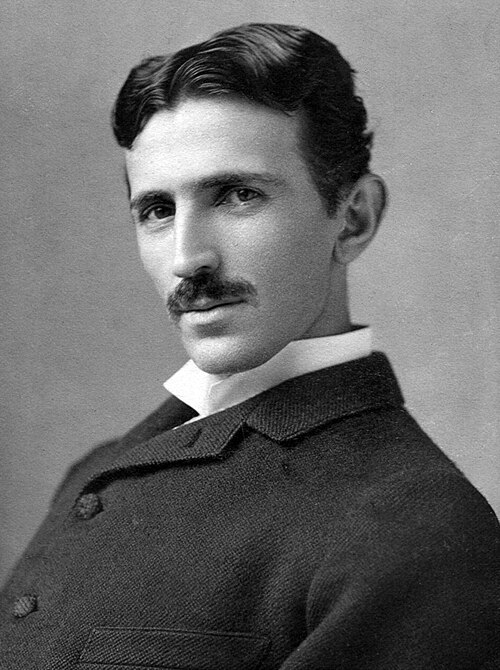
Sigmund Freud - INTJ Personality Type

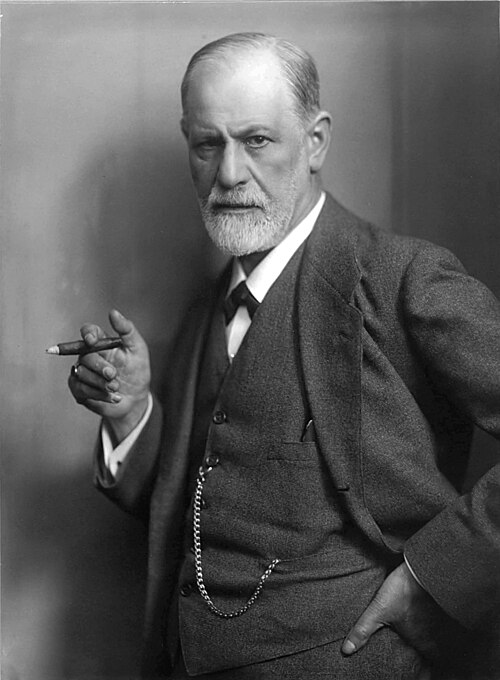
Sigmund Freud

INTJ - Architect

Category

Science

Nationality

Austrian

Occupation

Neurologist, Psychoanalyst, Founder of Psychoanalysis

About Sigmund Freud

Sigmund Freud was an Austrian neurologist and the founder of psychoanalysis, a clinical method for treating psychopathology through dialogue between a patient and a psychoanalyst. He is best known for his theories of the unconscious mind, the defense mechanism of repression, and the structural model of the psyche divided into the id, ego, and superego. His work profoundly influenced Western thought, psychology, psychiatry, and culture, though many of his ideas remain controversial.

Personality Profile: INTJ

Confidence: 85%

Personality Analysis

Freud’s personality is a quintessential example of the INTJ cognitive stack. His dominant Introverted Intuition (Ni) is evident in his lifelong pursuit of a single, grand unifying theory of the human mind. He looked beyond surface symptoms of patients to perceive underlying, unconscious patterns and structures, synthesizing disparate observations—dreams, slips of the tongue, childhood memories—into a coherent, albeit speculative, meta-theory. This function drove his visionary and often deterministic view of psychic life, centered on foundational concepts like the Oedipus complex and psychosexual development. His auxiliary Extraverted Thinking (Te) provided the logical scaffolding for his Ni visions. Freud was fiercely analytical, systematically organizing his clinical observations into structured theories with defined terminology (id, ego, superego, libido). He used Te to argue his points with formidable logic in his writings and lectures, seeking to establish psychoanalysis as a rigorous, scientific discipline. However, this Te was often in service of his Ni insights rather than purely objective data, leading him to dismiss contradictory evidence or reinterpret it to fit his framework. The tertiary Introverted Feeling (Fi) manifests in Freud’s strong personal convictions and the value-laden nature of his theories. His ideas on morality, civilization, and desire were deeply intertwined with his own worldview and ethical stance. He held his theories with a sense of personal importance and defended them as matters of profound truth, often clashing fiercely with dissenters. The inferior Extraverted Sensing (Se) appears in his relative neglect of concrete, sensory reality that contradicted his theories, a certain dogmatism in practice, and his noted personal habits like cigar smoking, which he famously refused to link to his cancer despite medical evidence.

Supporting Evidence

His development of psychoanalysis itself demonstrates dominant Ni—creating a vast, interconnected theory of the mind from symbolic interpretation of dreams and free association. His writing style in works like ‘The Interpretation of Dreams’ and ‘Civilization and Its Discontents’ showcases auxiliary Te, building complex, logical arguments from his foundational premises. His famous break with colleagues like Jung and Adler highlights tertiary Fi, as he viewed theoretical deviations as personal betrayals and held steadfastly to his own core beliefs. His dogmatic leadership of the psychoanalytic movement, insisting on strict adherence to his theories, shows the potential rigidity of an INTJ under stress. Furthermore, his famous collection of antiquities reflects a tangible (Se) expression of his interest in uncovering buried (unconscious) layers of the past.

Cognitive Function Stack

Confidence: 85%

The cognitive function stack represents how an individual processes information and makes decisions based on Jungian personality type theory.

Auxiliary Function: Te

Extraverted Thinking - Organizing and structuring the external world logically and efficiently.

Dominant Function: Ni

Introverted Intuition - Perceiving underlying patterns and developing long-range visions.

Inferior Function: Se

Extraverted Sensing - Experiencing and interacting with the immediate environment.

Tertiary Function: Fi

Introverted Feeling - Making decisions based on internal values and personal ethics.

Enneagram Personality Profile:

Confidence: 85%

5w4

Big Five Personality Traits

Confidence: 85%

The Big Five personality traits represent the five broad dimensions of personality that are commonly used to describe human personality.

Openness 0%
Conscientiousness 0%
Extraversion 0%
Agreeableness 0%
Neuroticism 0%

Similar INTJ Characters

Explore other characters with similar personality traits