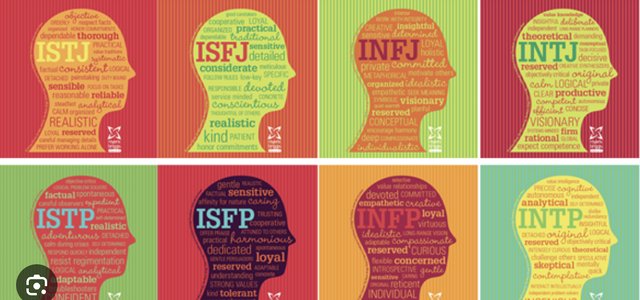
Russell "Stringer" Bell - INTJ Personality Type

Russell "Stringer" Bell

INTJ - Architect

Category

TV Show

Nationality

American

Occupation

Drug Trafficking Lieutenant, Aspiring Real Estate Developer

About Russell "Stringer" Bell

Russell "Stringer" Bell is a major antagonist and co-leader of the Barksdale drug organization in the HBO series The Wire. He is known for his cold, calculating, and business-minded approach to the drug trade, aspiring to transform his criminal enterprise into a legitimate corporation. His significance lies in embodying the tension between street-level gangsterism and corporate capitalism, ultimately undone by his misunderstanding of both worlds.

Personality Profile: INTJ

Confidence: 85%

Personality Analysis

Stringer Bell is a quintessential INTJ, operating through a dominant Introverted Intuition (Ni) that allows him to see the larger picture and devise complex, long-term strategies. He envisions a future where the Barksdale organization is not just a street gang but a diversified, semi-legitimate corporation, a vision that far exceeds the more immediate, territory-focused goals of his partner Avon Barksdale. This future-oriented planning is the hallmark of his Ni. His auxiliary function, Extraverted Thinking (Te), is his primary tool for executing this vision. He imposes strict, logical systems on the drug trade (e.g., standardizing product, creating a co-op with rival dealers to reduce violence) and later applies it to his real estate ventures, ruthlessly prioritizing efficiency, structure, and measurable outcomes over personal relationships or street codes.

His interpersonal dynamics reveal a severely underdeveloped Feeling function. Stringer’s tertiary Introverted Feeling (Fi) manifests as a personal, internal code focused on his own ambition and self-image as a businessman, which often clashes with the external, loyalty-based Fe (Extraverted Feeling) of the street. This leads him to make brutally pragmatic decisions—ordering hits on close associates like D’Angelo Barksdale and later Avon—that are logical from a Te perspective but catastrophic from a social-cohesion perspective. His inferior Extraverted Sensing (Se) is a point of vulnerability; he fails to appreciate the raw, instinctual, and territorial realities of the street that Avon masters. His attempts to engage with the sensory world (e.g., his lavish but sterile condo, his awkward dealings with politicians) feel forced and ultimately betray a lack of genuine connection to immediate reality.

Stringer’s growth area, which he never achieves, would involve integrating a healthier form of Se—understanding and respecting the present-moment realities and human elements he tries to systematize away—and developing a more nuanced ethical framework (Fi) that isn’t solely self-serving. His tragic end stems from the fatal disconnect between his abstract, systemic Ni-Te vision and the concrete, interpersonal Se-Fi realities of both the criminal underworld and the legitimate business world, neither of which he fully comprehends.


Supporting Evidence

His creation of a ‘co-op’ meeting for Baltimore’s drug lords, where he presents flip charts and advocates for collective action to reduce police attention, demonstrates his Ni vision and Te execution. His enrollment in business economics classes at Baltimore Community College, where he applies concepts like ‘elasticity of demand’ to the drug trade, highlights his systematic, intellectual approach. The cold-blooded order to kill his surrogate nephew, D’Angelo Barksdale, because D’Angelo’s potential cooperation with police was a ‘business’ liability, showcases his Te-over-Fi prioritization. His deal with Proposition Joe, trading territory for a superior drug connection to improve product consistency and profit margins, exemplifies his pragmatic, systems-oriented thinking. Finally, his attempt to have Avon Barksdale assassinated after Avon’s focus on ‘the crown’ (street corners) jeopardizes their real estate ventures perfectly illustrates the ultimate clash between his Ni/Te long-term corporatization and Avon’s Se/Te focus on immediate, tangible power.

Cognitive Function Stack

Confidence: 85%

The cognitive function stack represents how an individual processes information and makes decisions based on Jungian personality type theory.

Auxiliary Function: Te

Extraverted Thinking - Organizing and structuring the external world logically and efficiently.

Dominant Function: Ni

Introverted Intuition - Perceiving underlying patterns and developing long-range visions.

Inferior Function: Se

Extraverted Sensing - Experiencing and interacting with the immediate environment.

Tertiary Function: Fi

Introverted Feeling - Making decisions based on internal values and personal ethics.

Enneagram Personality Profile:

Confidence: 85%

3w4

Big Five Personality Traits

Confidence: 85%

The Big Five personality traits represent the five broad dimensions of personality that are commonly used to describe human personality.

Openness 0%
Conscientiousness 0%
Extraversion 0%
Agreeableness 0%
Neuroticism 0%

Similar INTJ Characters

Explore other characters with similar personality traits