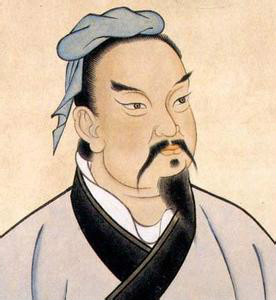
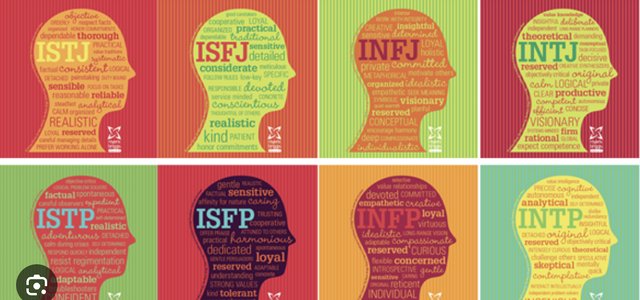
Sun Tzu exemplifies the INTJ personality type through his dominant Introverted Intuition (Ni), which allows him to perceive underlying patterns, principles, and future possibilities in warfare. His strategic genius stems from this ability to synthesize vast amounts of information into a coherent, long-term vision of victory, often seeing the endgame long before the battle begins. His famous dictum, ‘Every battle is won or lost before it is ever fought,’ highlights this forward-looking, predictive cognitive style.
His auxiliary Extraverted Thinking (Te) is evident in his pragmatic, efficiency-driven approach. He systematized warfare into logical principles, valuing objective results, disciplined organization, and the effective application of resources. He disdains wasted effort and emotional displays, advocating for winning through superior calculation and positioning rather than brute force. This Te function manifests in his clear, directive, and impersonal writing style, aimed at achieving a specific, optimal outcome.
In interpersonal dynamics, Sun Tzu appears detached and reserved, a hallmark of the INTJ. His tertiary Introverted Feeling (Fi) provides an internal framework of values—such as the moral and strategic value of avoiding unnecessary bloodshed—but these are not expressed sentimentally. His inferior Extraverted Sensing (Se) is under control but appears in his acute awareness of the immediate physical terrain and conditions (‘Know the ground’), though always in service of his long-term Ni vision. Growth for this archetype would involve integrating a healthier Se, ensuring grand strategies remain grounded in present-moment realities.