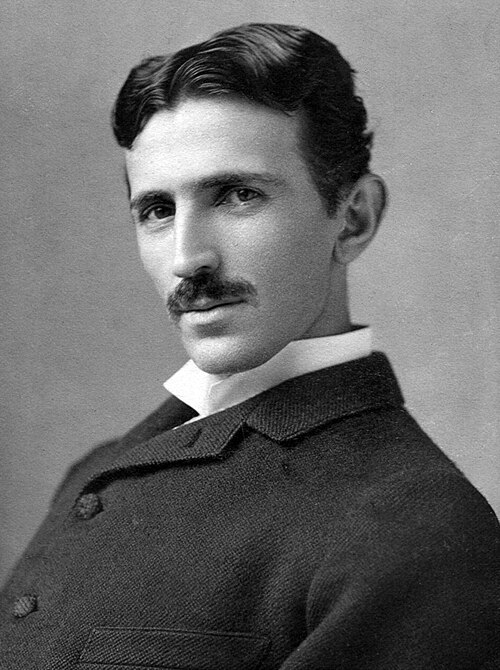
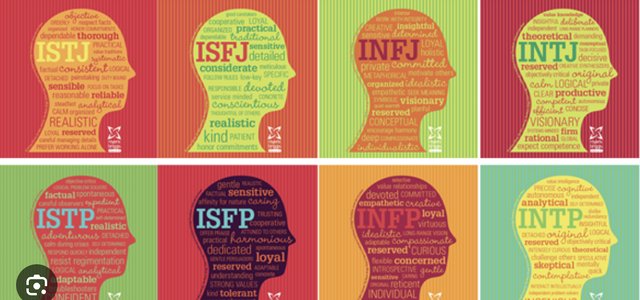
Trent Reznor - INTJ Personality Type

Trent Reznor

INTJ - Architect

Category

Music

Nationality

United States

Occupation

Musician, Singer-Songwriter, Record Producer, Film Composer

About Trent Reznor

Trent Reznor is an American musician, singer, songwriter, and record producer, best known as the founder, lead vocalist, multi-instrumentalist, and primary creative force behind the industrial rock band Nine Inch Nails. He is renowned for his intense, genre-defying music that explores themes of anguish, alienation, and technology, and for his pioneering work in production and sound design. His significance lies in his profound influence on alternative and industrial music, and his successful evolution into an acclaimed film composer.

Personality Profile: INTJ

Confidence: 85%

Personality Analysis

Trent Reznor exemplifies the INTJ (Architect) personality type, driven by a dominant Introverted Intuition (Ni). His work is defined by a singular, futuristic vision of music that synthesizes disparate elements—industrial noise, pop melody, classical structure, and digital technology—into a cohesive and often prophetic whole. Ni allows him to perceive underlying patterns in culture and his own psyche, projecting them forward into complex conceptual albums like ‘The Downward Spiral’ and ‘Year Zero.’ His career is not a series of random releases but a meticulously charted evolution, a hallmark of Ni’s long-range strategic thinking. His auxiliary function, Extraverted Thinking (Te), provides the executional framework for his visions. Reznor is famously perfectionistic and maintains exhaustive control over every sonic detail, business decision, and visual element associated with Nine Inch Nails. This Te-driven efficiency and competence enabled him to build a self-contained artistic empire, famously challenging the music industry’s norms with innovative release strategies and direct fan engagement. Interpersonally, Reznor aligns with the INTJ’s reserved and private nature. He is not a gregarious rock star but an intensely introspective artist who channels his emotions—primarily through his tertiary Introverted Feeling (Fi)—into his art. This Fi fuels the raw, personal, and often tormented emotional core of his music, giving intellectual concepts their visceral punch. His inferior Extraverted Sensing (Se) manifests in periods of sensory overload, substance abuse, and chaotic live performances earlier in his career, which he has since integrated into a healthier balance, evident in his disciplined lifestyle and the immersive, physical precision of his modern concerts and film scores.


Supporting Evidence

His creation of the dystopian alternate reality game for ‘Year Zero’ demonstrates dominant Ni (complex future vision) supported by Te (detailed execution). His hands-on, multi-instrumentalist role and notorious studio perfectionism, as documented during the recording of ‘The Fragile,’ highlight auxiliary Te’s drive for control and efficiency. His intensely private personal life, contrasted with brutally confessional lyrics (‘Hurt’), reveals the tertiary Fi’s internal value system and emotional depth. His early struggles with addiction and chaotic stage presence pointed to a struggle with inferior Se, while his mastery of immersive live production and physical fitness in later years shows growth in integrating this function. His strategic shift from major label rebel to independent pioneer and Oscar-winning film composer showcases Ni-Te long-term planning and adaptability.

Cognitive Function Stack

Confidence: 85%

The cognitive function stack represents how an individual processes information and makes decisions based on Jungian personality type theory.

Auxiliary Function: Te

Extraverted Thinking - Organizing and structuring the external world logically and efficiently.

Dominant Function: Ni

Introverted Intuition - Perceiving underlying patterns and developing long-range visions.

Inferior Function: Se

Extraverted Sensing - Experiencing and interacting with the immediate environment.

Tertiary Function: Fi

Introverted Feeling - Making decisions based on internal values and personal ethics.

Enneagram Personality Profile:

Confidence: 85%

5w4

Big Five Personality Traits

Confidence: 85%

The Big Five personality traits represent the five broad dimensions of personality that are commonly used to describe human personality.

Openness 0%
Conscientiousness 0%
Extraversion 0%
Agreeableness 0%
Neuroticism 0%

Similar INTJ Characters

Explore other characters with similar personality traits