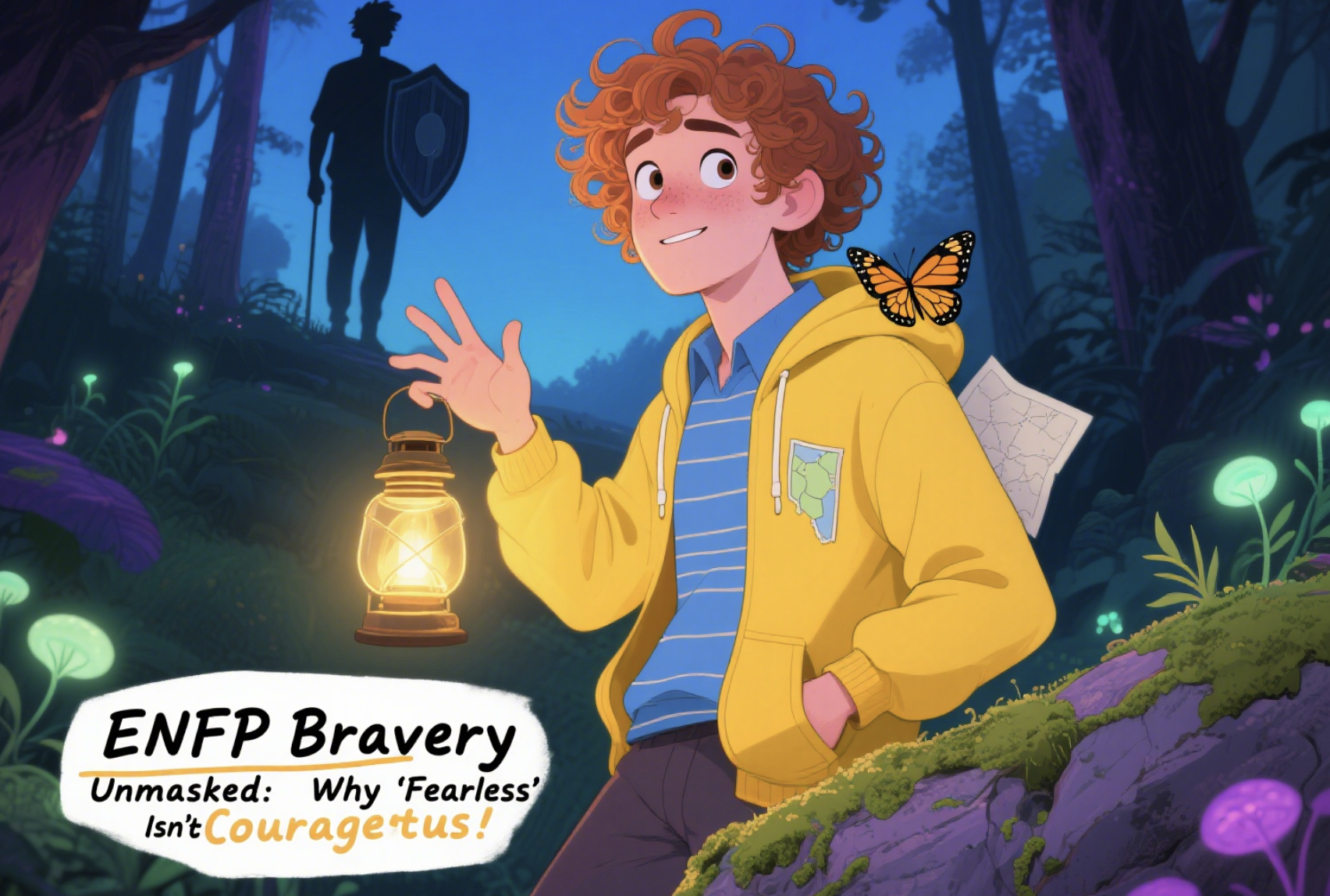
ENFP Bravery Unmasked: Why ‘Fearless’ Isn’t Always Better
ENFP Bravery: A Double-Edged Sword in Career and Life
The ENFP’s reputation for fearlessness often borders on mythmaking. Take the 21-year-old rock climber from Shaoxing—a technical prodigy scaling peaks like Little Gongga, rubbing shoulders with elite alpinists like Zhou Song (pioneer of the first ascent of Mount Yōmei’s north face). On paper, he embodies the ENFP archetype: audacious, boundary-pushing, seemingly invincible. Yet dig deeper, and the cracks in this “fearless” facade emerge.
The Illusion of Invincibility
This climber’s story isn’t one of physical superiority. Despite severe altitude sickness, lung nodules, and chronic chest pain, he charges into high-risk environments—a stark contrast to the ISFJ nurse who’d avoid the Himalayas after calculating every conceivable risk. His “bravery” isn’t resilience; it’s a byproduct of low Si (Introverted Sensing), the cognitive function responsible for recalling past experiences and bodily signals. ENFPs with underdeveloped Si often ignore physical warnings, mistaking recklessness for courage.
The tragic counterpoint? His 25-year-old Ningbo colleague, who died in a fall near Leduomanyin Glacier. The ENFP climber’s dismissive attitude toward medical checkups (“I’ll get around to it”) underscores a critical blind spot: unchecked bravery without self-awareness is a liability.
The Si Awakening: Why ‘Fearful’ ENFPs Are Leveling Up
As ENFPs age, Si development reshapes their approach to risk. Consider the author’s own shift: after experiencing chest discomfort during a hike, they sought medical attention immediately—despite no diagnosis. This isn’t cowardice; it’s Emotional Intelligence in action. Mature ENFPs leverage Si to:
Assess risks strategically (e.g., avoiding burnout in high-pressure careers).
Balance passion with pragmatism (e.g., pivoting from unstable creative fields to roles blending innovation and structure).
Recognize that longevity trumps adrenaline—a lesson for entrepreneurs and artists alike.
Career Implications: From Chaotic to Calculated
For ENFPs navigating career growth, this evolution is transformative:
Early-Career ENFPs thrive in roles demanding spontaneity (e.g., startups, event planning) but risk instability by neglecting logistics.
Mid-Career ENFPs with growing Si excel in leadership, blending vision with operational savvy (e.g., creative directors who master budgets).
Late-Career ENFPs often mentor others, channeling their energy into sustainable impact—proof that “fear” can mean wisdom, not weakness.
The Takeaway: Redefine ‘Brave’
True courage isn’t ignoring danger; it’s knowing when to step back. ENFPs who cultivate Si gain a superpower: the ability to harness their enthusiasm without self-sabotage. Whether scaling mountains or corporate ladders, the bravest move is sometimes the most cautious one.
Final Thought: If your ENFP trait of “fearlessness” feels unsustainable, it’s not a flaw—it’s a sign you’re evolving. The next level of success isn’t about going higher; it’s about going farther.
ProMbti helps you align your MBTI type with career paths that honor your strengths—and your growth. Take our assessment to build a future that’s bold and balanced.
More ENFP & Personality Resources
- 📊 Take the Free Personality Test — Discover your type in 5 minutes →
- 🎨 ENFP Personality Guide — Complete deep dive into the Campaigner →
- 🎭 ENFP Character Database — 46 ENFP characters from fiction and history →
- 🧠 MBTI Cognitive Functions — Understand the Ne-Fi-Te-Si stack →
- 🔬 The Diplomat Personality Types — The NF temperament family →