ENTP Charm or Emotional Harm? The Dark Side of the Fox: One ENFP's Trauma and a Warning About Your Idealized Personality Archetypes
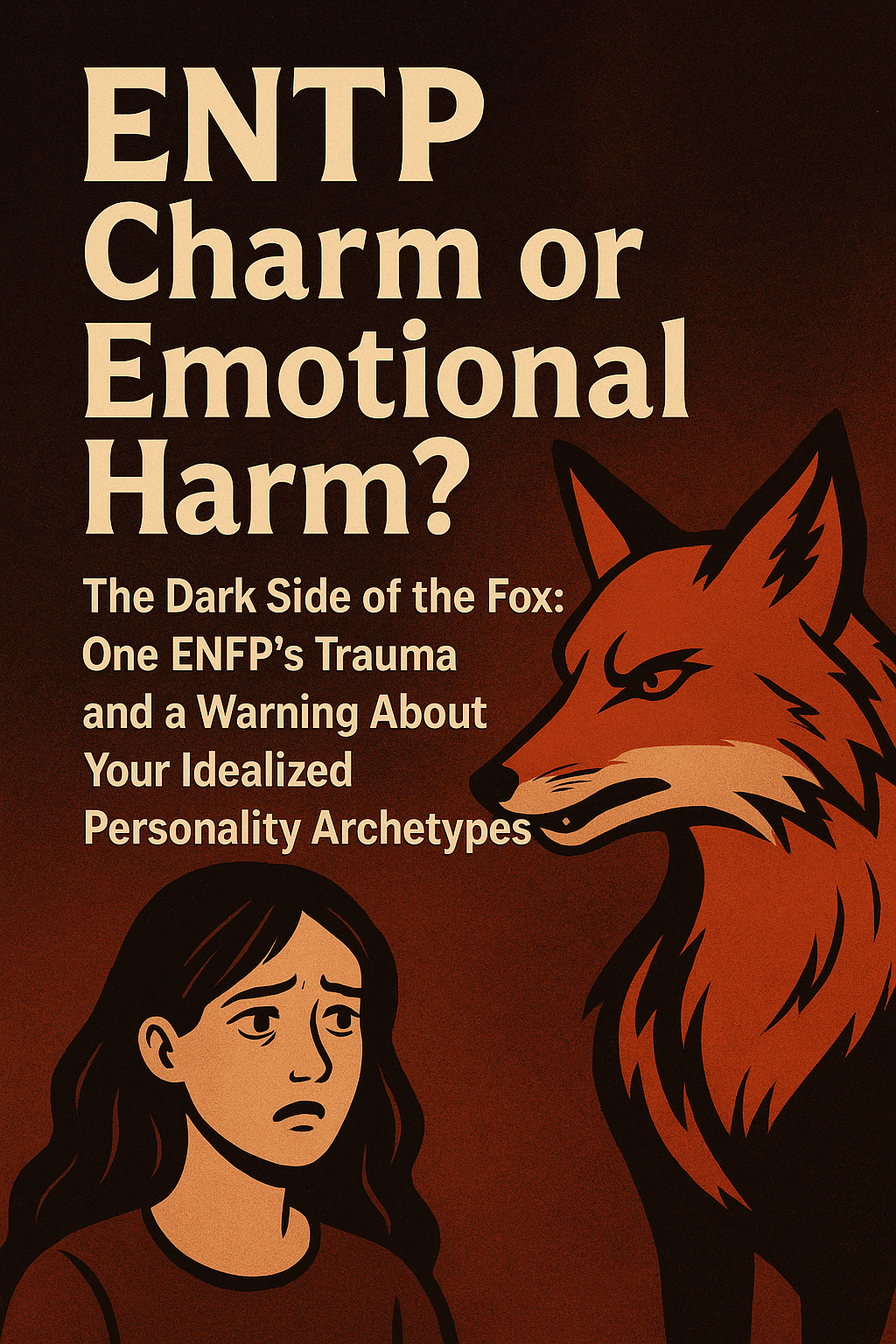
In the realm of personality typology, few figures have captured collective imagination like Zootopia’s Nick Wilde—the witty, resourceful, and seemingly vulnerable ENTP fox who charms both Officer Judy Hopps and audiences worldwide. This archetype has become dangerously romanticized in popular psychology circles, particularly among those exploring MBTI-based Relationship Dynamics. As professionals dedicated to authentic personality understanding and career development, we must examine the disturbing reality that often lurks behind such seductive archetypes. The story of one ENFP woman’s traumatic relationship with a real-life “Nick Wilde” figure serves not as an indictment of an entire personality type, but as a crucial case study in distinguishing between healthy traits and pathological behaviors masked by charismatic exteriors.
The narrative begins with a pattern familiar to many intuitive feelers: an ENTP male pursued an ENFP woman for two years during their student years. His persistence created an illusion of depth—a curated performance of devotion that obscured concurrent emotional infidelity with multiple others. Like many ENFPs, the woman interpreted this persistence through her value framework of authenticity and emotional richness, believing his efforts signaled genuine connection. The relationship’s foundation was thus built on a fundamental misreading: she saw vulnerability where there was vacancy, depth where there was only performance. This dynamic mirrors how fictional portrayals like Nick Wilde’s carefully crafted “soft side” manipulate audience perception, encouraging viewers to overlook problematic behaviors for glimpses of perceived emotional availability.
The dissolution of this relationship reveals the structural flaws in romanticizing the “charming rogue” archetype. When confronted with concrete evidence of infidelity, the ENTP partner responded not with remorse or justification, but with unapologetic admission and refusal to change—a display of psychological rigidity masquerading as honesty. This moment epitomizes a critical distinction between healthy ENTP traits (debate-loving, boundary-pushing) and toxic manifestations (absence of empathy, entitlement to transgression). The subsequent physical conflicts—where the male’s perceived physical “vulnerability” contrasted with his psychological aggression—further complicated the trauma, creating the confusing duality many survivors describe: the alternating experience of the partner as both victim and perpetrator.
The aftermath has been professionally significant: the ENFP woman developed post-traumatic stress responses affecting her career trajectory and relational patterns—a stark reminder that personality compatibility theories mean little when core ethical boundaries are violated. Her experience challenges the popular MBTI narrative that ENFP-ENTP pairings are inherently synergistic due to shared intuition and extraversion. Instead, it highlights how unchecked traits—particularly the ENTP’s potential for emotional detachment and the ENFP’s tendency to prioritize idealism over evidence—can create dangerously asymmetric relationships.
Most revealing is the ENTP’s subsequent relationship pattern: at age thirty, he initiated a romance with his most conventionally attractive student, beginning their emotional entanglement while she was still a minor. This transition to a new partner embodying youthful vitality and professional admiration (paralleling Judy Hopps’ narrative role) coincided with his public identification with Nick Wilde—posting the character’s dialogue as romantic cues. This behavior transcends simple identification with a fictional figure; it represents a conscious self-mythologizing where real people become supporting characters in his personal hero narrative. The young woman, like many early-career professionals drawn to charismatic mentors, likely perceives this attention as validation of her unique qualities, unaware she’s been cast as a trophy in someone else’s redemption arc.
From a professional development perspective, this case illustrates urgent considerations. First, personality typology must never excuse unethical behavior. The ENTP’s cognitive strengths—strategic innovation, persuasive communication—become dangerous when divorced from moral scaffolding. Second, individuals in helping or leadership roles must scrutinize power dynamics intensely, as mentor relationships inherently complicate consent. Third, the traumatized ENFP’s career journey now requires rebuilding self-trust—a component rarely discussed in career guides but fundamental to professional decision-making.
For organizations and career platforms, this story underscores the need to integrate ethical dimensions into personality-based advising. Rather than merely matching traits to roles, we must help individuals develop critical awareness: how might their type’s shadows manifest under stress? What boundaries protect their professional and personal integrity? How can they distinguish between healthy debate and psychological manipulation in Workplace Dynamics?
The ultimate warning lies in the contrast between fictional redemption and real-world patterns. Nick Wilde’s narrative arc provides resolution and growth; real-life “charismatic foxes” often simply repeat cycles with new audiences. For the young student now receiving fox-themed love notes, the romance likely feels uniquely validating. For the recovering ENFP professional, it’s a painful echo of her own beginning. And for the ENTP, it’s perhaps merely another chapter in an endless story where he remains the charming protagonist—regardless of the emotional debts left unpaid.
Our platform’s role isn’t to villainize types but to empower nuanced understanding. If you see yourself in either person’s story, professional development begins with honest reflection: Are you engaging your full potential or acting from type stereotypes? Are you seeking relationships that challenge you ethically or merely flatter your self-image? The answers might determine whether you build a career—and life—of genuine connection or endless performance.
More ENTP & Relationship Resources
- 📊 Take the Free Personality Test — Discover your type in 5 minutes →
- 🎭 ENTP Character Database — 27 ENTP characters from fiction and history →
- ❤️ MBTI Compatibility Guide — How all 16 types match in relationships →
- 🧠 MBTI Cognitive Functions — Understand the Ne-Ti-Fe-Si stack →
- 🔬 The Analyst Personality Types — The NT temperament family →