MBTI Compatibility: The Ultimate Guide to Personality Type Relationships & Dating
Does Your MBTI Type Determine Relationship Success?
The short answer: no single pairing guarantees happiness, and no combination is doomed. But understanding MBTI compatibility can illuminate why you clash with certain partners, what you need to feel loved, and how to bridge differences with anyone.
Compatibility Science: What Actually Matters
Research suggests three key factors in personality-based relationship success:
- Shared Judging/Perceiving preference — Couples who share J or P tend to have fewer conflicts about lifestyle pace and planning.
- Complementary functions — Partners whose dominant functions differ can create balance, provided they respect the difference.
- Communication style alignment — Feeling types (F) and Thinking types (T) speak fundamentally different emotional languages.
The Golden Pair Theory — Fact or Fiction?
You’ve probably heard that INTPs and ENTJs are “golden pairs.” The idea comes from complementary cognitive function stacks, where each partner’s dominant function is the other’s auxiliary, creating mutual growth. While this has some basis in cognitive theory, real-world compatibility depends far more on emotional maturity, shared values, and communication skills than on four-letter codes.
Compatibility by Temperament
Analysts (NT) in Love
- Best with: Other NTs (shared intellectual wavelength) or NFs (emotional depth challenges their logic)
- Challenge: May intellectualize emotions rather than feeling them
- What They Need: A partner who respects their independence and engages their mind
Diplomats (NF) in Love
- Best with: Other NFs (deep emotional connection) or NTs (intellectual stimulation)
- Challenge: May idealize partners and overlook red flags
- What They Need: Emotional authenticity, shared values, meaningful conversation
Sentinels (SJ) in Love
- Best with: Other SJs (shared pragmatic approach) or SPs (spontaneity lightens their structure)
- Challenge: May prioritize duty over emotional connection
- What They Need: Reliability, clear commitment, demonstrated loyalty through action
Explorers (SP) in Love
- Best with: Other SPs (shared adventure) or SJs (stability without stifling)
- Challenge: May resist long-term commitment or routine
- What They Need: Freedom, excitement, a partner who doesn’t try to change them
Type-by-Type Relationship Profiles (Quick Reference)
| Type | Love Style | Best Matches | Growth Edge |
|---|---|---|---|
| INTJ | Strategic, loyal, private | ENFP, ENTP, ENTJ | Expressing vulnerability |
| INTP | Curious, independent, playful | ENTJ, ESTJ, ENFJ | Emotional availability |
| ENTJ | Protective, ambitious, direct | INTP, INFP, ISTP | Patience with emotions |
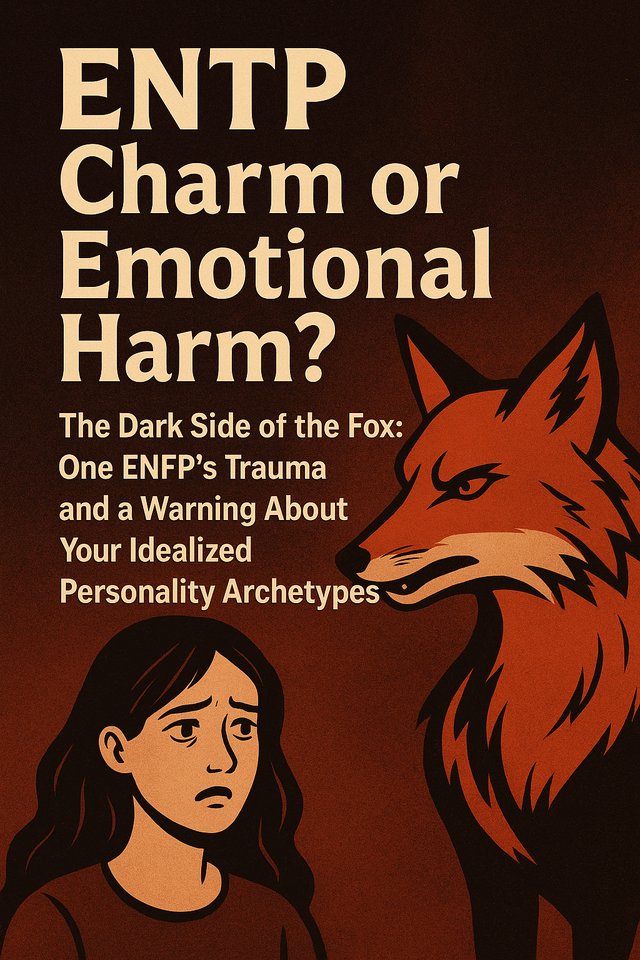
| ENTP | Exciting, challenging, witty | INFJ, INTJ, INFP | Commitment follow-through |
| INFJ | Deep, devoted, idealistic | ENTP, ENFP, INTJ | Accepting imperfection |
| INFP | Romantic, creative, gentle | ENFJ, ENTJ, ESFJ | Practical conflict resolution |
| ENFJ | Nurturing, inspiring, devoted | INFP, ISFP, INTP | Receiving care (not just giving) |
| ENFP | Enthusiastic, warm, exploratory | INTJ, INFJ, ISTJ | Grounding and routine |
| ISTJ | Steady, reliable, dutiful | ESFP, ESTP, ISFJ | Spontaneity |
| ISFJ | Selfless, warm, protective | ESTP, ESFP, ISTP | Asserting personal needs |
| ESTJ | Loyal, providing, structured | ISTP, ISFP, INFP | Emotional flexibility |
| ESFJ | Caring, social, devoted | ISFP, ISTP, ESTP | Independence within relationships |
| ISTP | Cool, capable, sensual | ESTJ, ESFJ, ENTJ | Emotional expression |
| ISFP | Artistic, gentle, present | ESFJ, ESTJ, ENFJ | Long-term planning together |
| ESTP | Exciting, bold, fun-loving | ISFJ, ISTJ, ESFJ | Emotional depth |
| ESFP | Joyful, generous, spontaneous | ISTJ, ISFJ, INTJ | Future-oriented thinking |
4 Communication Tips That Work Across All Types
- Ask, don’t assume — “What do you need from me right now?” beats any type-based prediction.
- Learn your partner’s apology language — Thinkers prefer solutions; Feelers need emotional acknowledgment.
- Use conflict as data — Recurring arguments reveal value differences, not personal failures.
- Schedule check-ins — Judgers appreciate planned relationship reviews; Perceivers need the reminder.
Want to understand your relationship patterns? Discover your type with our free personality test.
More Relationship & Personal Growth Resources
- 📊 Take the Free Personality Test — Discover your type and relationship style →
- 🧘 MBTI Stress Management — How each type handles relationship stress →
- 🧠 MBTI and Mental Health — What your type reveals about emotional wellbeing →
- 💼 MBTI Career Guide — Your personality type at work affects your personal life →
- 🎭 Character Database — See how different types interact in fiction →