Augusta Ada King, Countess of Lovelace - INTP Personality Type

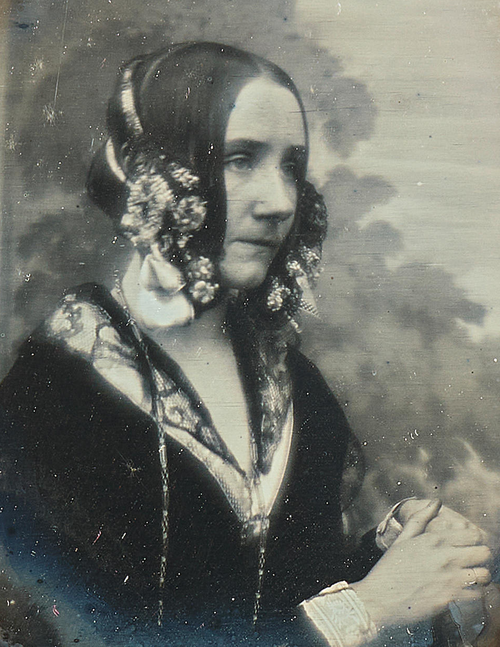
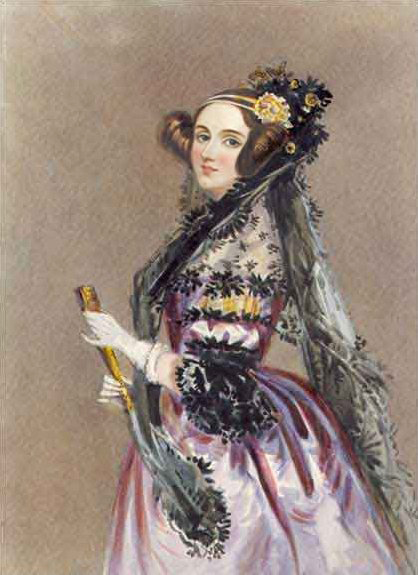
Augusta Ada King, Countess of Lovelace

INTP - Logician

Category

Science

Nationality

British

Occupation

Mathematician and Writer

About Augusta Ada King, Countess of Lovelace

Ada Lovelace was a 19th-century English mathematician and writer, chiefly known for her work on Charles Babbage's proposed mechanical general-purpose computer, the Analytical Engine. She is celebrated for writing the first published algorithm intended to be carried out by such a machine, recognizing its potential beyond mere calculation to create music and art, which has led to her being regarded as the first computer programmer.
Personality Profile: INTP

Confidence: 85%

Personality Analysis

Ada Lovelace is a quintessential INTP, driven by a dominant Introverted Thinking (Ti) function that craves internal logical consistency and precision. Her work is a testament to building complex, self-consistent mental models. She didn’t just transcribe Babbage’s ideas; she deconstructed the Analytical Engine’s principles to their logical core and rebuilt them in her notes, famously correcting an error in one of Babbage’s own example algorithms. This meticulous internal logical framework was her primary tool for understanding the world. Her auxiliary Extroverted Intuition (Ne) was the engine of her visionary insight. While Babbage focused on the computational utility of the Engine, Lovelace’s Ne allowed her to see expansive, abstract possibilities—that it could manipulate symbols beyond numbers to compose music or generate art. This ‘poetical science,’ as she called it, represents a classic Ne leap, connecting mechanical computation to future creative applications. The tertiary Introverted Sensing (Si) provided a repository of learned mathematical principles and past work to draw upon and verify her logical structures, grounding her visions in studied fact. Her inferior Extroverted Feeling (Fe) manifested in her struggle with conventional social expectations and emotional turbulence. She craved intellectual collaboration (like with Babbage) but often found high society draining and confining. Her correspondence reveals periods of emotional volatility and a desire for her work to be recognized and to contribute to human progress—a Fe-driven longing for external harmony and legacy, which often clashed with her intensely private and rational dominant nature. Her growth would involve integrating this Fe to communicate her visions more effectively and manage interpersonal relationships without compromising her intellectual independence.

Supporting Evidence

Her most famous work, ‘Note G’ appended to her translation of Luigi Menabrea’s article, showcases Ti-Ne synergy: she provides a step-by-step, logically rigorous algorithm (Ti) for computing Bernoulli numbers, while the preceding notes argue prophetically for the machine’s potential beyond number-crunching (Ne). Her lifelong nickname, ‘The Enchantress of Numbers,’ given by Babbage, reflects her mystical, abstract fascination (Ne) with mathematical beauty (Ti). Her rebellious streak against her mother’s strict, emotion-suppressing educational regime and her fascination with her father Lord Byron’s poetic legacy indicate a non-conformist (Ne) and internally-defined (Ti) value system. Her periods of ill health and social withdrawal, alongside intense bursts of intellectual correspondence, point to an introvert recharging alone to fuel her dominant thinking function.

Cognitive Function Stack

Confidence: 85%

The cognitive function stack represents how an individual processes information and makes decisions based on Jungian personality type theory.

Auxiliary Function: Ne

Extraverted Intuition - Seeing possibilities and connections in the external world.

Dominant Function: Ti

Introverted Thinking - Analyzing and categorizing information logically and precisely.

Inferior Function: Fe

Extraverted Feeling - Connecting with others and maintaining social harmony.

Tertiary Function: Si

Introverted Sensing - Recalling detailed information and maintaining traditions.

Enneagram Personality Profile:

Confidence: 85%

5w4

Big Five Personality Traits

Confidence: 85%

The Big Five personality traits represent the five broad dimensions of personality that are commonly used to describe human personality.

Openness 0%
Conscientiousness 0%
Extraversion 0%
Agreeableness 0%
Neuroticism 0%