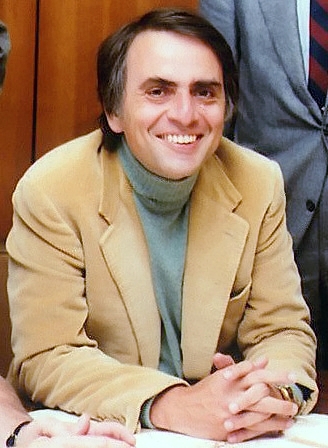
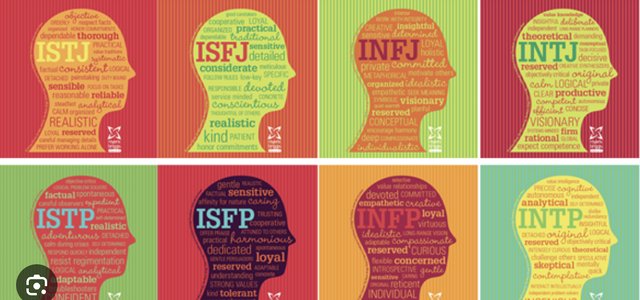
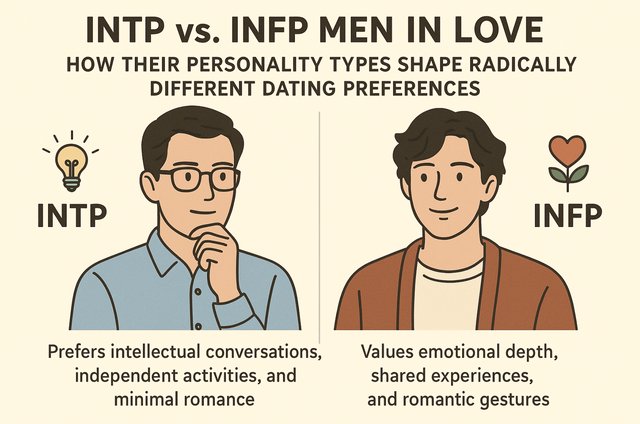
Carl Sagan exemplifies the INTP personality type, driven by a dominant Introverted Thinking (Ti) function. His primary mode of operation was building and refining an internal, logical framework for understanding the universe. He was not content with isolated facts; his life’s work involved constructing coherent, evidence-based models of cosmic and planetary phenomena. This Ti dominance fueled his rigorous skepticism and his famous aphorism, ‘Extraordinary claims require extraordinary evidence.’ He approached problems with a detached, analytical precision, seeking to understand the underlying principles governing reality. His auxiliary function, Extraverted Intuition (Ne), was the perfect partner to his Ti. Ne allowed him to generate a vast array of possibilities, connections, and hypotheses. He was a master of ‘what if’ scenarios, whether speculating about extraterrestrial life, the greenhouse effect on Venus, or the future of humanity. This Ne gave his work its visionary and imaginative quality, allowing him to explore the implications of scientific discoveries far beyond their immediate data. His tertiary Introverted Sensing (Si) provided a repository of established scientific knowledge and personal experiences that he could draw upon, lending a sense of historical continuity to his narratives, as seen in ‘Cosmos.’ His inferior function, Extraverted Feeling (Fe), manifested in his deep-seated idealism and drive to communicate. While not naturally a ‘people person’ in a conventional sense, he felt a profound responsibility to share the beauty and importance of science with all of humanity. This Fe-driven mission to foster a sense of planetary community and to warn against the dangers of nuclear war and pseudoscience was a powerful, if sometimes emotionally taxing, aspect of his public life.