Bojack Horseman - ENFP Personality Type

Bojack Horseman

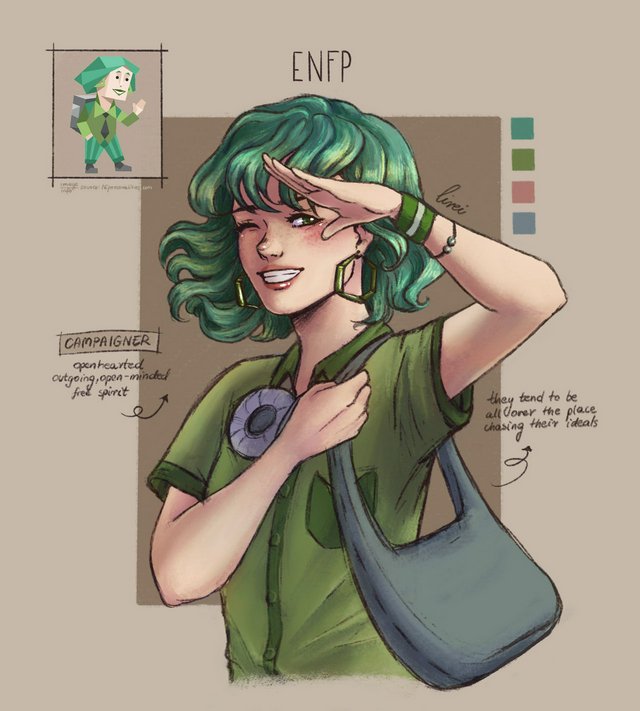
ENFP - Campaigner

Category

TV Show

Nationality

American

Occupation

Actor

About Bojack Horseman

Bojack Horseman is the titular protagonist of the Netflix animated series 'BoJack Horseman'. He is a washed-up, self-loathing actor from the 1990s sitcom 'Horsin' Around', living in a surreal Hollywood populated by humans and anthropomorphic animals. He is known for his deep-seated cynicism, self-destructive behavior, and decades-long struggle with addiction, fame, and the search for meaning and redemption.

Personality Profile: ENFP

Confidence: 85%

Personality Analysis

Bojack is a classic, albeit tragic, example of an unhealthy ENFP. His dominant Extraverted Intuition (Ne) manifests as a relentless, often chaotic, exploration of possibilities—be it new career ventures, relationships, or self-reinventions—but without the follow-through. He is quick-witted, capable of making brilliant creative connections, but his life lacks direction and coherence due to a lack of developed Judgment. His auxiliary Introverted Feeling (Fi) is overwhelmingly dominant in his internal world, leading to intense, often paralyzing, introspection about his identity, morality, and feelings. He is driven by a deep, personal value system centered on a desire to be a ‘good person,’ but his constant failure to live up to this ideal leads to immense shame and self-loathing. His tertiary Extraverted Thinking (Te) emerges in bursts of impulsive, often reckless, action aimed at imposing control on his external world (e.g., rash decisions, manipulative schemes), but it is crude and serves his Fi-driven emotional needs rather than objective logic. His inferior Introverted Sensing (Si) is the source of his greatest turmoil; he is haunted by past traumas, regrets, and a nostalgic, rose-tinted view of his fleeting fame, which he can’t integrate healthily. This leads to repetitive, self-destructive cycles. His growth, when it occurs, involves developing his Te to take accountable action and healthily engaging with Si to process his past rather than be consumed by it.


Supporting Evidence

His pattern of starting grand projects (like his autobiography, ‘Secretariat’ movie, or teaching at Wesleyan) with Ne-fueled enthusiasm only to abandon or sabotage them demonstrates dominant Ne with underdeveloped Judging functions. His entire existential crisis is Fi-driven, constantly asking ‘Am I a good person, deep down?’ as seen in his conversations with Diane and his own internal monologues. The ‘View from Halfway Down’ poem and his persistent hallucinations of Herb Kazzaz and Sarah Lynn are manifestations of his inferior Si, where repressed memories and traumas violently surface. His manipulative, Te-gone-wrong behavior is evident in his attempt to expose Todd’s rock opera to gain his own freedom and his scheme to get co-star Gina to choke him for a movie role, showing a ruthless, ends-justify-means approach when cornered by his emotions.

Cognitive Function Stack

Confidence: 85%

The cognitive function stack represents how an individual processes information and makes decisions based on Jungian personality type theory.

Auxiliary Function: Fi

Introverted Feeling - Making decisions based on internal values and personal ethics.

Dominant Function: Ne

Extraverted Intuition - Seeing possibilities and connections in the external world.

Inferior Function: Si

Introverted Sensing - Recalling detailed information and maintaining traditions.

Tertiary Function: Te

Extraverted Thinking - Organizing and structuring the external world logically and efficiently.

Enneagram Personality Profile:

Confidence: 85%

4w3

Big Five Personality Traits

Confidence: 85%

The Big Five personality traits represent the five broad dimensions of personality that are commonly used to describe human personality.

Openness 0%
Conscientiousness 0%
Extraversion 0%
Agreeableness 0%
Neuroticism 0%

Similar ENFP Characters

Explore other characters with similar personality traits