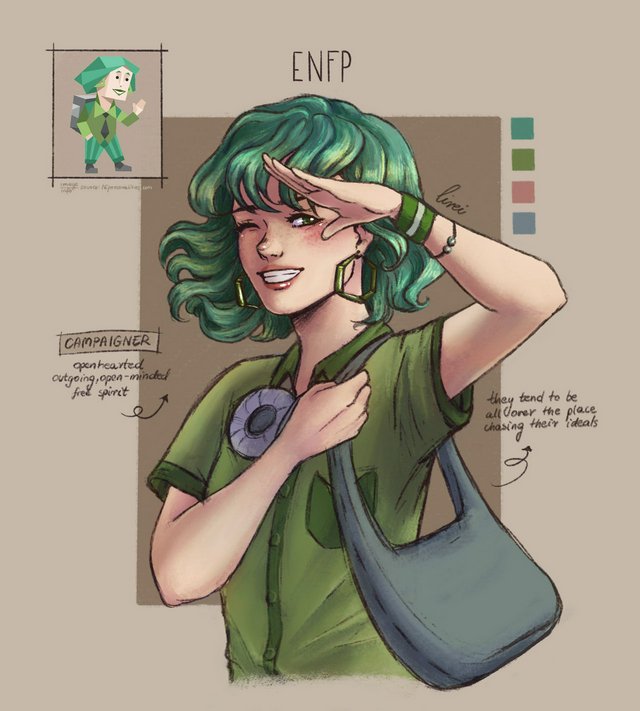
Fleabag is a quintessential, albeit traumatized, ENFP. Her dominant Extraverted Intuition (Ne) is evident in her constant generation of possibilities—in conversation, in schemes to save her cafe, and in her imaginative, often inappropriate, interpretations of every situation. This function fuels her quick wit, her ability to see absurd connections, and her restless need for novelty, which she uses to escape her inner turmoil. Her auxiliary Introverted Feeling (Fi) is the core of her character; it provides her strong, personal moral compass (seen in her fierce loyalty to Boo and her sister, Claire) and is the source of her intense, privatized grief, guilt, and self-loathing. Her values are deeply held but internally referenced, leading to a sense of being misunderstood.
Her decision-making is a turbulent mix of Fi-driven values and Ne-fueled impulsivity, often overridden by the need to avoid pain. Her use of tertiary Extraverted Thinking (Te) is sporadic and chaotic—she can be brutally direct and logistical when cornered (e.g., confronting the ‘misogynist’ lender), but more often she uses it in a self-sabotaging way, creating messy, external chaos that mirrors her internal state. The inferior Introverted Sensing (Si) is her Achilles’ heel; she is haunted by past memories and traumas (Boo’s death, her mother’s death) but cannot integrate them healthily, leading to cycles of self-punishment and avoidance.
Interpersonally, her Ne-Fi combination makes her charming, perceptive, and capable of profound, disarming intimacy (as seen with the Priest), but her trauma and inferior Si cause her to flee from genuine connection when it becomes too real or reminiscent of past pain. Her growth in Season 2 involves slowly turning her Fi inward to confront her guilt and allowing her Si to process grief, moving from chaotic Ne escapism towards a more integrated, present acceptance of her pain and humanity.