Guido Orefice - ENFP Personality Type

Guido Orefice

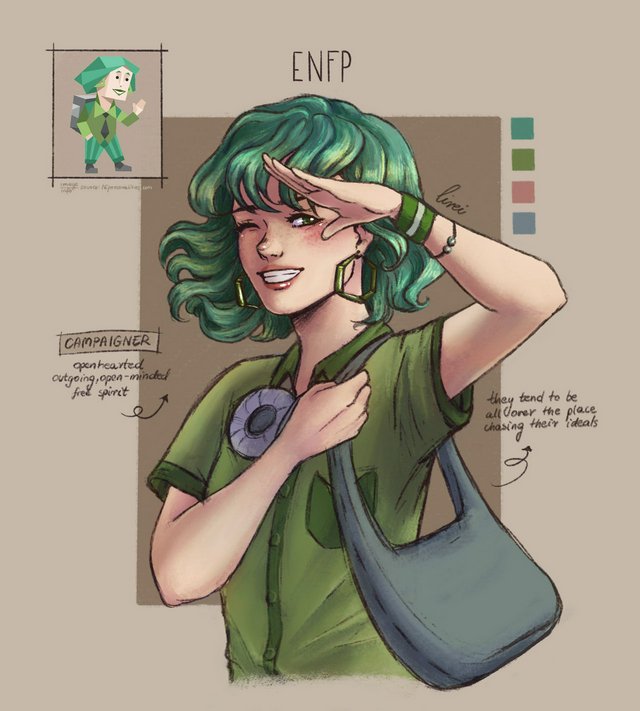
ENFP - Campaigner

Category

Movie

Nationality

Italian

Occupation

Bookshop Owner, Waiter

About Guido Orefice

Guido Orefice is the protagonist of the 1997 Italian film 'Life is Beautiful'. He is a Jewish Italian bookshop owner and waiter whose boundless optimism, quick wit, and inventive love transform the horrific reality of a Nazi concentration camp into a protective fantasy for his young son. He is known for his extraordinary sacrifice and for using humor and imagination as shields against cruelty.

Personality Profile: ENFP

Confidence: 85%

Personality Analysis

Guido Orefice is a quintessential ENFP, driven by Extraverted Intuition (Ne) as his dominant function. He perceives the world as a web of endless possibilities, connections, and meanings, which he uses to craft narratives on the fly. This is most evident in his relentless improvisation—from his courtship of Dora to the elaborate ‘game’ he constructs in the concentration camp. His mind constantly seeks alternative, more hopeful interpretations of reality, refusing to be confined by its bleakest aspects. His auxiliary function, Introverted Feeling (Fi), provides the deep moral and emotional core to his Ne antics. His actions are not just whimsical; they are guided by a profound, internalized value system centered on love, family, and human dignity. His commitment to protecting his son’s innocence and his unwavering devotion to Dora are Fi-driven missions. He uses his tertiary Extraverted Thinking (Te) pragmatically to execute his imaginative plans, organizing the ‘game’ rules, translating for the German officer, and finding moments to contact Dora. His inferior Introverted Sensing (Si) manifests as a conscious rejection of dwelling on past trauma or adhering to tradition for its own sake. He constantly reshapes painful memories (like the camp) into stories of hope, though under extreme stress, flashes of the grim reality he’s suppressing can surface.

Supporting Evidence

His entire courtship of Dora demonstrates Ne and Fi: he improvises multiple ‘chance’ encounters (‘Principessa!’), reinterprets a rainstorm as a romantic red carpet, and steals her from her engagement party, all driven by his authentic love. In the concentration camp, he uses his dominant Ne to invent and sustain the elaborate ‘game’ for his son Joshua, creatively mistransating the German officer’s rules to maintain the illusion. His quick-witted lie about the ‘silence game’ when Joshua almost speaks in the barracks shows rapid, on-the-spot problem-solving (Ne-Te). His defiant act of playing the opera record over the camp loudspeaker for Dora is a profound Fi gesture, asserting beauty and connection against dehumanization. Even early in the film, his spontaneous impersonation of a school inspector to ridicule racist ideology showcases his use of humor and improvisation (Ne) to challenge rigid structures (inferior Si).

Cognitive Function Stack

Confidence: 85%

The cognitive function stack represents how an individual processes information and makes decisions based on Jungian personality type theory.

Auxiliary Function: Fi

Introverted Feeling - Making decisions based on internal values and personal ethics.

Dominant Function: Ne

Extraverted Intuition - Seeing possibilities and connections in the external world.

Inferior Function: Si

Introverted Sensing - Recalling detailed information and maintaining traditions.

Tertiary Function: Te

Extraverted Thinking - Organizing and structuring the external world logically and efficiently.

Enneagram Personality Profile:

Confidence: 85%

7w6

Big Five Personality Traits

Confidence: 85%

The Big Five personality traits represent the five broad dimensions of personality that are commonly used to describe human personality.

Openness 0%
Conscientiousness 0%
Extraversion 0%
Agreeableness 0%
Neuroticism 0%

Similar ENFP Characters

Explore other characters with similar personality traits