Humbert Humbert - INTP Personality Type

Humbert Humbert

INTP - Logician

Category

Literature

Nationality

European (French-Swiss, unspecified)

Occupation

Scholar, Writer, Professor of Literature

About Humbert Humbert

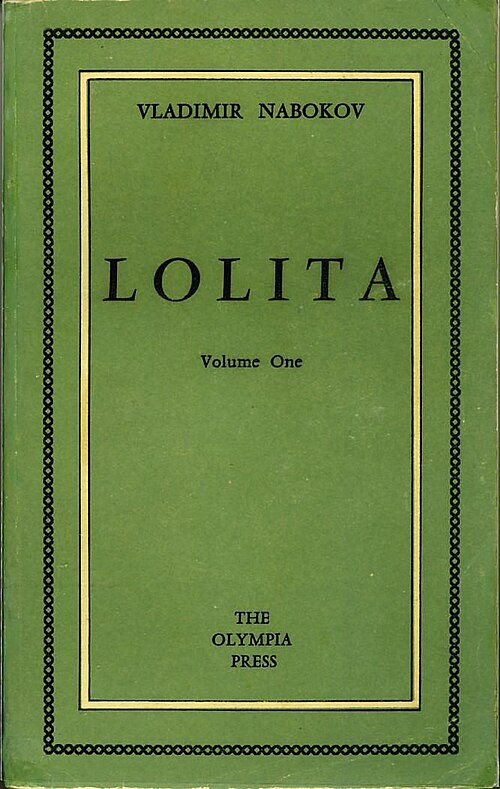
Humbert Humbert is the fictional narrator and protagonist of Vladimir Nabokov's 1955 novel 'Lolita'. He is a middle-aged, highly educated European literature scholar who becomes obsessively and destructively infatuated with his twelve-year-old stepdaughter, Dolores Haze, whom he nicknames Lolita. The character is infamous as a masterful, unreliable narrator who uses his immense intellect, literary eloquence, and self-pity to rationalize his monstrous pedophilia and to seduce the reader into a complicit understanding of his perspective.

Personality Profile: INTP

Confidence: 85%

Personality Analysis

Humbert Humbert is a quintessential, albeit pathological, INTP. His dominant Introverted Thinking (Ti) is the engine of his entire narrative. He builds an elaborate, self-referential internal framework of logic, aesthetics, and classification (‘nymphets’) to rationalize his pedophilia, treating his obsession as a philosophical or artistic pursuit rather than a moral crime. This Ti-driven need to systematize and justify his desires overrides all external ethical standards (low Conscientiousness and Agreeableness in Big Five). His auxiliary Extroverted Intuition (Ne) allows him to generate countless possibilities, connections, and justifications, weaving literary allusions, psychological theories, and hypothetical scenarios to create a seductive, if horrifying, narrative web. He is constantly interpreting the world through this Ne lens, seeing patterns and symbolic meanings that serve his internal framework. His tertiary Introverted Sensing (Si) traps him in a nostalgic, idealized past, fixated on the memory of his lost childhood love, Annabel Leigh. This unresolved trauma, filtered through Si, provides the emotional fuel for his present obsession, which he mistakenly perceives as a recapturing of that lost paradise. His inferior Extroverted Feeling (Fe) is his critical blind spot. He has a profound inability to genuinely connect with or understand others’ emotions, especially Lolita’s. He views her not as a person with her own inner life, but as an object (‘my Lolita’) within his Ti-Ne system. His attempts at Fe are manipulative performances—charm, pity, or false remorse—designed to control others or elicit a specific response to maintain his constructed reality. His growth is stunted by his refusal to engage his Fe healthily, leading to catastrophic interpersonal destruction.

Supporting Evidence

  1. His entire narrative is a Ti construct, building the pseudo-scientific category of the ‘nymphet’ to intellectualize his attraction. 2. He devises elaborate Ne-driven schemes, like the convoluted plan to marry Charlotte Haze solely to remain near Lolita, and the detailed chronicle of their cross-country travels. 3. His Si is evident in the haunting, lyrical memory of Annabel Leigh on the Riviera, which he explicitly connects to Lolita, framing his present obsession as a continuation of that past trauma. 4. His utter failure of Fe is showcased in his complete misinterpretation of Lolita’s suffering; he records her tears and rage but attributes them to childish moods or influences like Quilty, never genuinely acknowledging his own role as her tormentor and jailer.

Cognitive Function Stack

Confidence: 85%

The cognitive function stack represents how an individual processes information and makes decisions based on Jungian personality type theory.

Auxiliary Function: Ne

Extraverted Intuition - Seeing possibilities and connections in the external world.

Dominant Function: Ti

Introverted Thinking - Analyzing and categorizing information logically and precisely.

Inferior Function: Fe

Extraverted Feeling - Connecting with others and maintaining social harmony.

Tertiary Function: Si

Introverted Sensing - Recalling detailed information and maintaining traditions.

Enneagram Personality Profile:

Confidence: 85%

5w4

Big Five Personality Traits

Confidence: 85%

The Big Five personality traits represent the five broad dimensions of personality that are commonly used to describe human personality.

Openness 0%
Conscientiousness 0%
Extraversion 0%
Agreeableness 0%
Neuroticism 0%